Department of Urology, Northwestern University Feinberg School of Medicine, Chicago, IL, 60611, USA.
The Robert H. Lurie Comprehensive Cancer Center, Northwestern University Feinberg School of Medicine, Chicago, IL, 60611, USA.
Nat Commun. 2018 Apr 23;9(1):1591. doi: 10.1038/s41467-018-03900-x.
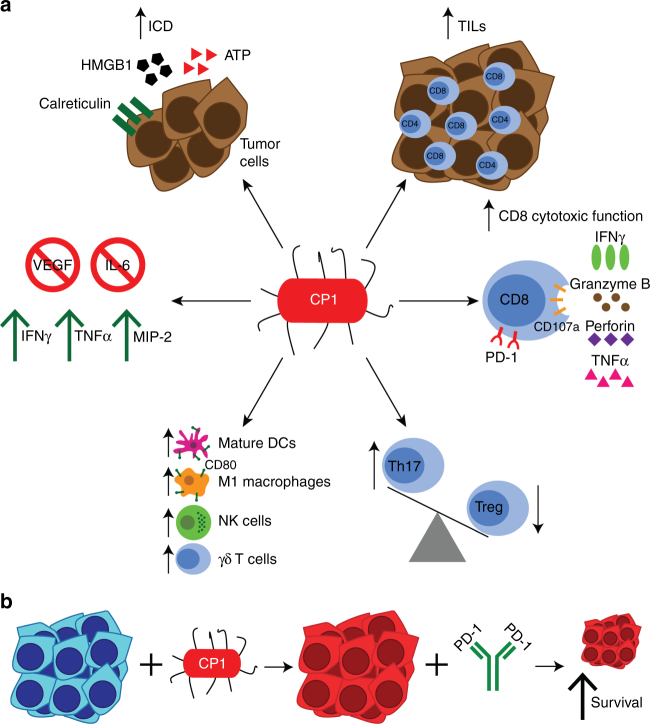
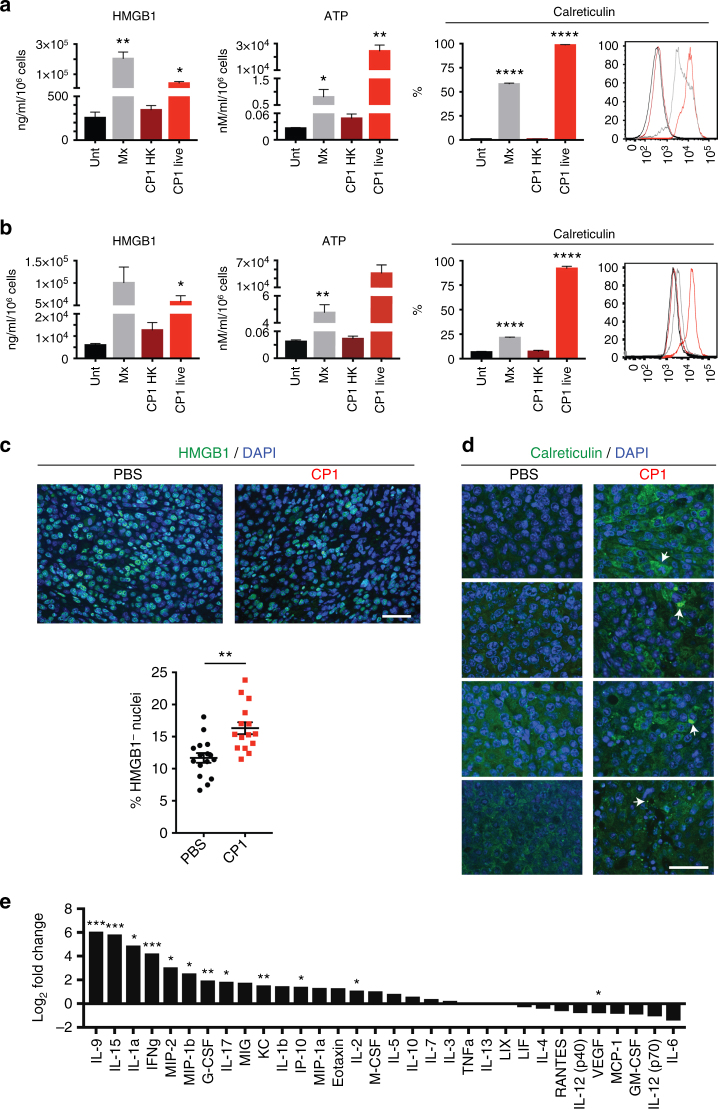
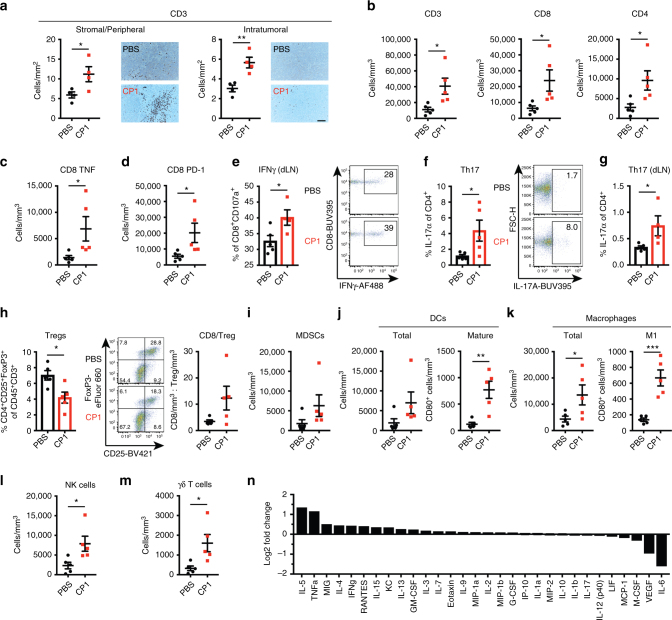
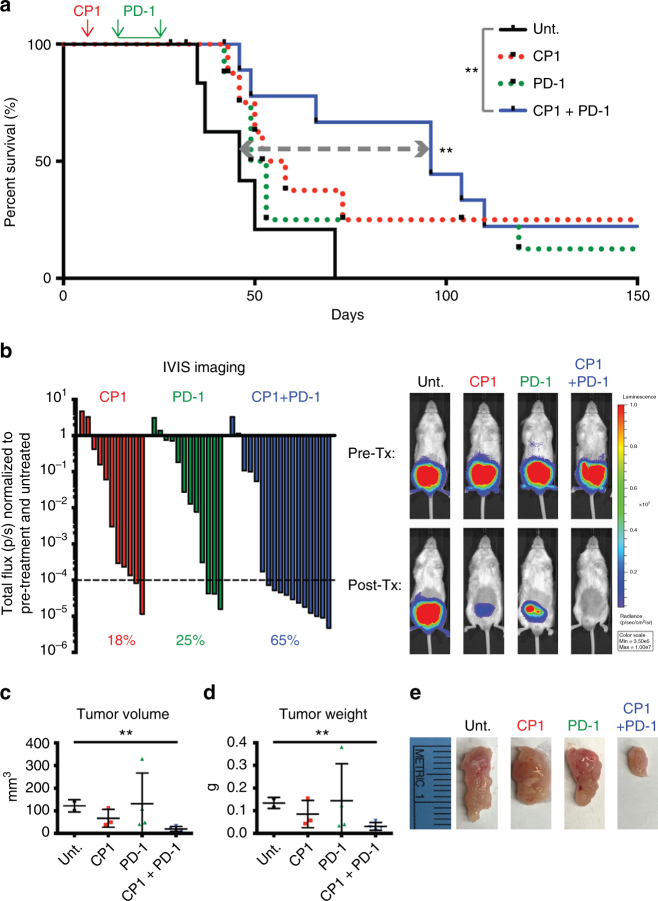
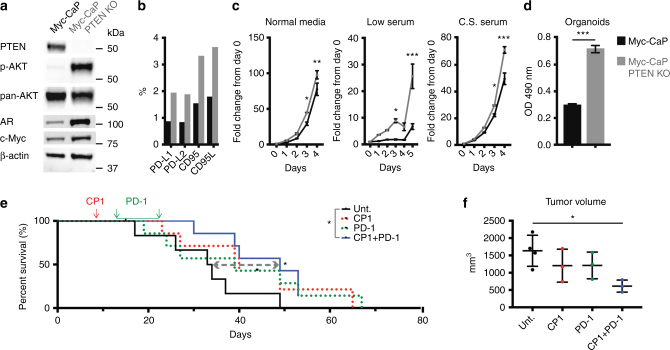
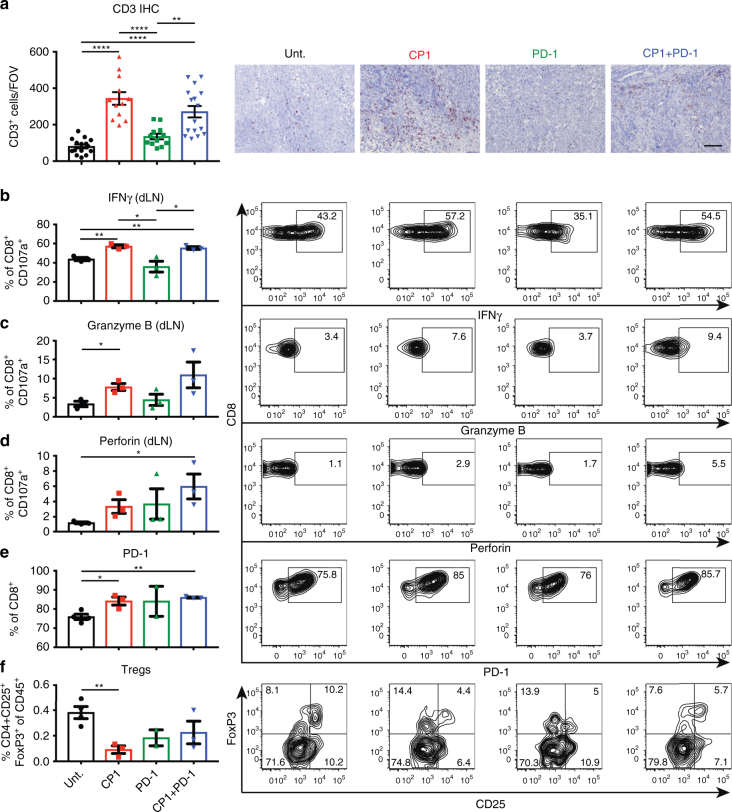
Immune checkpoint inhibitors have not been effective for immunologically "cold" tumors, such as prostate cancer, which contain scarce tumor infiltrating lymphocytes. We hypothesized that select tissue-specific and immunostimulatory bacteria can potentiate these immunotherapies. Here we show that a patient-derived prostate-specific microbe, CP1, in combination with anti-PD-1 immunotherapy, increases survival and decreases tumor burden in orthotopic MYC- and PTEN-mutant prostate cancer models. CP1 administered intra-urethrally specifically homes to and colonizes tumors without causing any systemic toxicities. CP1 increases immunogenic cell death of cancer cells, T cell cytotoxicity, and tumor infiltration by activated CD8 T cells, Th17 T cells, mature dendritic cells, M1 macrophages, and NK cells. CP1 also decreases intra-tumoral regulatory T cells and VEGF. Mechanistically, blocking CP1-recruited T cells from infiltrating the tumor inhibits its therapeutic efficacy. CP1 is an immunotherapeutic tool demonstrating how a tissue-specific microbe can increase tumor immunogenicity and sensitize an otherwise resistant cancer type to immunotherapy.
免疫检查点抑制剂对免疫“冷”肿瘤(如前列腺癌)无效,此类肿瘤中浸润的肿瘤内淋巴细胞稀少。我们假设,选择组织特异性和免疫刺激性细菌可以增强这些免疫疗法的效果。在这里,我们发现一种源自患者的前列腺特异性微生物 CP1 与抗 PD-1 免疫疗法联合使用,可以提高原位 MYC 和 PTEN 突变型前列腺癌模型的存活率并降低肿瘤负担。CP1 通过尿道内给药可特异性地归巢并定植于肿瘤,而不会引起任何全身毒性。CP1 增加了癌细胞的免疫原性细胞死亡、T 细胞细胞毒性以及激活的 CD8 T 细胞、Th17 T 细胞、成熟树突状细胞、M1 巨噬细胞和 NK 细胞向肿瘤内的浸润。CP1 还减少了肿瘤内的调节性 T 细胞和 VEGF。从机制上讲,阻断 CP1 募集的 T 细胞浸润肿瘤会抑制其治疗效果。CP1 是一种免疫治疗工具,证明了一种组织特异性微生物如何增强肿瘤的免疫原性,并使原本对免疫疗法具有抗性的癌症类型变得敏感。