• 文献检索
  • 文档翻译
  • 深度研究
  • 学术资讯
  • Suppr Zotero 插件Zotero 插件
  • 邀请有礼
  • 套餐&价格
  • 历史记录
应用&插件
Suppr Zotero 插件Zotero 插件浏览器插件Mac 客户端Windows 客户端微信小程序
定价
高级版会员购买积分包购买API积分包
服务
文献检索文档翻译深度研究API 文档MCP 服务
关于我们
关于 Suppr公司介绍联系我们用户协议隐私条款
关注我们

Suppr 超能文献

核心技术专利:CN118964589B侵权必究
粤ICP备2023148730 号-1Suppr @ 2026

文献检索

告别复杂PubMed语法,用中文像聊天一样搜索,搜遍4000万医学文献。AI智能推荐,让科研检索更轻松。

立即免费搜索

文件翻译

保留排版,准确专业,支持PDF/Word/PPT等文件格式,支持 12+语言互译。

免费翻译文档

深度研究

AI帮你快速写综述,25分钟生成高质量综述,智能提取关键信息,辅助科研写作。

立即免费体验

高固体负荷下从回收纸污泥生产生物乙醇的高效纤维素酶循环利用过程的影响因素。

Determinants on an efficient cellulase recycling process for the production of bioethanol from recycled paper sludge under high solid loadings.

作者信息

Gomes Daniel, Gama Miguel, Domingues Lucília

机构信息

Centre of Biological Engineering, University of Minho, Campus de Gualtar, 4710-057 Braga, Portugal.

出版信息

Biotechnol Biofuels. 2018 Apr 16;11:111. doi: 10.1186/s13068-018-1103-2. eCollection 2018.

DOI:10.1186/s13068-018-1103-2
PMID:29686729
原文链接:https://pmc.ncbi.nlm.nih.gov/articles/PMC5901881/
Abstract

BACKGROUND

In spite of the continuous efforts and investments in the last decades, lignocellulosic ethanol is still not economically competitive with fossil fuels. Optimization is still required in different parts of the process. Namely, the cost effective usage of enzymes has been pursued by different strategies, one of them being recycling.

RESULTS

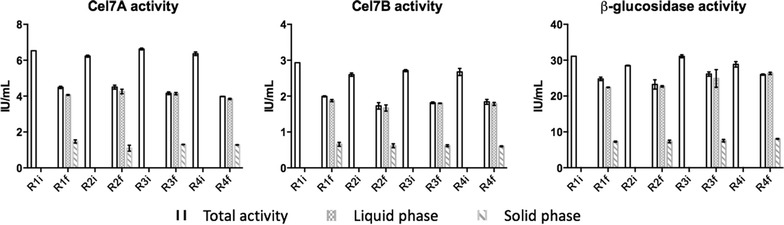
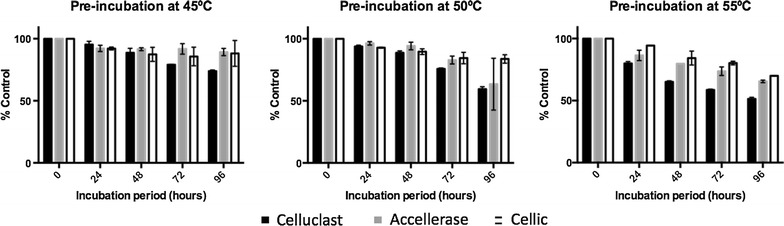
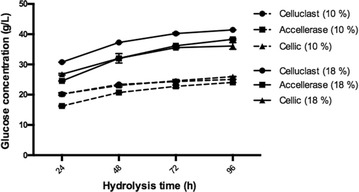
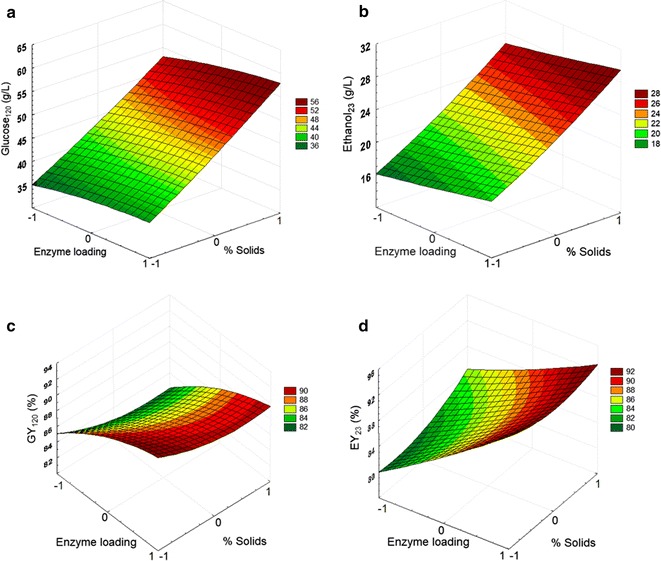
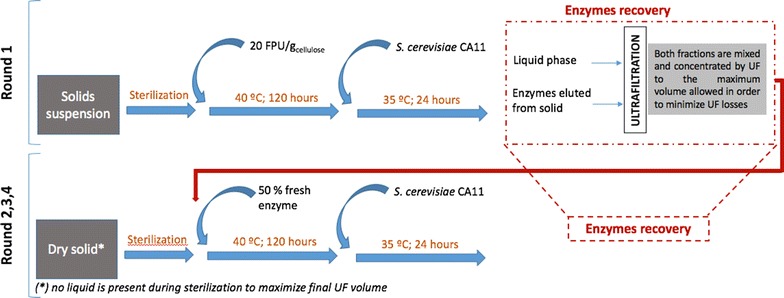
Cellulase recycling was analyzed on recycled paper sludge (RPS) conversion into bioethanol under intensified conditions. Different cocktails were studied regarding thermostability, hydrolysis efficiency, distribution in the multiphasic system and recovery from solid. Celluclast showed inferior stability at higher temperatures (45-55 °C), nevertheless its performance at moderate temperatures (40 °C) was slightly superior to other cocktails (ACCELLERASE1500 and CellicCTec2). Celluclast distribution in the solid-liquid medium was also more favorable, enabling to recover 88% of final activity at the end of the process. A central composite design studied the influence of solid concentration and enzyme dosage on RPS conversion by Celluclast. Solids concentration showed a significant positive effect on glucose production, no major limitations being found from utilizing high amounts of solids under the studied conditions. Increasing enzyme loading from 20 to 30 FPU/g had no significant effect on sugars production, suggesting that 22% solids and 20 FPU/g are the best operational conditions towards an intensified process. Applying these, a system of multiple rounds of hydrolysis with enzyme recycling was implemented, allowing to maintain the steady levels of enzyme activity with only 50% of enzyme on each recycling stage. Additionally, interesting levels of solid conversion (70-81%) were also achieved, leading to considerable improvements on glucose and ethanol production comparatively with the reports available so far (3.4- and 3.8-fold, respectively).

CONCLUSIONS

Enzyme recycling viability depends on enzyme distribution between the solid and liquid phases at the end of hydrolysis, as well as enzymes thermostability. Both are critical features to be observed for a judicious choice of enzyme cocktail. This work demonstrates that enzyme recycling in intensified biomass degradation can be achieved through simple means. The process is possibly much more effective at larger scale, hence novel enzyme formulations favoring this possibility should be developed for industrial usage.

摘要

背景

尽管在过去几十年中不断努力并投入资金,但木质纤维素乙醇在经济上仍无法与化石燃料竞争。该过程的不同环节仍需优化。具体而言,人们通过不同策略追求酶的经济有效利用,其中之一是酶的循环利用。

结果

在强化条件下,分析了纤维素酶在回收纸污泥(RPS)转化为生物乙醇过程中的循环利用情况。研究了不同酶制剂在热稳定性、水解效率、多相系统中的分布以及从固体中回收等方面的特性。纤维素酶(Celluclast)在较高温度(45 - 55°C)下稳定性较差,不过其在中等温度(40°C)下的性能略优于其他酶制剂(ACCELERASE1500和CellicCTec2)。纤维素酶在固液介质中的分布也更有利,在过程结束时能够回收88%的最终活性。采用中心复合设计研究了固体浓度和酶用量对纤维素酶转化RPS的影响。固体浓度对葡萄糖产量有显著的正向影响,在所研究的条件下,使用大量固体未发现重大限制。将酶负载量从20 FPU/g增加到30 FPU/g对糖产量没有显著影响,这表明22%的固体浓度和20 FPU/g是强化过程的最佳操作条件。应用这些条件,实施了一个酶循环的多轮水解系统,在每个循环阶段仅使用50%的酶就能维持酶活性的稳定水平。此外,还实现了令人感兴趣的固体转化率(70 - 81%),与目前的报道相比,葡萄糖和乙醇产量有了相当大的提高(分别提高了3.4倍和3.8倍)。

结论

酶的循环利用可行性取决于水解结束时酶在固液相之间的分布以及酶的热稳定性。这两个都是明智选择酶制剂时需要考虑的关键特性。这项工作表明,通过简单方法可以在强化生物质降解中实现酶的循环利用。该过程在更大规模下可能更有效,因此应开发有利于这种可能性的新型酶制剂用于工业用途。
https://cdn.ncbi.nlm.nih.gov/pmc/blobs/aa95/5901881/13b5e17f077b/13068_2018_1103_Fig5_HTML.jpg
https://cdn.ncbi.nlm.nih.gov/pmc/blobs/aa95/5901881/8bdb2beca139/13068_2018_1103_Fig1_HTML.jpg
https://cdn.ncbi.nlm.nih.gov/pmc/blobs/aa95/5901881/34757619c7db/13068_2018_1103_Fig2_HTML.jpg
https://cdn.ncbi.nlm.nih.gov/pmc/blobs/aa95/5901881/9fb9f9a18397/13068_2018_1103_Fig3_HTML.jpg
https://cdn.ncbi.nlm.nih.gov/pmc/blobs/aa95/5901881/a5d9963d7776/13068_2018_1103_Fig4_HTML.jpg
https://cdn.ncbi.nlm.nih.gov/pmc/blobs/aa95/5901881/13b5e17f077b/13068_2018_1103_Fig5_HTML.jpg
https://cdn.ncbi.nlm.nih.gov/pmc/blobs/aa95/5901881/8bdb2beca139/13068_2018_1103_Fig1_HTML.jpg
https://cdn.ncbi.nlm.nih.gov/pmc/blobs/aa95/5901881/34757619c7db/13068_2018_1103_Fig2_HTML.jpg
https://cdn.ncbi.nlm.nih.gov/pmc/blobs/aa95/5901881/9fb9f9a18397/13068_2018_1103_Fig3_HTML.jpg
https://cdn.ncbi.nlm.nih.gov/pmc/blobs/aa95/5901881/a5d9963d7776/13068_2018_1103_Fig4_HTML.jpg
https://cdn.ncbi.nlm.nih.gov/pmc/blobs/aa95/5901881/13b5e17f077b/13068_2018_1103_Fig5_HTML.jpg

相似文献

1
Determinants on an efficient cellulase recycling process for the production of bioethanol from recycled paper sludge under high solid loadings.高固体负荷下从回收纸污泥生产生物乙醇的高效纤维素酶循环利用过程的影响因素。
Biotechnol Biofuels. 2018 Apr 16;11:111. doi: 10.1186/s13068-018-1103-2. eCollection 2018.
2
Valorizing recycled paper sludge by a bioethanol production process with cellulase recycling.利用纤维素酶回收的生物乙醇生产工艺对再生纸污泥进行增值利用。
Bioresour Technol. 2016 Sep;216:637-44. doi: 10.1016/j.biortech.2016.06.004. Epub 2016 Jun 2.
3
Celluclast and Cellic® CTec2: Saccharification/fermentation of wheat straw, solid-liquid partition and potential of enzyme recycling by alkaline washing.纤维素酶和Cellic® CTec2:小麦秸秆的糖化/发酵、固液分离以及通过碱洗进行酶回收利用的潜力
Enzyme Microb Technol. 2015 Nov;79-80:70-7. doi: 10.1016/j.enzmictec.2015.06.019. Epub 2015 Jul 17.
4
Increased enzymatic hydrolysis of sugarcane bagasse from enzyme recycling.通过酶循环利用提高甘蔗渣的酶促水解效率。
Biotechnol Biofuels. 2015 Jan 22;8(1):5. doi: 10.1186/s13068-014-0185-8. eCollection 2015.
5
Insights into the economic viability of cellulases recycling on bioethanol production from recycled paper sludge.从再生纸污泥生产生物乙醇中纤维素酶回收的经济可行性研究。
Bioresour Technol. 2018 Nov;267:347-355. doi: 10.1016/j.biortech.2018.07.056. Epub 2018 Jul 12.
6
Cellulase stability, adsorption/desorption profiles and recycling during successive cycles of hydrolysis and fermentation of wheat straw.在小麦秸秆水解和发酵的连续循环过程中,纤维素酶的稳定性、吸附/解吸特性和回收。
Bioresour Technol. 2014 Mar;156:163-9. doi: 10.1016/j.biortech.2014.01.019. Epub 2014 Jan 17.
7
Cellulase recycling in high-solids enzymatic hydrolysis of pretreated empty fruit bunches.预处理空果串高固形物酶水解中的纤维素酶循环利用
Biotechnol Biofuels. 2019 Jun 6;12:138. doi: 10.1186/s13068-019-1476-x. eCollection 2019.
8
Enzymatic lignocellulose hydrolysis: Improved cellulase productivity by insoluble solids recycling.酶法木质纤维素水解:通过不溶性固体回收提高纤维素酶生产率。
Biotechnol Biofuels. 2013 Jan 21;6(1):5. doi: 10.1186/1754-6834-6-5.
9
Upflow anaerobic sludge blanket reactor--a review.上流式厌氧污泥床反应器——综述
Indian J Environ Health. 2001 Apr;43(2):1-82.
10
Process evaluation of enzymatic hydrolysis with filtrate recycle for the production of high concentration sugars.酶解过程评估与滤出液再循环用于生产高浓度糖。
Appl Biochem Biotechnol. 2012 Feb;166(4):839-55. doi: 10.1007/s12010-011-9474-x. Epub 2011 Dec 15.

引用本文的文献

1
Efficient - and -glycosylation with -2,2-dimethoxycarbonylcyclopropylbenzyl thioglycoside donors by catalytic strain-release.通过催化应变释放实现与-2,2-二甲氧基羰基环丙基苄基硫代糖苷供体的高效糖基化反应。
Chem Sci. 2024 Feb 7;15(10):3711-3720. doi: 10.1039/d3sc06619c. eCollection 2024 Mar 6.
2
Nanocellulose Production: Exploring the Enzymatic Route and Residues of Pulp and Paper Industry.纳米纤维素生产:探索酶法途径及纸浆和造纸工业残渣。
Molecules. 2020 Jul 28;25(15):3411. doi: 10.3390/molecules25153411.
3
Production of Methane, Hydrogen and Ethanol from L. Straw Pretreated with Sulfuric Acid.

本文引用的文献

1
Boosting bioethanol production from Eucalyptus wood by whey incorporation.乳清添加物提高桉树木材生物乙醇产量。
Bioresour Technol. 2018 Feb;250:256-264. doi: 10.1016/j.biortech.2017.11.023. Epub 2017 Nov 10.
2
Integrated approach for selecting efficient Saccharomyces cerevisiae for industrial lignocellulosic fermentations: Importance of yeast chassis linked to process conditions.用于工业木质纤维素发酵的高效酿酒酵母选择的综合方法:与工艺条件相关的酵母底盘的重要性。
Bioresour Technol. 2017 Mar;227:24-34. doi: 10.1016/j.biortech.2016.12.016. Epub 2016 Dec 11.
3
Enhanced cellulase recovery without β-glucosidase supplementation for cellulosic ethanol production using an engineered strain and surfactant.
利用硫酸预处理的L.秸秆生产甲烷、氢气和乙醇。
Molecules. 2020 Feb 24;25(4):1013. doi: 10.3390/molecules25041013.
4
Xylose utilization in Saccharomyces cerevisiae during conversion of hydrothermally pretreated lignocellulosic biomass to ethanol.木糖在水热预处理木质纤维素生物质转化为乙醇过程中在酿酒酵母中的利用。
Appl Microbiol Biotechnol. 2020 Apr;104(8):3245-3252. doi: 10.1007/s00253-020-10427-z. Epub 2020 Feb 19.
使用工程菌株和表面活性剂,在不添加β-葡萄糖苷酶的情况下提高纤维素酶回收率用于纤维素乙醇生产。
Biotechnol Bioeng. 2017 Mar;114(3):543-551. doi: 10.1002/bit.26194. Epub 2016 Oct 10.
4
Valorizing recycled paper sludge by a bioethanol production process with cellulase recycling.利用纤维素酶回收的生物乙醇生产工艺对再生纸污泥进行增值利用。
Bioresour Technol. 2016 Sep;216:637-44. doi: 10.1016/j.biortech.2016.06.004. Epub 2016 Jun 2.
5
Engineering Cel7A carbohydrate binding module and linker for reduced lignin inhibition.工程化Cel7A碳水化合物结合模块和连接子以减少木质素抑制作用。
Biotechnol Bioeng. 2016 Jun;113(6):1369-74. doi: 10.1002/bit.25889. Epub 2015 Dec 8.
6
Celluclast and Cellic® CTec2: Saccharification/fermentation of wheat straw, solid-liquid partition and potential of enzyme recycling by alkaline washing.纤维素酶和Cellic® CTec2:小麦秸秆的糖化/发酵、固液分离以及通过碱洗进行酶回收利用的潜力
Enzyme Microb Technol. 2015 Nov;79-80:70-7. doi: 10.1016/j.enzmictec.2015.06.019. Epub 2015 Jul 17.
7
Cellulase recycling in biorefineries--is it possible?纤维素酶在生物精炼厂中的循环利用——是否可行?
Appl Microbiol Biotechnol. 2015 May;99(10):4131-43. doi: 10.1007/s00253-015-6535-z. Epub 2015 Mar 29.
8
Recycling cellulases by pH-triggered adsorption-desorption during the enzymatic hydrolysis of lignocellulosic biomass.在木质纤维素生物质的酶水解过程中,通过pH触发的吸附-解吸回收纤维素酶。
Appl Microbiol Biotechnol. 2014 Jun;98(12):5765-74. doi: 10.1007/s00253-014-5761-0. Epub 2014 Apr 22.
9
Cellulase stability, adsorption/desorption profiles and recycling during successive cycles of hydrolysis and fermentation of wheat straw.在小麦秸秆水解和发酵的连续循环过程中,纤维素酶的稳定性、吸附/解吸特性和回收。
Bioresour Technol. 2014 Mar;156:163-9. doi: 10.1016/j.biortech.2014.01.019. Epub 2014 Jan 17.
10
Recycling cellulase from enzymatic hydrolyzate of acid treated wheat straw by electroultrafiltration.电超滤法从酸处理麦草酶解液中回收纤维素酶。
Bioresour Technol. 2013 Sep;144:186-93. doi: 10.1016/j.biortech.2013.06.089. Epub 2013 Jun 27.