ISGlobal (Barcelona Institute for Global Health), Barcelona, Spain
CIBER (Consorcio de Investigación Biomédica en Red) Epidemiologia y Salud Pública (CIBERESP), Madrid, Spain
Environ Health Perspect. 2018 Apr 23;126(4):047011. doi: 10.1289/EHP1837.
Night shift work, exposure to light at night (ALAN) and circadian disruption may increase the risk of hormone-dependent cancers.
We evaluated the association of exposure to ALAN during sleeping time with breast and prostate cancer in a population based multicase-control study (MCC-Spain), among subjects who had never worked at night. We evaluated chronotype, a characteristic that may relate to adaptation to light at night.
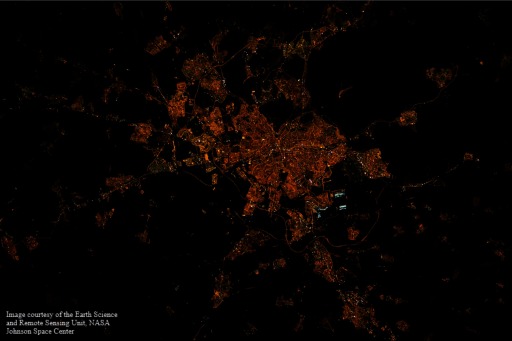
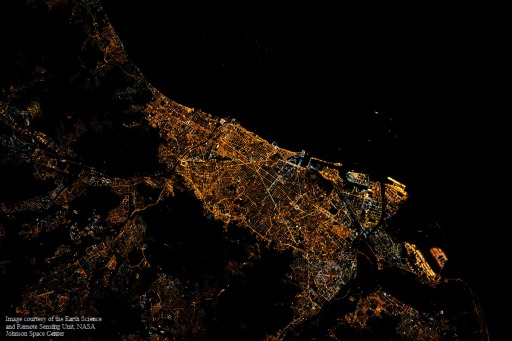
We enrolled 1,219 breast cancer cases, 1,385 female controls, 623 prostate cancer cases, and 879 male controls from 11 Spanish regions in 2008-2013. Indoor ALAN information was obtained through questionnaires. Outdoor ALAN was analyzed using images from the International Space Station (ISS) available for Barcelona and Madrid for 2012-2013, including data of remotely sensed upward light intensity and blue light spectrum information for each geocoded longest residence of each MCC-Spain subject.
Among Barcelona and Madrid participants with information on both indoor and outdoor ALAN, exposure to outdoor ALAN in the blue light spectrum was associated with breast cancer [adjusted odds ratio (OR) for highest vs. lowest tertile, OR=1.47; 95% CI: 1.00, 2.17] and prostate cancer (OR=2.05; 95% CI: 1.38, 3.03). In contrast, those exposed to the highest versus lowest intensity of outdoor ALAN were more likely to be controls than cases, particularly for prostate cancer. Compared with those who reported sleeping in total darkness, men who slept in "quite illuminated" bedrooms had a higher risk of prostate cancer (OR=2.79; 95% CI: 1.55, 5.04), whereas women had a slightly lower risk of breast cancer (OR=0.77; 95% CI: 0.39, 1.51).
Both prostate and breast cancer were associated with high estimated exposure to outdoor ALAN in the blue-enriched light spectrum. https://doi.org/10.1289/EHP1837.
夜班工作、夜间光照暴露(ALAN)和昼夜节律紊乱可能会增加激素依赖性癌症的风险。
我们在一项基于人群的病例对照研究(MCC-Spain)中,评估了睡眠时间暴露于 ALAN 与乳腺癌和前列腺癌之间的关联,研究对象从未上过夜班。我们评估了昼夜时型,这是一种可能与夜间光照适应有关的特征。
我们于 2008-2013 年在西班牙 11 个地区招募了 1219 名乳腺癌病例、1385 名女性对照、623 名前列腺癌病例和 879 名男性对照。通过问卷调查获得室内 ALAN 信息。使用国际空间站(ISS)的图像分析室外 ALAN,这些图像可用于 2012-2013 年的巴塞罗那和马德里,包括每个 MCC-Spain 参与者的最长居住地点的遥感向上光强度和蓝光光谱信息。
在有室内和室外 ALAN 信息的巴塞罗那和马德里参与者中,暴露于蓝光光谱的室外 ALAN 与乳腺癌有关[最高与最低三分位的调整比值比(OR),OR=1.47;95%置信区间(CI):1.00,2.17]和前列腺癌(OR=2.05;95% CI:1.38,3.03)。相比之下,暴露于最高与最低强度的室外 ALAN 的参与者更有可能是对照而非病例,特别是对于前列腺癌。与那些报告在完全黑暗中睡眠的人相比,睡在“相当明亮”的卧室里的男性患前列腺癌的风险更高(OR=2.79;95% CI:1.55,5.04),而女性患乳腺癌的风险略低(OR=0.77;95% CI:0.39,1.51)。
前列腺癌和乳腺癌都与高估计的室外 ALAN 暴露有关,这种暴露在富含蓝光的光谱中。https://doi.org/10.1289/EHP1837.