Low-Beer Daniel, Mahy Mary, Renaud Francoise, Calleja Txema
World Health Organization, Geneva, Switzerland.
UNAIDS, Geneva, Switzerland.
JMIR Public Health Surveill. 2018 Apr 24;4(2):e3. doi: 10.2196/publichealth.8173.
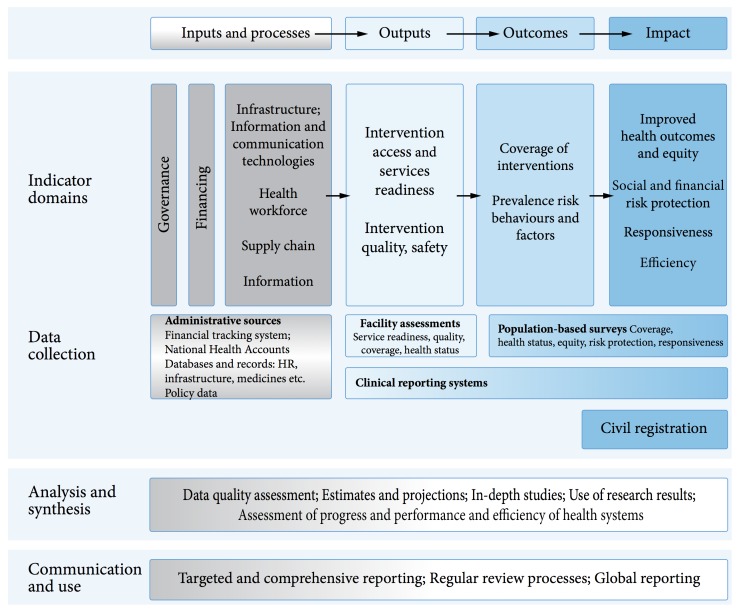
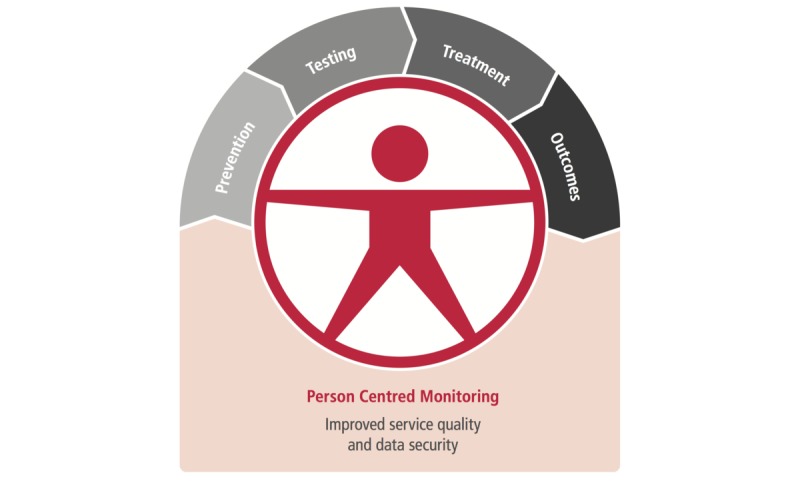
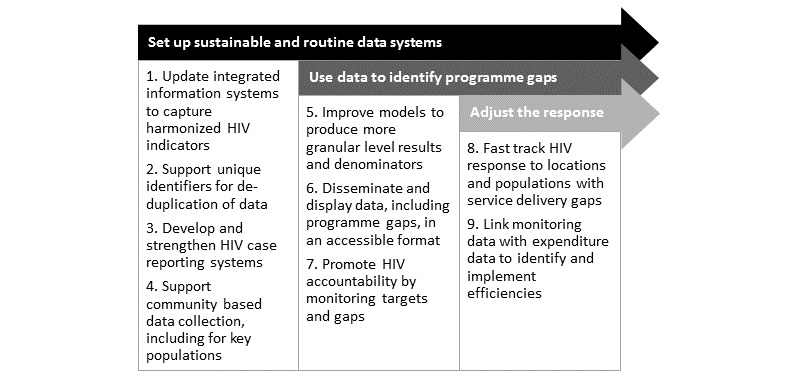
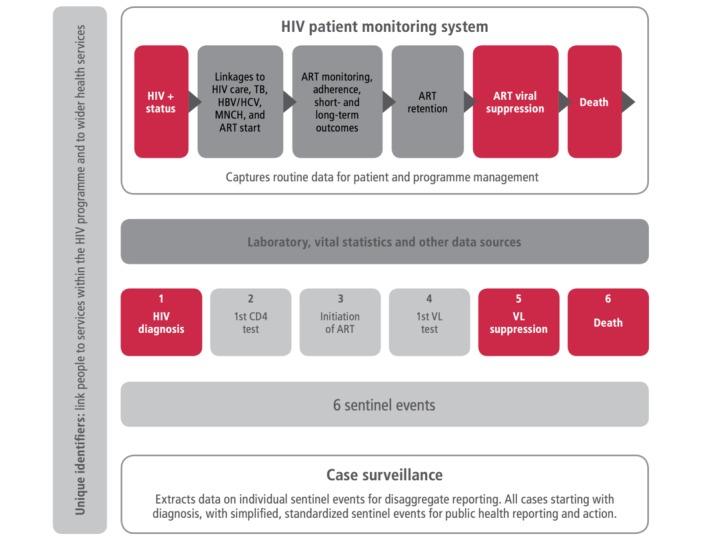
HIV programs have provided a major impetus for investments in surveillance data, with 5-10% of HIV program budgets recommended to support data. However there are questions concerning the sustainability of these investments. The Sustainable Development Goals have consolidated health into one goal and communicable diseases into one target (Target 3.3). Sustainable Development Goals now introduce targets focused specifically on data (Targets 17.18 and 17.19). Data are seen as one of the three systemic issues (in Goal 17) for implementing Sustainable Development Goals, alongside policies and partnerships. This paper reviews the surveillance priorities in the context of the Sustainable Development Goals and highlights the shift from periodic measurement towards sustainable disaggregated, real-time, case, and patient data, which are used routinely to improve programs. Finally, the key directions in developing person-centered monitoring systems are assessed with country examples. The directions contribute to the Sustainable Development Goal focus on people-centered development applied to data.
艾滋病项目为监测数据投资提供了主要动力,建议将5%至10%的艾滋病项目预算用于支持数据工作。然而,这些投资的可持续性存在问题。可持续发展目标已将健康整合为一个目标,并将传染病整合为一个具体目标(具体目标3.3)。可持续发展目标现在引入了专门针对数据的具体目标(具体目标17.18和17.19)。数据被视为实施可持续发展目标的三个系统性问题之一(在目标17中),与政策和伙伴关系并列。本文回顾了可持续发展目标背景下的监测重点,并强调了从定期测量向可持续的分类、实时、病例和患者数据的转变,这些数据被常规用于改进项目。最后,以国家实例评估了开发以人为本的监测系统的关键方向。这些方向有助于可持续发展目标关注应用于数据的以人为本的发展。