Cotoia Antonella, Dibello Floriana, Moscatelli Fiorenzo, Sciusco Alberto, Polito Pietro, Modolo Alberto, Gallo Crescenzio, Cibelli Giuseppe, Cinnella Gilda
Department of Anesthesia, Intensive Care, and Pain Therapy, University of Foggia, Policlinico "OO. Riuniti", Foggia, Italy.
Department of Clinical and Experimental Medicine, University of Foggia, Policlinico "OO. Riuniti", Foggia, Italy.
Anesthesiol Res Pract. 2018 Mar 5;2018:9683780. doi: 10.1155/2018/9683780. eCollection 2018.
The aim of this study was to investigate the effects of listening to Tibetan music on anxiety and endocrine, autonomic, cognitive responses in patients waiting for urologic surgery.
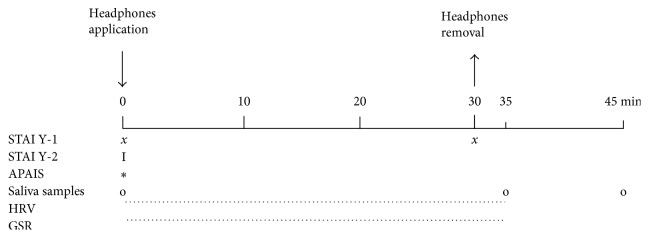
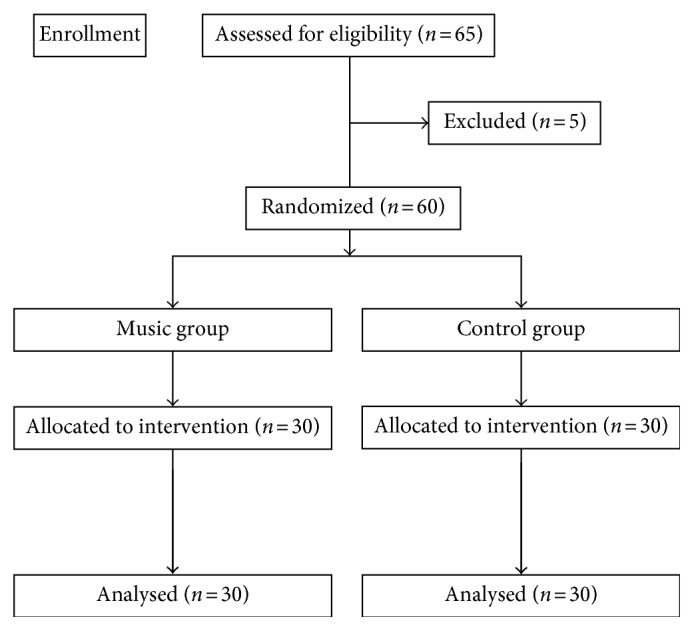
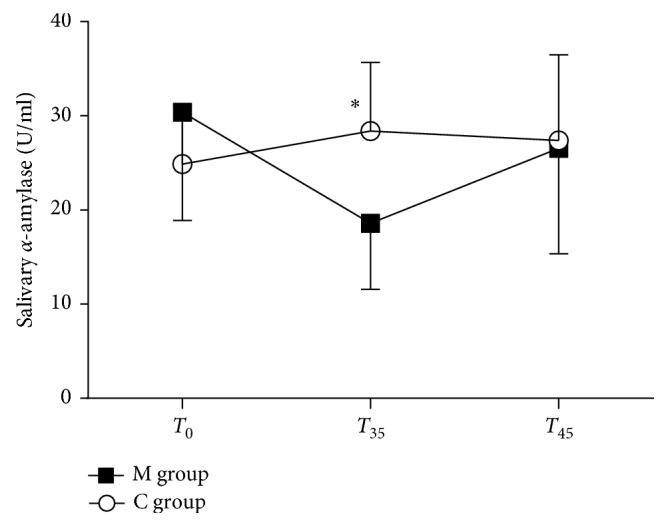
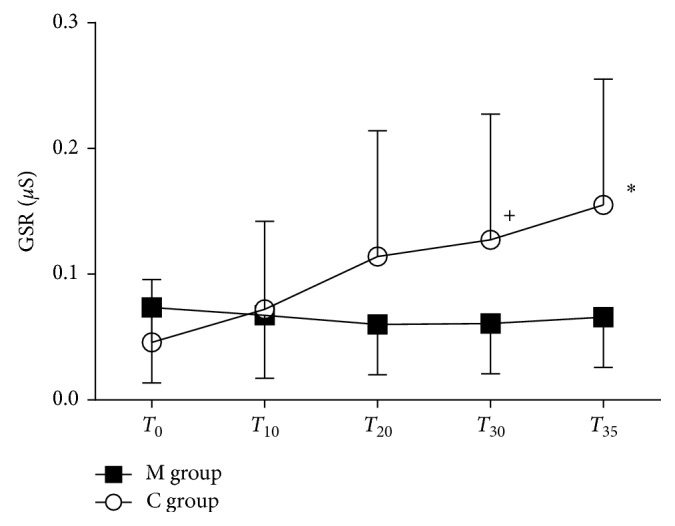
Sixty patients waiting for surgery were enrolled to the study. They were randomized in music (M) and control (C) groups. The M group listened to a low-frequency Tibetan music for 30 min (T-T) through headphones, and the C group wore headphones with no sound. The State Trait Anxiety Inventory Questionnaire (STAI) Y-1 was administered at T and T. Normalized low (LFnu) and high frequencies (HFnu) of heart rate variability, LF/HF ratio, and galvanic skin response (GRS) data were analyzed at T, T, T, T, and T. The salivary -amylase (sAA) samples were collected at T, T, and T.
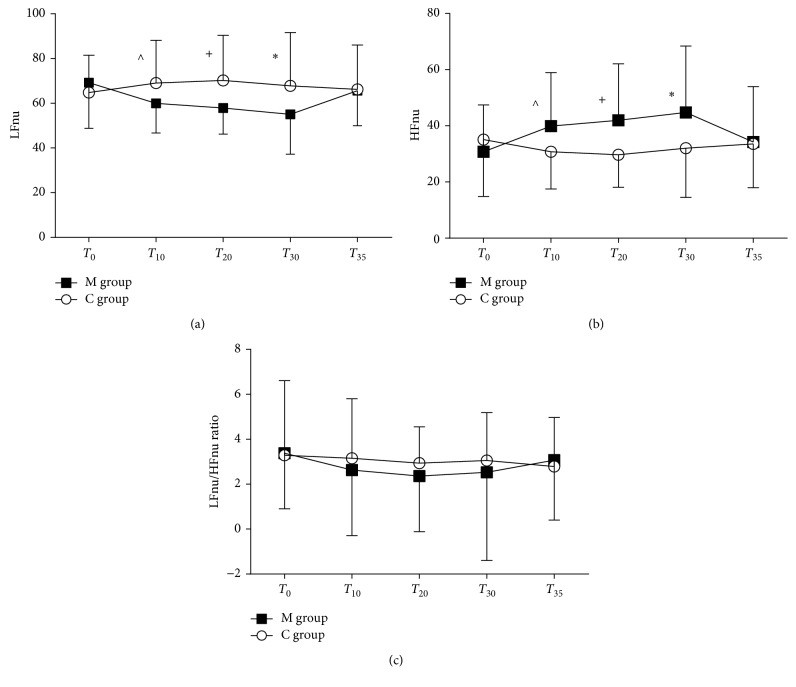
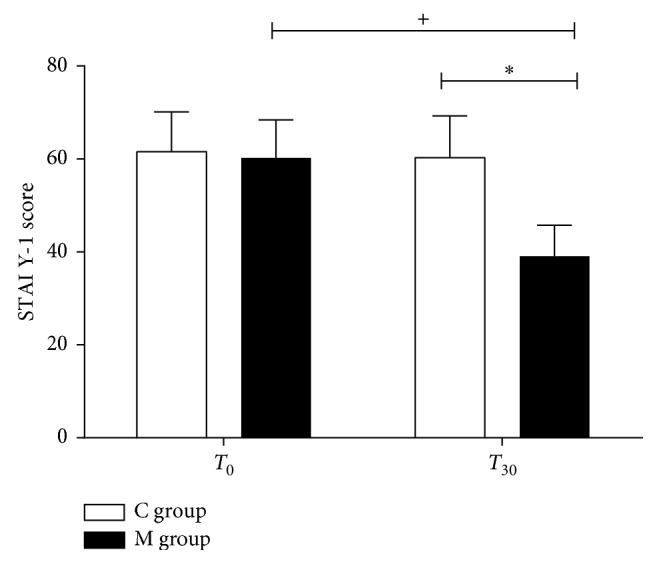
In the M group, the STAI Y-1 score decreased at T versus baseline ( < 0.001), sAA levels decreased at T versus T(=0.004), and GSR remained unchanged. In the C group, the STAI Y-1 score remained unchanged, sAA level increased at T versus T( < 0.001), and GSR slightly increased at T versus baseline (=0.359). LFnu was lower, and HFnu was significantly higher (T-T) in M versus C group. Mean LF/HF ratio slightly reduced in the M group.
Our results suggest that preoperative listening to relaxing Tibetan music might be a useful strategy to manage preoperative anxiety.
本研究旨在探讨聆听藏族音乐对等待泌尿外科手术患者的焦虑以及内分泌、自主神经、认知反应的影响。
60名等待手术的患者被纳入本研究。他们被随机分为音乐组(M)和对照组(C)。M组通过耳机聆听30分钟低频藏族音乐(T-T),C组佩戴无声耳机。在T和T时进行状态-特质焦虑量表问卷(STAI)Y-1测评。在T、T、T、T和T时分析心率变异性的归一化低频(LFnu)和高频(HFnu)、LF/HF比值以及皮肤电反应(GRS)数据。在T、T和T时采集唾液淀粉酶(sAA)样本。
在M组中,与基线相比,T时STAI Y-1评分降低(<0.001),与T相比,T时sAA水平降低(=0.004),GSR保持不变。在C组中,STAI Y-1评分保持不变,与T相比,T时sAA水平升高(<0.001),与基线相比,T时GSR略有升高(=0.359)。与C组相比,M组的LFnu较低,HFnu显著较高(T-T)。M组的平均LF/HF比值略有降低。
我们的结果表明,术前聆听舒缓的藏族音乐可能是一种管理术前焦虑的有效策略。