Department of Biological Engineering, Massachusetts Institute of Technology, Cambridge, MA, 02139, USA.
Department of Chemical Engineering, Massachusetts Institute of Technology, Cambridge, MA, 02139, USA.
Sci Rep. 2018 Apr 25;8(1):6548. doi: 10.1038/s41598-018-24677-5.
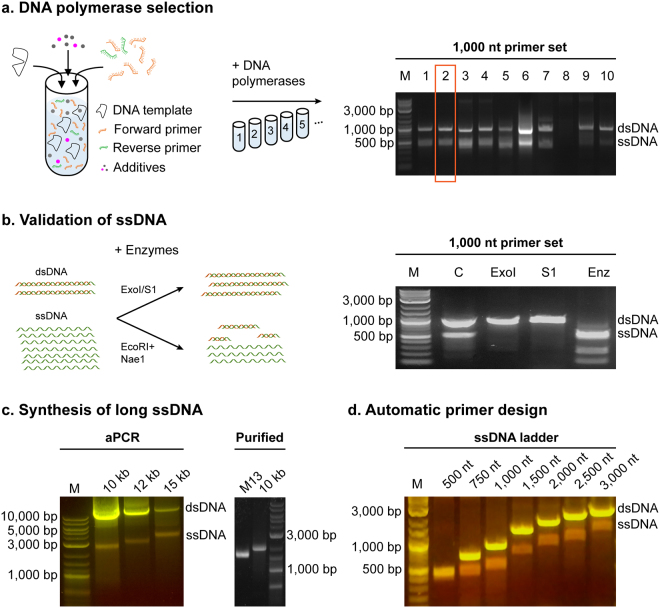
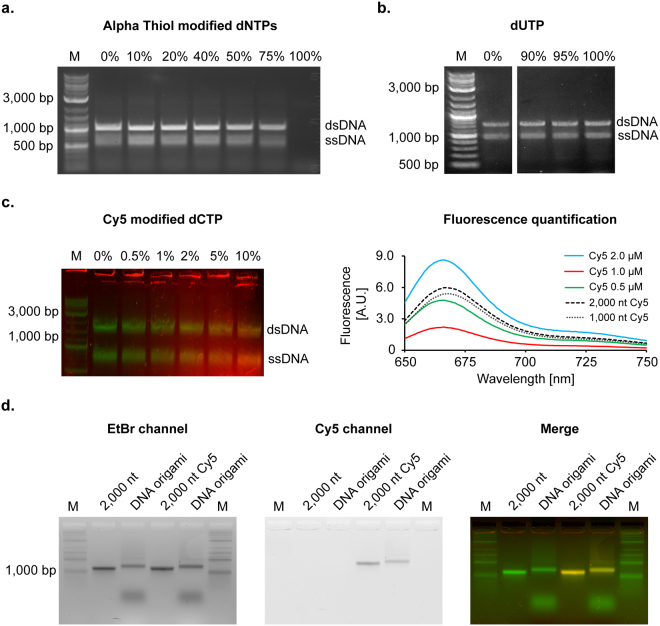
Single-stranded DNA (ssDNA) increases the likelihood of homology directed repair with reduced cellular toxicity. However, ssDNA synthesis strategies are limited by the maximum length attainable, ranging from a few hundred nucleotides for chemical synthesis to a few thousand nucleotides for enzymatic synthesis, as well as limited control over nucleotide composition. Here, we apply purely enzymatic synthesis to generate ssDNA greater than 15 kilobases (kb) using asymmetric PCR, and illustrate the incorporation of diverse modified nucleotides for therapeutic and theranostic applications.
单链 DNA(ssDNA)增加了同源定向修复的可能性,同时降低了细胞毒性。然而,ssDNA 的合成策略受到可达最大长度的限制,从化学合成的几百个核苷酸到酶合成的几千个核苷酸不等,并且对核苷酸组成的控制也很有限。在这里,我们应用不对称 PCR 进行纯酶合成,生成大于 15 千碱基(kb)的 ssDNA,并说明如何将各种修饰核苷酸用于治疗和治疗应用。