Faculty of Medicine, Institute of Clinical Medicine, Clinic of Psychiatry, Vilnius University, Vilnius, Lithuania.
Faculty of Philosophy, Institute of Psychology, Vilnius University, Vilnius, Lithuania.
BMC Public Health. 2018 Apr 24;18(1):548. doi: 10.1186/s12889-018-5436-3.
From the public health perspective, epidemiological data of child mental health and psychosocial correlates were necessary and very lacking in Lithuanian society that has been undergoing rapid socio-economic change since the past decades. Together with determining the prevalence rates of disorders and assessing the needs for the services, this study has also shifted attention from the highly selective samples of children attending children and adolescent mental health services towards less severe cases of psychopathology as well as different attitudes of parents and teachers. The aim of the first epidemiological study in Lithuania was to identify the prevalence of psychiatric disorders in the community sample of children.
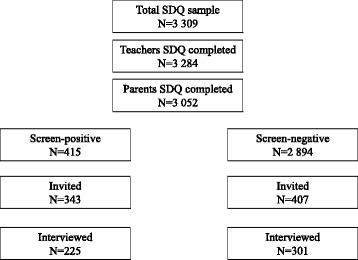
Child psychiatric disorders were investigated in a representative sample of 3309 children aged 7-16 years (1162 7-10-year-olds and 2147 11-16-year-olds), using a two-phase design with the Lithuanian version of the Strengths and Difficulties Questionnaire (SDQ) in the first screening phase, and the Development and Well-Being Assessment (DAWBA) in the second diagnostic phase.
The estimated point prevalence of ICD-10 psychiatric disorders was 13.1% for the total sample (14.0% for the child sample and 12.1% for adolescent sample). The most common groups of disorders were Conduct disorders 6.6% (7.1% for child sample and 6.0% for adolescent sample), Anxiety disorders 5.0% (5.9% for child sample and 6.0% for adolescent sample), with Hyperkinesis being less common 2.0% (2.7% for child sample and 1.2% for adolescent sample). Potential risk factors were related to individual characteristics of the child (gender, poor general health, and stressful life experiences), and the family (single parenthood, foster care, unfavourable family climate, disciplining difficulties, worries related to TV or computer use).
The overall prevalence of youth psychiatric disorders was relatively high in this representative Lithuanian sample compared to Western European countries. The SDQ and DAWBA measures appear useful for the further research and clinical practice in this society.
从公共卫生的角度来看,立陶宛社会经历了几十年的快速社会经济变革,因此需要了解儿童心理健康和心理社会相关因素的流行病学数据,但这方面的数据非常缺乏。除了确定疾病的患病率并评估服务需求外,本研究还将注意力从接受儿童和青少年心理健康服务的高度选择性儿童样本转移到了较轻的精神病理学病例以及父母和教师的不同态度。立陶宛的第一项流行病学研究旨在确定社区儿童样本中的精神疾病患病率。
使用立陶宛版的长处和困难问卷(SDQ)在第一阶段进行筛查,使用发展和福祉评估(DAWBA)在第二阶段进行诊断,对 3309 名 7-16 岁儿童(1162 名 7-10 岁儿童和 2147 名 11-16 岁儿童)的社区样本进行儿童精神疾病调查。
总样本的 ICD-10 精神疾病估计点患病率为 13.1%(儿童样本为 14.0%,青少年样本为 12.1%)。最常见的疾病组为行为障碍 6.6%(儿童样本为 7.1%,青少年样本为 6.0%),焦虑障碍 5.0%(儿童样本为 5.9%,青少年样本为 6.0%),多动障碍的发病率较低为 2.0%(儿童样本为 2.7%,青少年样本为 1.2%)。潜在的风险因素与儿童的个体特征(性别、整体健康状况差和生活压力大)以及家庭(单亲家庭、寄养、不良家庭氛围、管教困难、与电视或计算机使用相关的担忧)有关。
与西欧国家相比,立陶宛代表性样本中青少年精神疾病的总体患病率相对较高。SDQ 和 DAWBA 测量方法似乎对该社会的进一步研究和临床实践有用。