Broad Institute of the Massachusetts Institute of Technology (MIT) and Harvard, Cambridge, MA 02142, USA.
Center for Systems Biology, Department of Organismal and Evolutionary Biology, Harvard University, Cambridge, MA 02138, USA.
Science. 2018 Apr 27;360(6387):444-448. doi: 10.1126/science.aas8836.
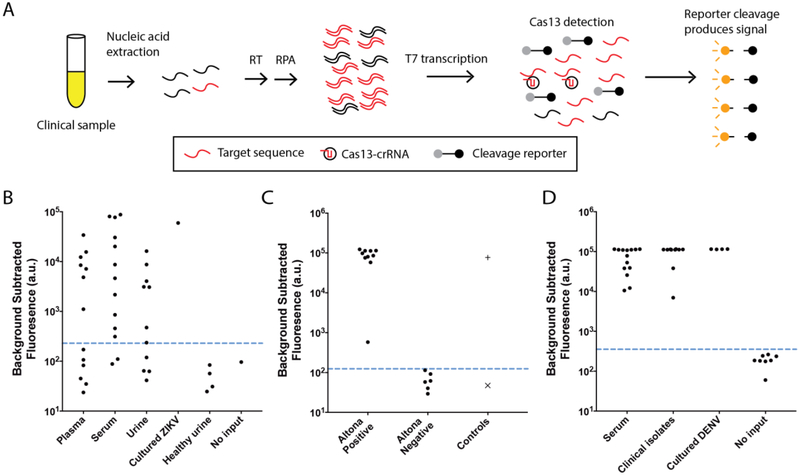
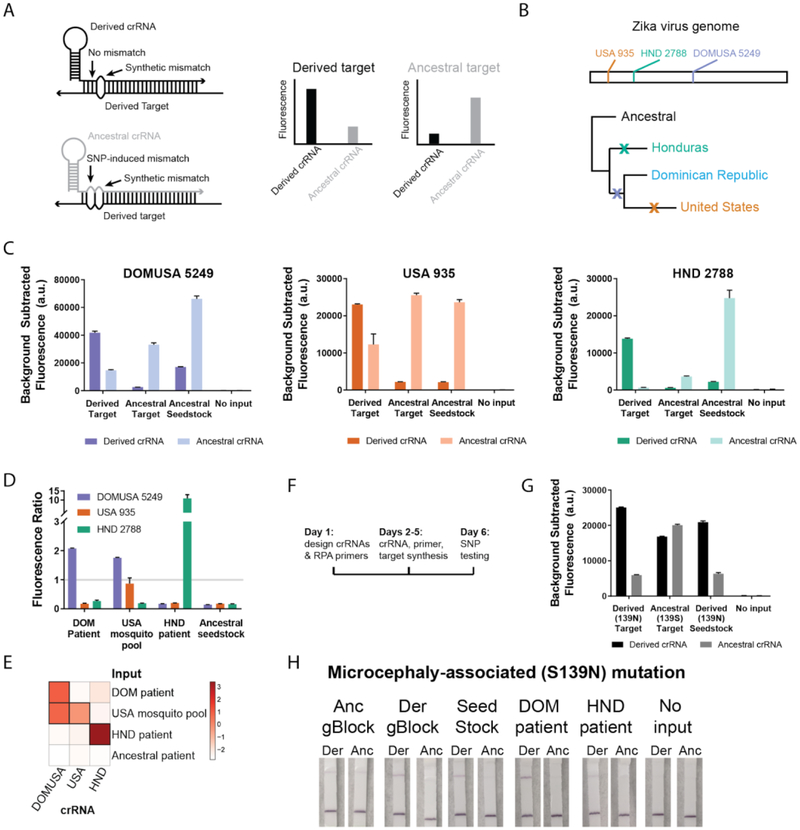
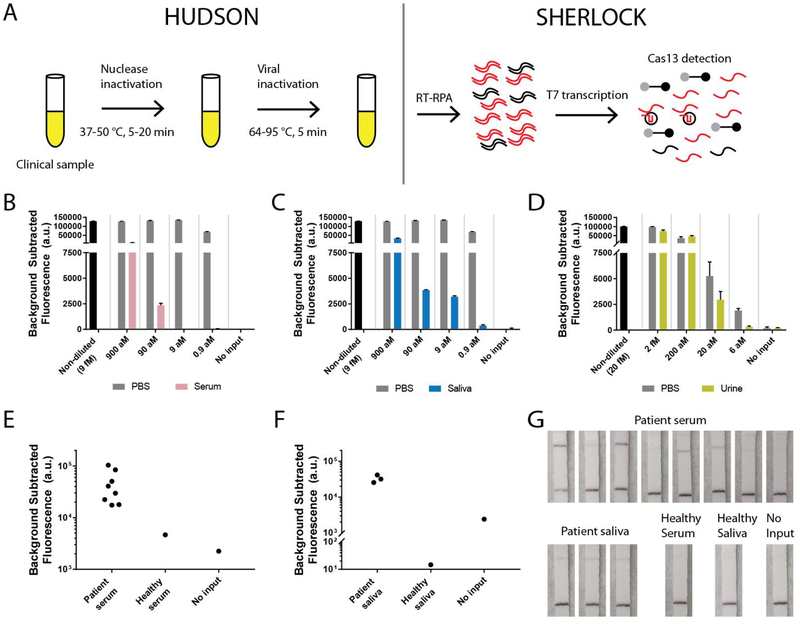
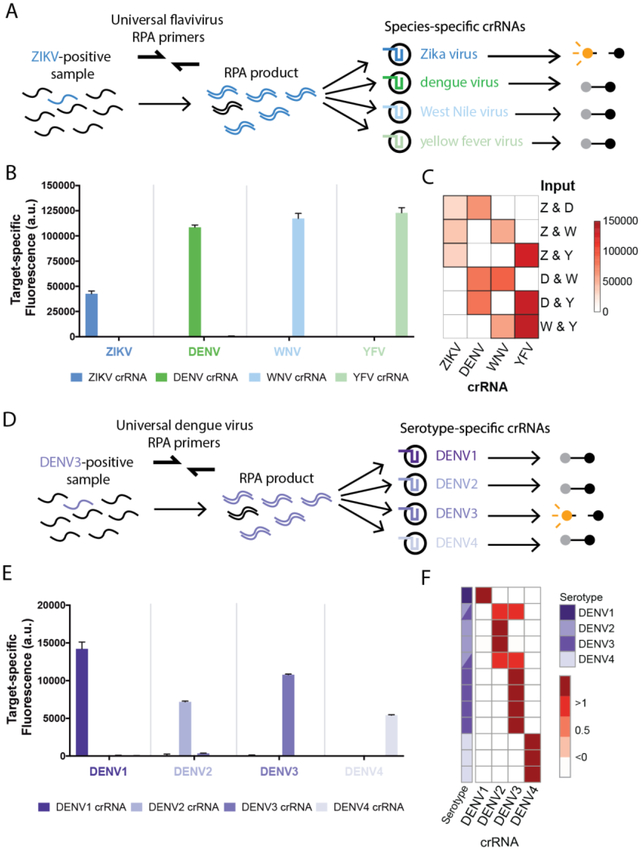
Mitigating global infectious disease requires diagnostic tools that are sensitive, specific, and rapidly field deployable. In this study, we demonstrate that the Cas13-based SHERLOCK (specific high-sensitivity enzymatic reporter unlocking) platform can detect Zika virus (ZIKV) and dengue virus (DENV) in patient samples at concentrations as low as 1 copy per microliter. We developed HUDSON (heating unextracted diagnostic samples to obliterate nucleases), a protocol that pairs with SHERLOCK for viral detection directly from bodily fluids, enabling instrument-free DENV detection directly from patient samples in <2 hours. We further demonstrate that SHERLOCK can distinguish the four DENV serotypes, as well as region-specific strains of ZIKV from the 2015-2016 pandemic. Finally, we report the rapid (<1 week) design and testing of instrument-free assays to detect clinically relevant viral single-nucleotide polymorphisms.
减轻全球传染病需要敏感、特异、快速现场部署的诊断工具。在这项研究中,我们证明了 Cas13 为基础的 SHERLOCK(特异性高灵敏度酶报告解锁)平台可以在低至每微升 1 个拷贝的浓度下检测寨卡病毒(ZIKV)和登革热病毒(DENV)。我们开发了 HUDSON(加热未提取的诊断样本以消除核酸酶),这一方案与 SHERLOCK 配对,可直接从体液中进行病毒检测,使无仪器的登革热病毒检测能在不到 2 小时内直接从患者样本中进行。我们进一步证明 SHERLOCK 可以区分四种 DENV 血清型,以及来自 2015-2016 年大流行的 ZIKV 特定地区株。最后,我们报告了快速(<1 周)设计和测试无仪器检测方法,以检测临床相关的病毒单核苷酸多态性。