Singh S P, McClung J A, Bellner L, Cao J, Waldman M, Schragenheim J, Arad M, Hochhauser E, Falck J R, Weingarten J A, Peterson S J, Abraham N G
Departments of Pharmacology and Medicine, New York Medical College, Valhalla, New York, USA.
Departments of Medicine, New York Medical College, Valhalla, New York, USA.
Cardiovasc Pharm Open Access. 2018;7(1). doi: 10.4172/2329-6607.1000233. Epub 2018 Feb 8.
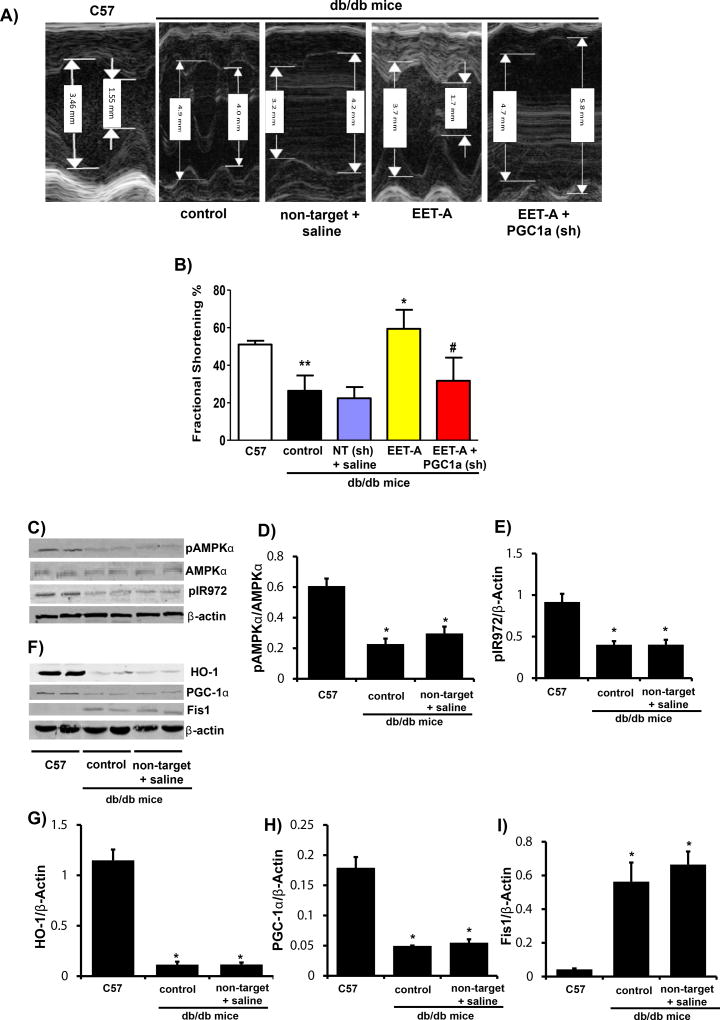
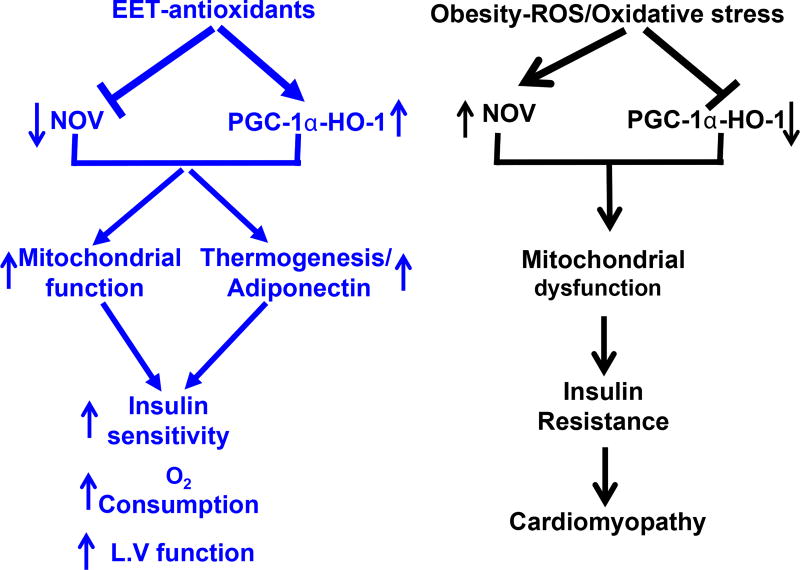
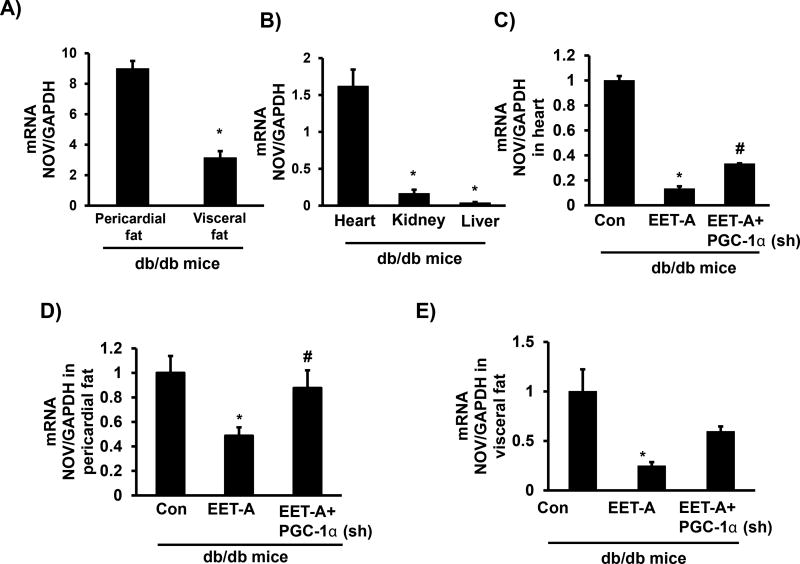
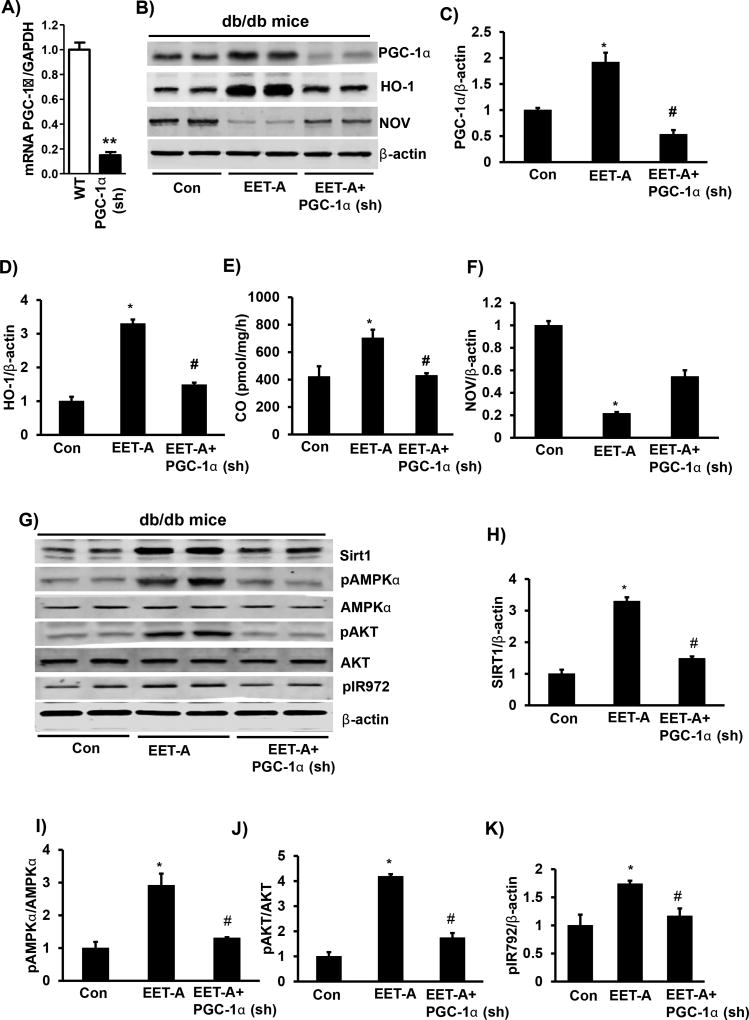
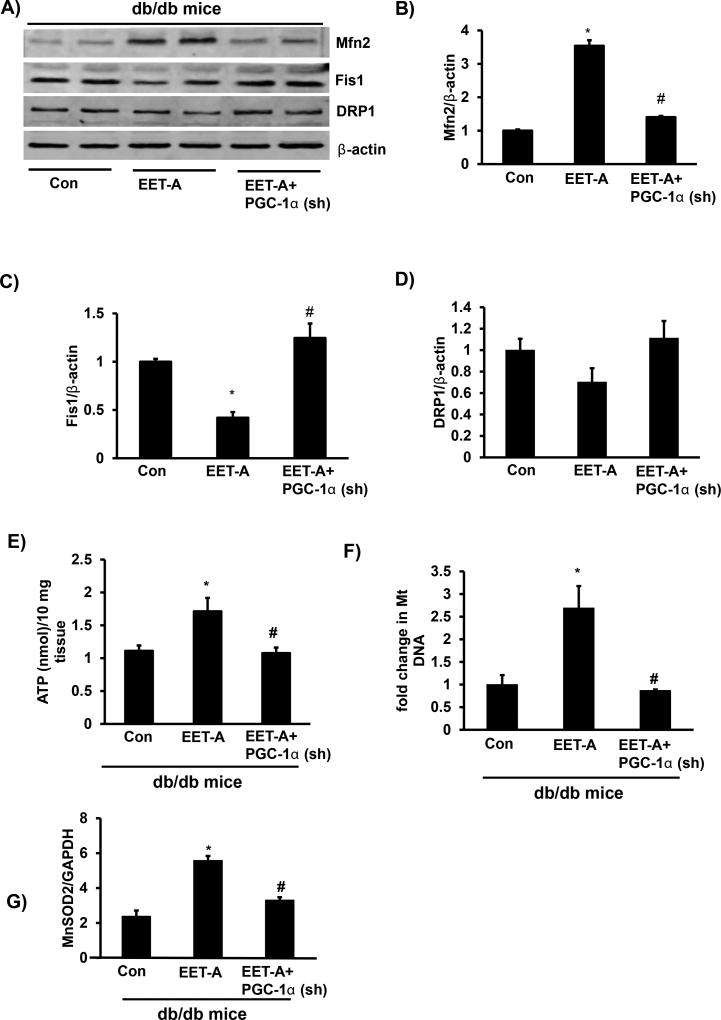
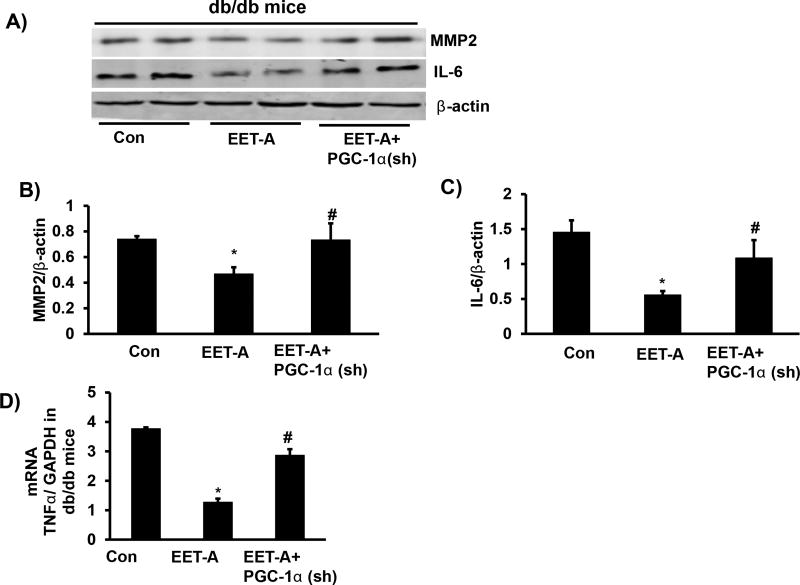
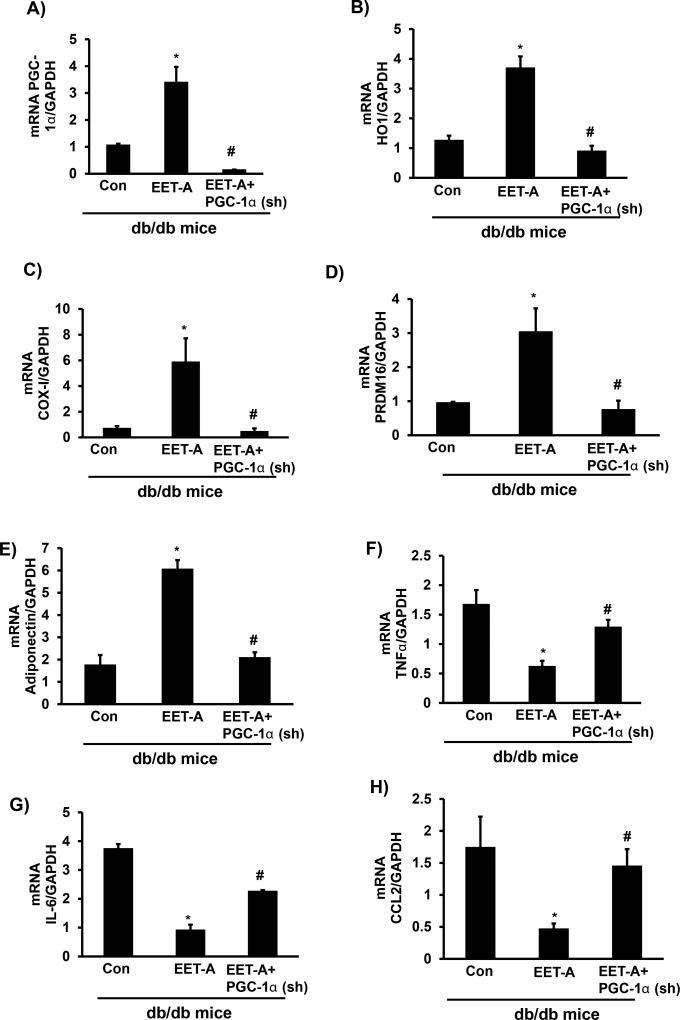
We have previously shown that an Epoxyeicosatrienoic Acid (EET) -agonist has pleiotropic effects and reverses cardiomyopathy by decreasing inflammatory molecules and increasing antioxidant signaling. We hypothesized that administration of an EET agonist would increase Peroxisome proliferator-activated receptor-gamma coactivator (PGC-1α), which controls mitochondrial function and induction of HO-1 and negatively regulates the expression of the proinflammatory adipokines CCN3/NOV in cardiac and pericardial tissues. This pathway would be expected to further improve left ventricular (LV) systolic function as well as increase insulin receptor phosphorylation. Measurement of the effect of an EET agonist on oxygen consumption, fractional shortening, blood glucose levels, thermogenic and mitochondrial signaling proteins was performed. Control obese mice developed signs of metabolic syndrome including insulin resistance, hypertension, inflammation, LV dysfunction, and increased NOV expression in pericardial adipose tissue. EET agonist intervention decreased pericardial adipose tissue expression of NOV, while normalized FS, increased PGC-1α, HO-1 levels, insulin receptor phosphorylation and improved mitochondrial function, theses beneficial effect were reversed by deletion of PGC-1α. These studies demonstrate that an EET agonist increases insulin receptor phosphorylation, mitochondrial and thermogenic gene expression, decreased cardiac and pericardial tissue NOV levels, and ameliorates cardiomyopathy in an obese mouse model of the metabolic syndrome.
我们之前已经表明,环氧二十碳三烯酸(EET)激动剂具有多效性,可通过减少炎症分子和增加抗氧化信号来逆转心肌病。我们假设给予EET激动剂会增加过氧化物酶体增殖物激活受体γ共激活因子(PGC-1α),其可控制线粒体功能并诱导HO-1表达,同时负向调节心脏和心包组织中促炎脂肪因子CCN3/NOV的表达。预期该途径会进一步改善左心室(LV)收缩功能,并增加胰岛素受体磷酸化。我们对EET激动剂对耗氧量、缩短分数、血糖水平、产热和线粒体信号蛋白的影响进行了测定。对照肥胖小鼠出现了代谢综合征的迹象,包括胰岛素抵抗、高血压、炎症、左心室功能障碍以及心包脂肪组织中NOV表达增加。EET激动剂干预降低了心包脂肪组织中NOV的表达,同时使缩短分数正常化,增加了PGC-1α、HO-1水平,提高了胰岛素受体磷酸化并改善了线粒体功能,而这些有益作用在敲除PGC-1α后被逆转。这些研究表明,在代谢综合征的肥胖小鼠模型中,EET激动剂可增加胰岛素受体磷酸化、线粒体和产热基因表达,降低心脏和心包组织中NOV水平,并改善心肌病。