Cell Biology and Genetics Unit, Department of Zoology, University of Ibadan, Ibadan, Nigeria.
Centre for Materials Characterization, CSIR-National Chemical Laboratory, Pune, India.
PLoS Negl Trop Dis. 2018 Apr 30;12(4):e0006452. doi: 10.1371/journal.pntd.0006452. eCollection 2018 Apr.
Metabolic fingerprinting analysis can offer insights into underlying reactions in a biological system; hence it is crucial to the understanding of disease pathogenesis and could provide useful tools for discovering biomarkers. We sought to examine the urine and plasma metabolome in individuals affected by urogenital schistosomiasis and its associated-bladder pathologies.
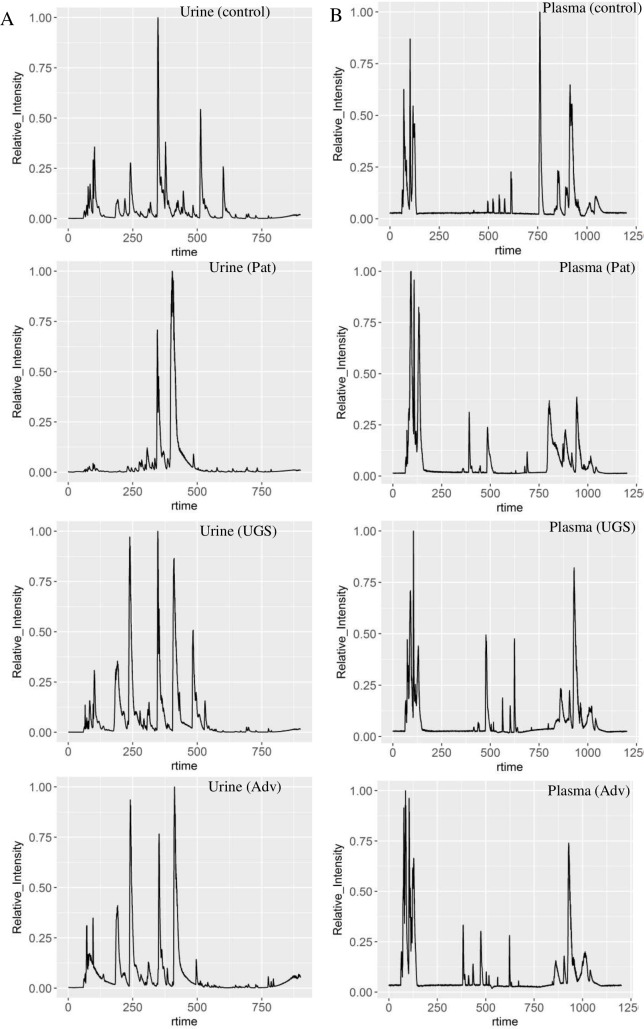
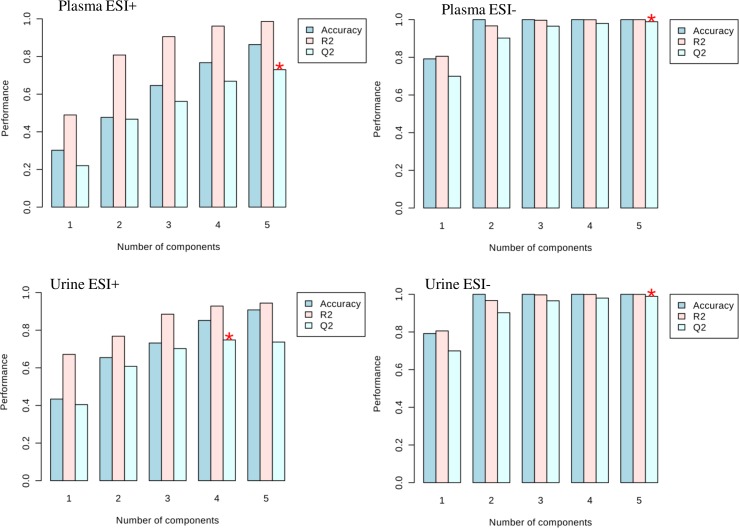
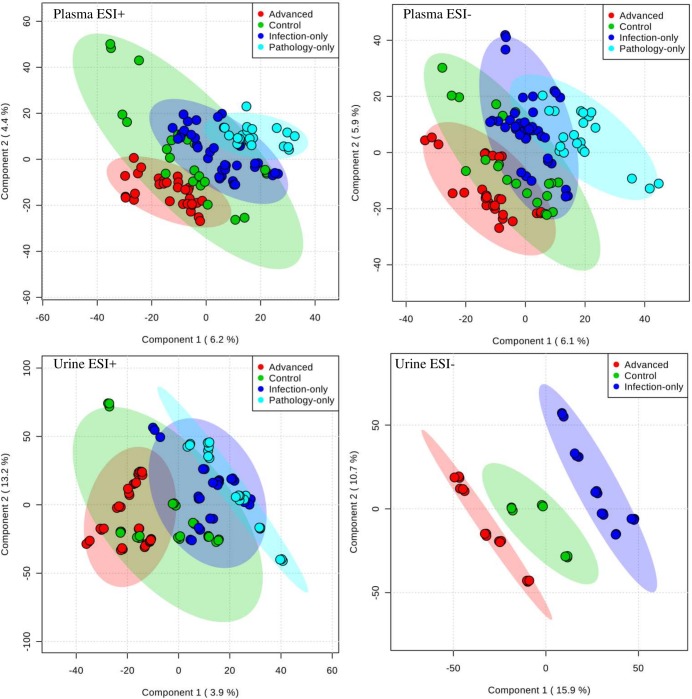
Blood and midstream urine were obtained from volunteers who matched our inclusion criteria among residents from Eggua, southwestern Nigeria. Samples were screened by urinalysis, microscopy, PCR and ultrasonography, and categorised as advanced (urogenital schistosomiasis associated-bladder pathologies), infection-only (urogenital schistosomiasis alone) and controls (no infection and no pathology). Metabolites were extracted and data acquired with ultra high-performance liquid chromatography coupled with Thermo Q-Exactive orbitrap HRMS. Data was analysed with MetaboAnalyst, Workflow4Metabolomics, HMDB, LipidMaps and other bioinformatics tools, with univariate and multivariate statistics for metabolite selection.
There were low levels of host sex steroids, and high levels of several benzenoids, catechols and lipids (including ganglioside, phosphatidylcholine and phosphatidylethanolamine), in infection-only and advanced cases (FDR<0.05, VIP>2, delta>2.0). Metabolites involved in biochemical pathways related to chorismate production were abundant in controls, while those related to choline and sphingolipid metabolism were upregulated in advanced cases (FDR<0.05). Some of these human host and Schistosoma haematobium molecules, including catechol estrogens, were good markers to distinguish infection-only and advanced cases.
Altered glycerophospholipid and sphingolipid metabolism could be key factors promoting the development of bladder pathologies and tumours during urogenital schistosomiasis.
代谢指纹分析可以提供对生物系统中潜在反应的深入了解;因此,它对理解疾病发病机制至关重要,并可为发现生物标志物提供有用的工具。我们试图检查受泌尿生殖系统血吸虫病及其相关膀胱病理影响的个体的尿液和血浆代谢组。
从符合我们在尼日利亚西南部 Eggua 居民中纳入标准的志愿者中获得血液和中段尿液。通过尿液分析、显微镜检查、PCR 和超声检查对样本进行筛选,并分为晚期(泌尿生殖系统血吸虫病相关膀胱病理)、感染仅(泌尿生殖系统血吸虫病)和对照组(无感染和无病理)。提取代谢物,使用超高效液相色谱与 Thermo Q-Exactive orbitrap HRMS 采集数据。使用 MetaboAnalyst、Workflow4Metabolomics、HMDB、LipidMaps 和其他生物信息学工具分析数据,使用单变量和多变量统计进行代谢物选择。
感染仅和晚期病例中宿主性激素水平较低,而苯并呋喃、儿茶酚和脂质(包括神经节苷脂、磷脂酰胆碱和磷脂酰乙醇胺)水平较高(FDR<0.05,VIP>2,delta>2.0)。与分支酸生成相关的生物化学途径中的代谢物在对照组中丰富,而与胆碱和鞘脂代谢相关的代谢物在晚期病例中上调(FDR<0.05)。这些人类宿主和曼氏血吸虫分子中的一些,包括儿茶酚雌激素,是区分感染仅和晚期病例的良好标志物。
甘油磷脂和鞘脂代谢的改变可能是促进泌尿生殖系统血吸虫病期间膀胱病理和肿瘤发展的关键因素。