BGPI, INRA, Montpellier SupAgro, Univ. Montpellier, Cirad, TA A-54/K, Campus de Baillarguet, 34398, Montpellier cedex 5, France.
ASTRE, INRA, CIRAD, Univ. Montpellier, Montpellier, France.
PLoS Comput Biol. 2018 Apr 30;14(4):e1006085. doi: 10.1371/journal.pcbi.1006085. eCollection 2018 Apr.
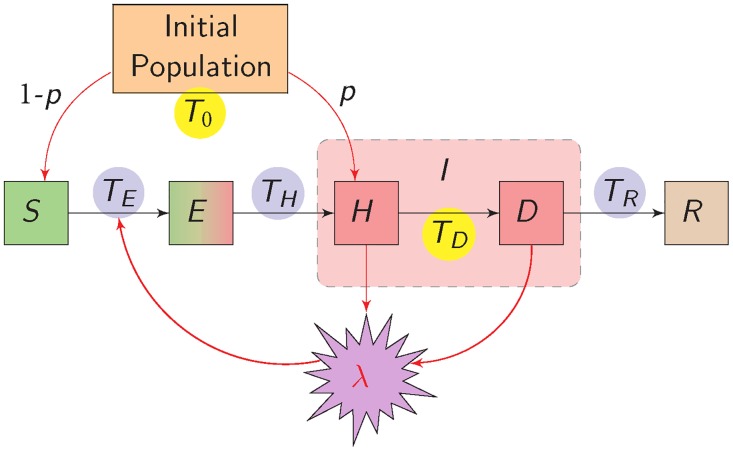
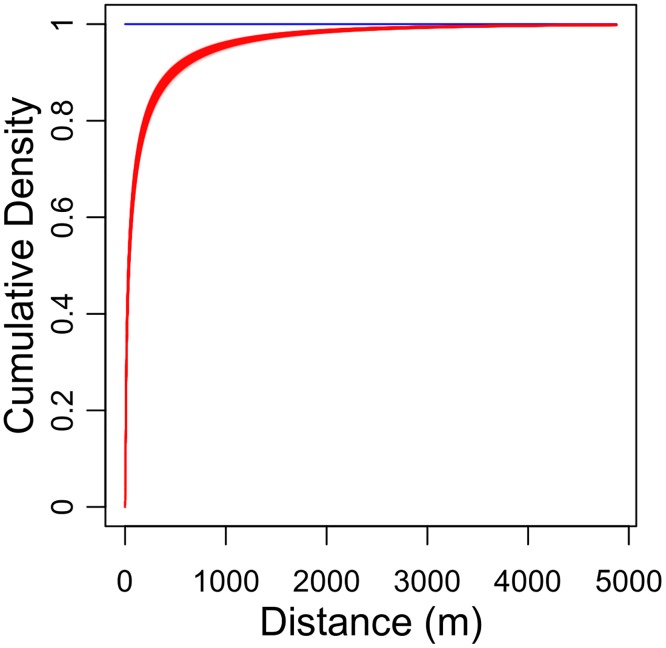
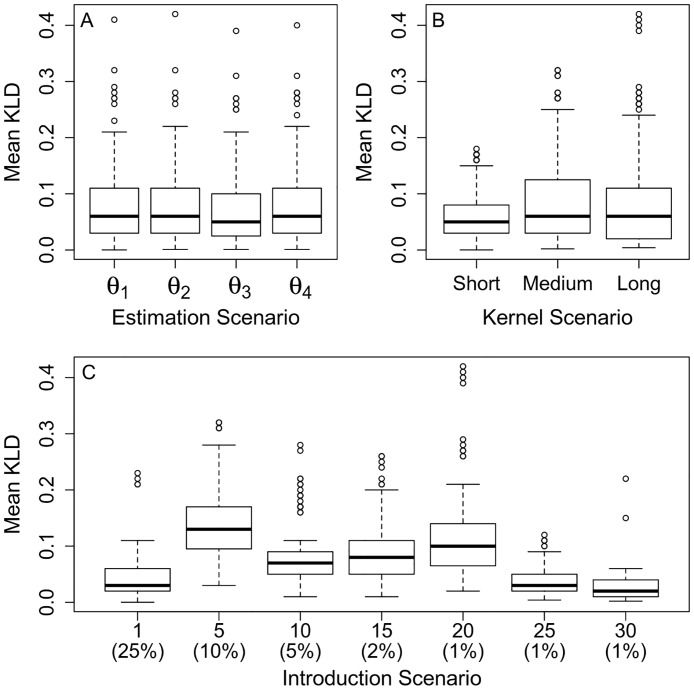
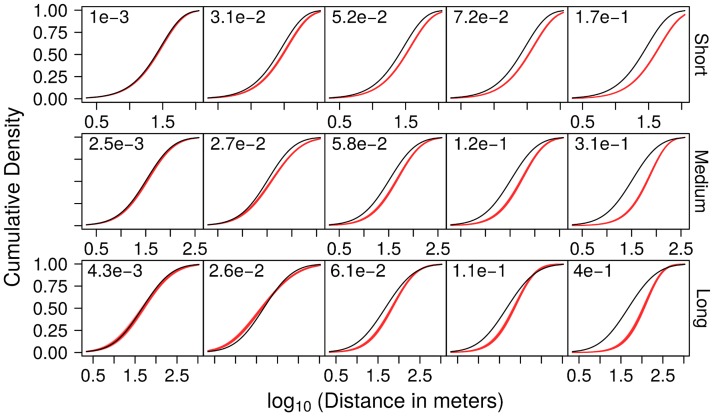
Characterising the spatio-temporal dynamics of pathogens in natura is key to ensuring their efficient prevention and control. However, it is notoriously difficult to estimate dispersal parameters at scales that are relevant to real epidemics. Epidemiological surveys can provide informative data, but parameter estimation can be hampered when the timing of the epidemiological events is uncertain, and in the presence of interactions between disease spread, surveillance, and control. Further complications arise from imperfect detection of disease and from the huge number of data on individual hosts arising from landscape-level surveys. Here, we present a Bayesian framework that overcomes these barriers by integrating over associated uncertainties in a model explicitly combining the processes of disease dispersal, surveillance and control. Using a novel computationally efficient approach to account for patch geometry, we demonstrate that disease dispersal distances can be estimated accurately in a patchy (i.e. fragmented) landscape when disease control is ongoing. Applying this model to data for an aphid-borne virus (Plum pox virus) surveyed for 15 years in 605 orchards, we obtain the first estimate of the distribution of flight distances of infectious aphids at the landscape scale. About 50% of aphid flights terminate beyond 90 m, which implies that most infectious aphids leaving a tree land outside the bounds of a 1-ha orchard. Moreover, long-distance flights are not rare-10% of flights exceed 1 km. By their impact on our quantitative understanding of winged aphid dispersal, these results can inform the design of management strategies for plant viruses, which are mainly aphid-borne.
描述病原体在自然环境中的时空动态是确保其有效预防和控制的关键。然而,在与实际疫情相关的规模上估计扩散参数是非常困难的。流行病学调查可以提供有价值的数据,但当流行病学事件的时间不确定时,以及疾病传播、监测和控制之间存在相互作用时,参数估计可能会受到阻碍。进一步的复杂性来自于疾病检测的不完善以及来自景观水平调查的大量个体宿主数据。在这里,我们提出了一个贝叶斯框架,通过在一个明确结合疾病传播、监测和控制过程的模型中对相关不确定性进行整合,克服了这些障碍。我们使用一种新颖的、计算效率高的方法来考虑斑块的几何形状,当疾病控制正在进行时,我们证明了在一个斑块状(即破碎化)的景观中可以准确估计疾病的扩散距离。将该模型应用于在 605 个果园中进行了 15 年调查的一种蚜虫传播病毒(李痘病毒)的数据,我们首次获得了在景观尺度上传染性蚜虫飞行距离分布的估计。大约 50%的蚜虫飞行终止于 90 米之外,这意味着大多数离开一棵树的传染性蚜虫都落在 1 公顷果园的范围之外。此外,长距离飞行并不罕见——10%的飞行超过 1 公里。这些结果通过对我们对带翅膀的蚜虫扩散的定量理解的影响,可以为植物病毒的管理策略提供信息,这些病毒主要是通过蚜虫传播的。