Department of Cardiac Surgery, University Hospitals of Leicester NHS Trust, Leicester, UK.
Department of Biomedical Engineering, University of Strathclyde, Glasgow, UK.
Biomed Eng Online. 2018 May 2;17(1):52. doi: 10.1186/s12938-018-0491-7.
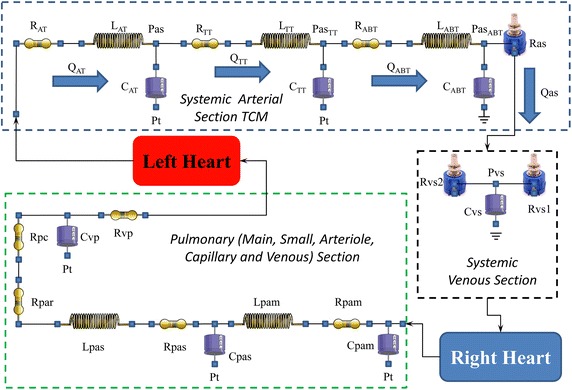
Modelling and simulation may become clinically applicable tools for detailed evaluation of the cardiovascular system and clinical decision-making to guide therapeutic intervention. Models based on pressure-volume relationship and zero-dimensional representation of the cardiovascular system may be a suitable choice given their simplicity and versatility. This approach has great potential for application in heart failure where the impact of left ventricular assist devices has played a significant role as a bridge to transplant and more recently as a long-term solution for non eligible candidates.
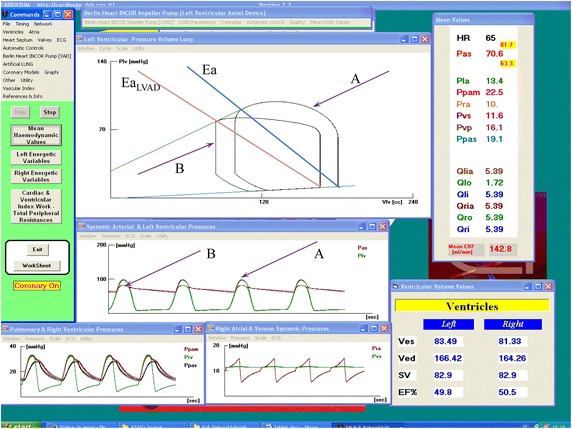
We sought to investigate the value of simulation in the context of three heart failure patients with a view to predict or guide further management. CARDIOSIM was the software used for this purpose. The study was based on retrospective analysis of haemodynamic data previously discussed at a multidisciplinary meeting. The outcome of the simulations addressed the value of a more quantitative approach in the clinical decision process.
Although previous experience, co-morbidities and the risk of potentially fatal complications play a role in clinical decision-making, patient-specific modelling may become a daily approach for selection and optimisation of device-based treatment for heart failure patients. Willingness to adopt this integrated approach may be the key to further progress.
建模和模拟可能成为心血管系统详细评估和指导治疗干预的临床应用工具。基于压力-容积关系和心血管系统零维表示的模型因其简单性和通用性,可能是一个合适的选择。这种方法在心衰患者中具有很大的应用潜力,左心室辅助设备的影响已成为移植的桥梁,最近也成为非合格患者的长期解决方案。
我们旨在通过对三名心力衰竭患者的模拟情况进行调查,以预测或指导进一步的管理。为此目的使用了 CARDIOSIM 软件。该研究基于先前在多学科会议上讨论的血流动力学数据的回顾性分析。模拟结果解决了在临床决策过程中采用更定量方法的价值。
尽管先前的经验、合并症和潜在致命并发症的风险在临床决策中发挥作用,但患者特异性建模可能成为心力衰竭患者选择和优化基于设备治疗的日常方法。愿意采用这种综合方法可能是进一步发展的关键。