Department of Neuroscience, Max Delbrück Center for Molecular Medicine (MDC), Berlin-Buch, Germany; Neuroscience Research Center and Cluster of Excellence NeuroCure, Charité-Universitätsmedizin, Berlin, Germany.
Department of Neuroscience, Max Delbrück Center for Molecular Medicine (MDC), Berlin-Buch, Germany; Neuroscience Research Center and Cluster of Excellence NeuroCure, Charité-Universitätsmedizin, Berlin, Germany.
Curr Opin Neurobiol. 2018 Oct;52:98-106. doi: 10.1016/j.conb.2018.04.006. Epub 2018 May 15.
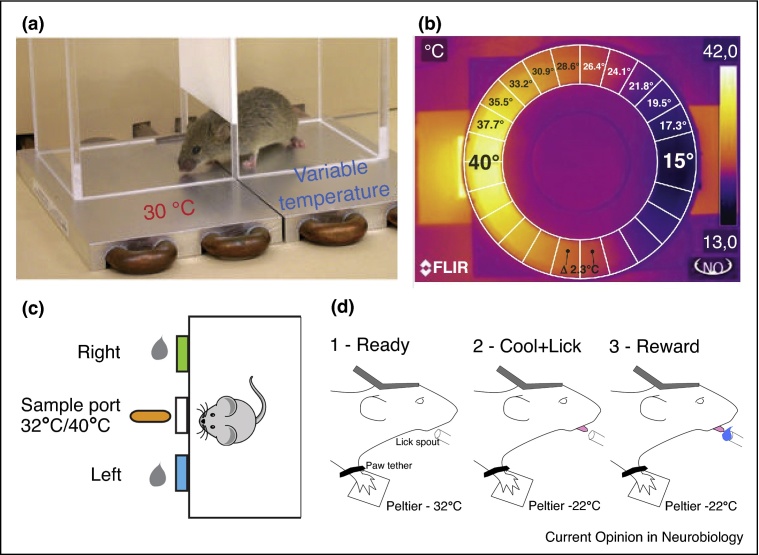
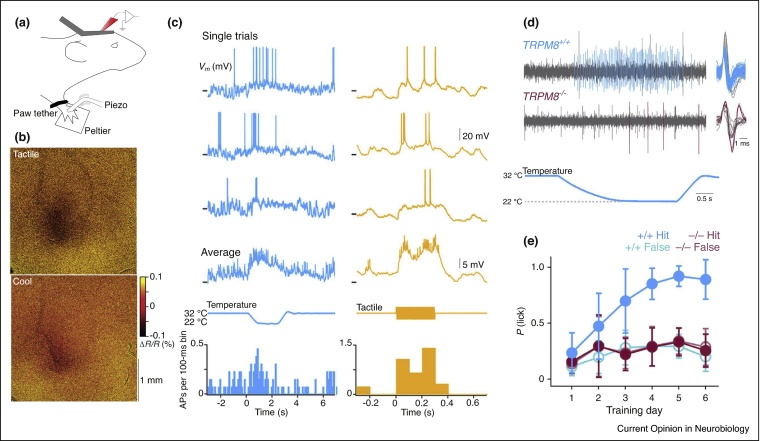
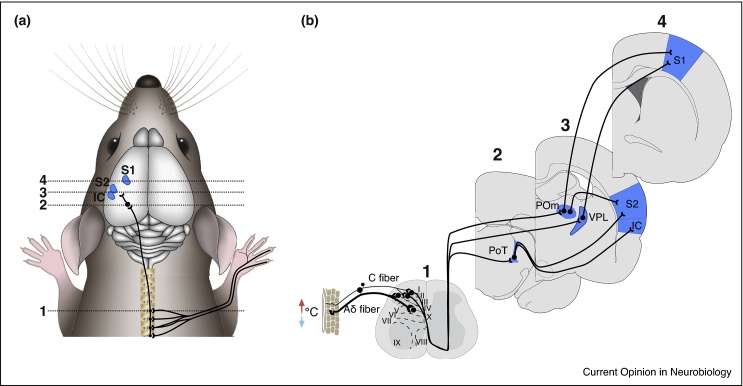
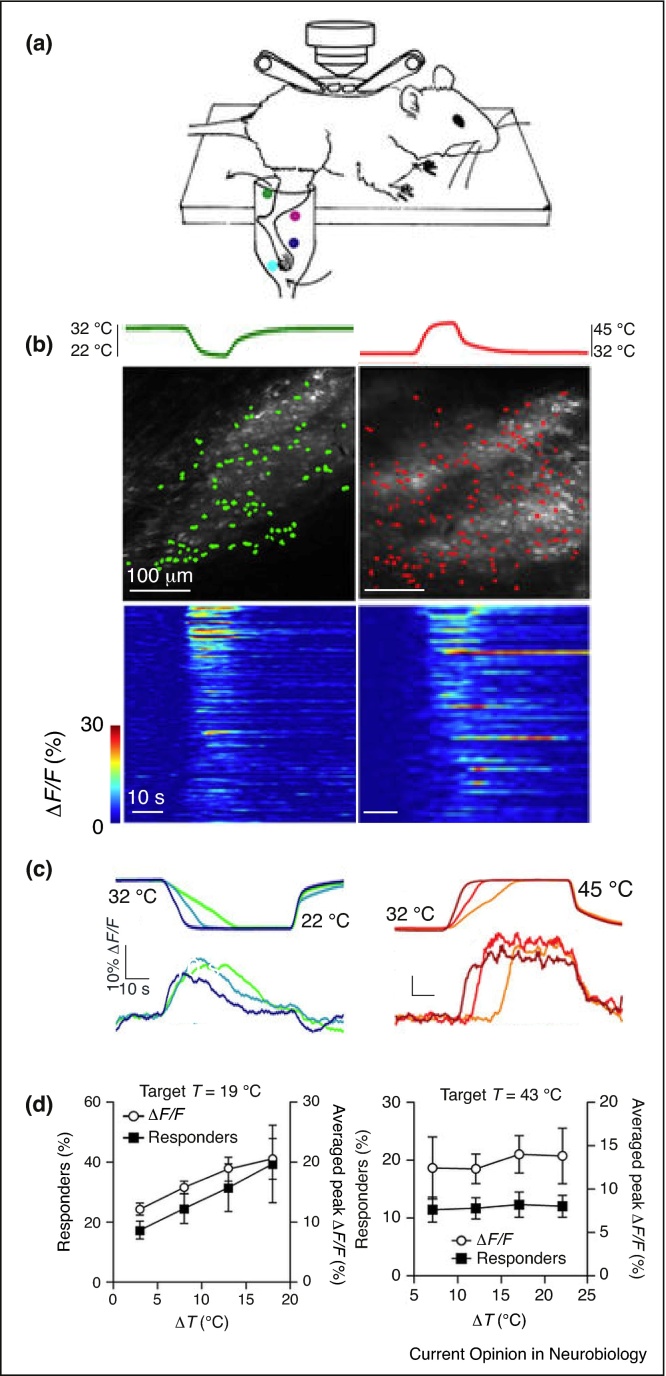
Thermal information about skin surface temperature is a key sense for the perception of object identity and valence. The identification of ion channels involved in the transduction of thermal changes has provided a genetic access point to the thermal system. However, from sensory specific 'labeled-lines' to multimodal interactive pathways, the functional organization and identity of the neural circuits mediating innocuous thermal perception have been debated for over 100 years. Here we highlight points in the system that require further attention and review recent advances using in vivo electrophysiology, cellular resolution calcium imaging, optogenetics and thermal perceptual tasks in behaving mice that have begun to uncover the anatomical principles and neural processing mechanisms underlying innocuous thermal perception.
皮肤表面温度的热信息是感知物体身份和效价的关键感觉。参与热变化转导的离子通道的鉴定为热系统提供了遗传切入点。然而,从感觉特异性的“标记线”到多模态交互途径,介导无害热感知的神经回路的功能组织和身份已经争论了 100 多年。在这里,我们强调了系统中需要进一步关注的要点,并回顾了最近使用活体电生理学、细胞分辨率钙成像、光遗传学和行为小鼠的热感知任务的进展,这些进展开始揭示无害热感知的解剖学原理和神经处理机制。