Department of Biochemistry & Molecular Biology, College of Life Sciences, Sichuan University, Chengdu, 610065, China.
Jining Medical University, Jining, 272000, China.
Sci Rep. 2018 May 9;8(1):7327. doi: 10.1038/s41598-018-25652-w.
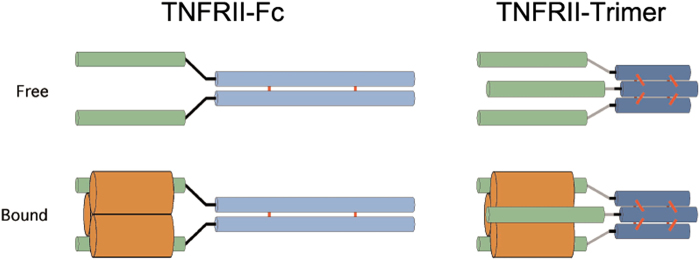
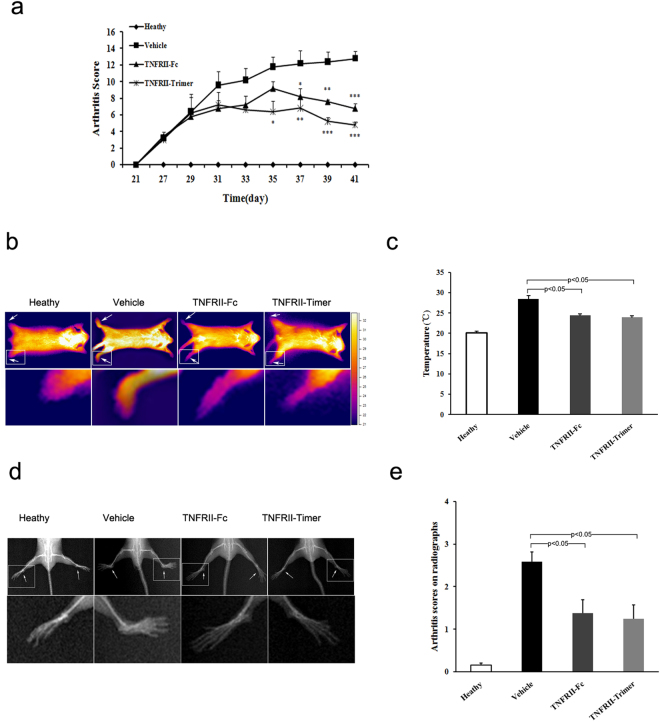
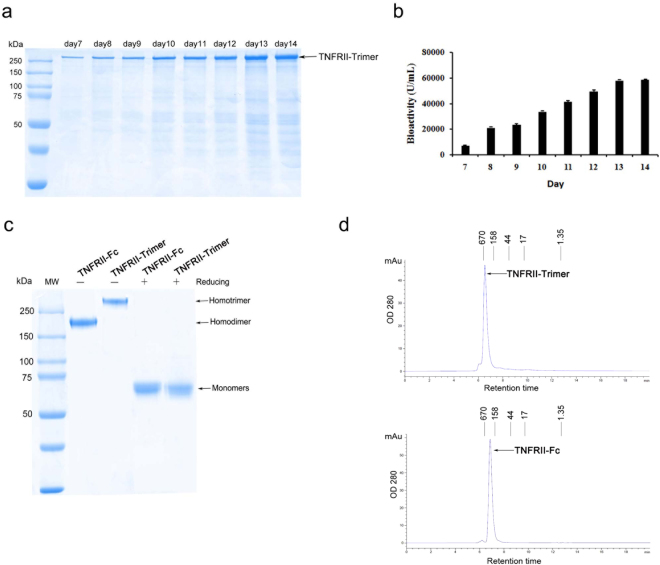
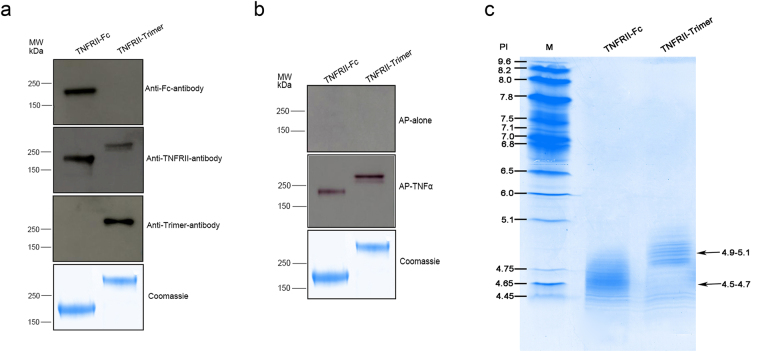
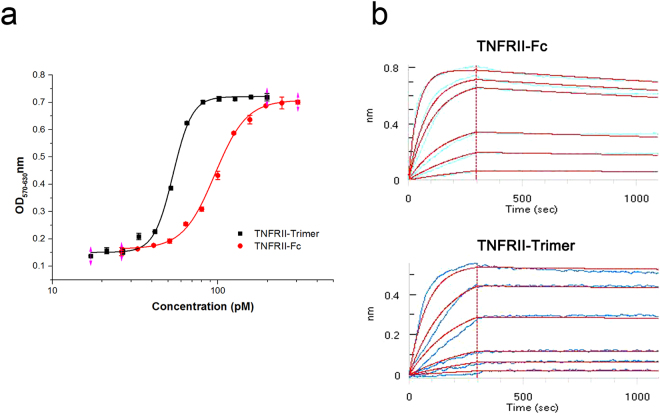
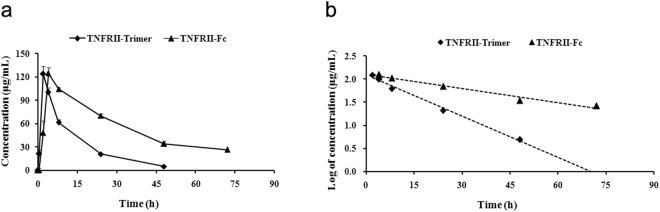
Tumor necrosis factor is a major pro-inflammatory cytokine which triggers various physiological consequences by binding to and trimerizing its receptors, and has been the single most sought-after drug target for intervening autoimmune diseases such as rheumatoid arthritis and psoriasis. However, current TNF-α blockers, including soluble receptor-Fc fusion and therapeutic antibodies, are all dimeric in structure, whereas their target TNF-α itself is homotrimeric in nature. Here we describe the development of a trivalent soluble TNF receptor and show that it is a more potent than the dimeric TNF receptor decoys in inhibiting TNF-α signaling both in vitro and in vivo. The process involves gene fusion between a soluble receptor TNFRII with a ligand binding domain and a trimerization tag from the C-propeptide of human collagen (Trimer-Tag), which is capable of self-assembly into a covalently linked trimer. We show that the homotrimeric soluble TNF receptor (TNFRII-Trimer) produced with such method is more potent in ligand binding kinetics and cell based bioassays, as well as more efficacious in attenuating collagen-induced arthritis (CIA) in a mouse model than its dimeric TNFRII-Fc counterpart. Thus, this work demonstrates the proof of concept of Trimer-Tag and provides a new platform for rational designs of next generation biologic drugs.
肿瘤坏死因子是一种主要的促炎细胞因子,通过与三聚体受体结合并三聚化触发各种生理后果,已成为干预类风湿关节炎和银屑病等自身免疫性疾病的单一最受追捧的药物靶点。然而,目前的 TNF-α 阻滞剂,包括可溶性受体-Fc 融合物和治疗性抗体,在结构上都是二聚体,而它们的靶标 TNF-α 本身在性质上是三聚体。在这里,我们描述了一种三聚体可溶性 TNF 受体的开发,并表明它比二聚体 TNF 受体诱饵更能有效地抑制 TNF-α 信号转导,无论是在体外还是体内。该过程涉及可溶性受体 TNFRII 与配体结合域和来自人胶原 C 前肽的三聚化标签(三聚体标签)之间的基因融合,该标签能够自组装成共价连接的三聚体。我们表明,采用这种方法产生的同源三聚体可溶性 TNF 受体(TNFRII-Trimer)在配体结合动力学和基于细胞的生物测定中更有效,并且在减轻胶原诱导性关节炎(CIA)方面比其二聚体 TNFRII-Fc 对应物更有效。因此,这项工作证明了三聚体标签的概念验证,并为下一代生物药物的合理设计提供了一个新平台。