School of Biochemistry, Biomedical Sciences Building, University of Bristol, BS8 1TD, UK.
School of Biochemistry, Biomedical Sciences Building, University of Bristol, BS8 1TD, UK; BrisSynBio Synthetic Biology Research Centre, Life Sciences Building, University of Bristol, Tyndall Avenue, Bristol BS8 1TQ, UK.
Curr Opin Struct Biol. 2018 Aug;51:149-155. doi: 10.1016/j.sbi.2018.04.008. Epub 2018 May 10.
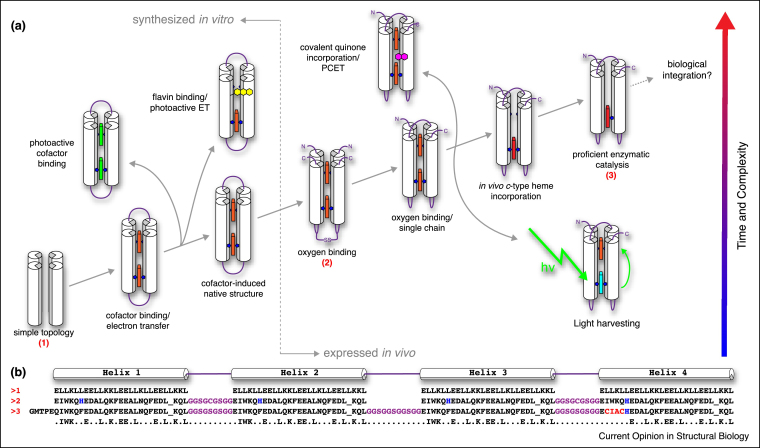
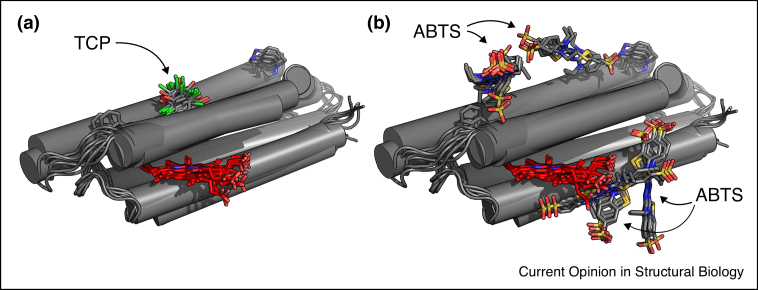
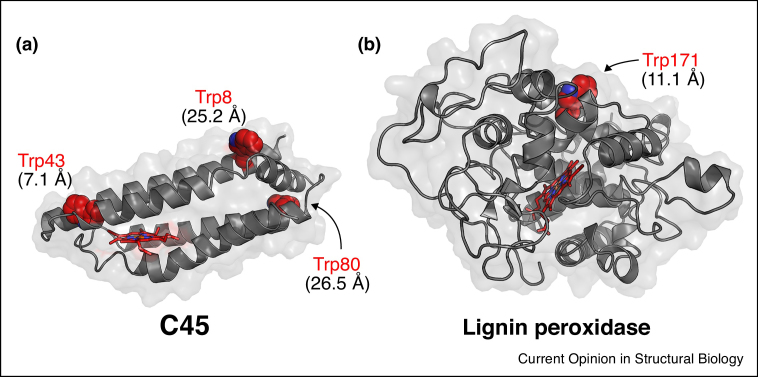
Though established 40 years ago, the field of de novo protein design has recently come of age, with new designs exhibiting an unprecedented level of sophistication in structure and function. With respect to catalysis, de novo enzymes promise to revolutionise the industrial production of useful chemicals and materials, while providing new biomolecules as plug-and-play components in the metabolic pathways of living cells. To this end, there are now de novo metalloenzymes that are assembled in vivo, including the recently reported C45 maquette, which can catalyse a variety of substrate oxidations with efficiencies rivalling those of closely related natural enzymes. Here we explore the successful design of this de novo enzyme, which was designed to minimise the undesirable complexity of natural proteins using a minimalistic bottom-up approach.
尽管从头蛋白质设计领域已经建立了 40 年,但最近它才崭露头角,新的设计在结构和功能上展现出了前所未有的复杂性。在催化方面,从头设计的酶有望彻底改变有用化学品和材料的工业生产方式,同时还可以为活细胞的代谢途径提供新的作为即插即用组件的生物分子。为此,现在已经可以在体内组装从头金属酶,包括最近报道的 C45 模型,它可以催化各种底物的氧化,其效率可与密切相关的天然酶相媲美。在这里,我们探讨了这种从头设计的酶的成功设计,该设计使用最小的自下而上方法来最小化天然蛋白质的不良复杂性。