State Key Laboratory of Plant Genomics, Institute of Microbiology, Chinese Academy of Sciences, Beijing, China.
University of Chinese Academy of Sciences, Beijing, China.
Elife. 2018 May 14;7:e34902. doi: 10.7554/eLife.34902.
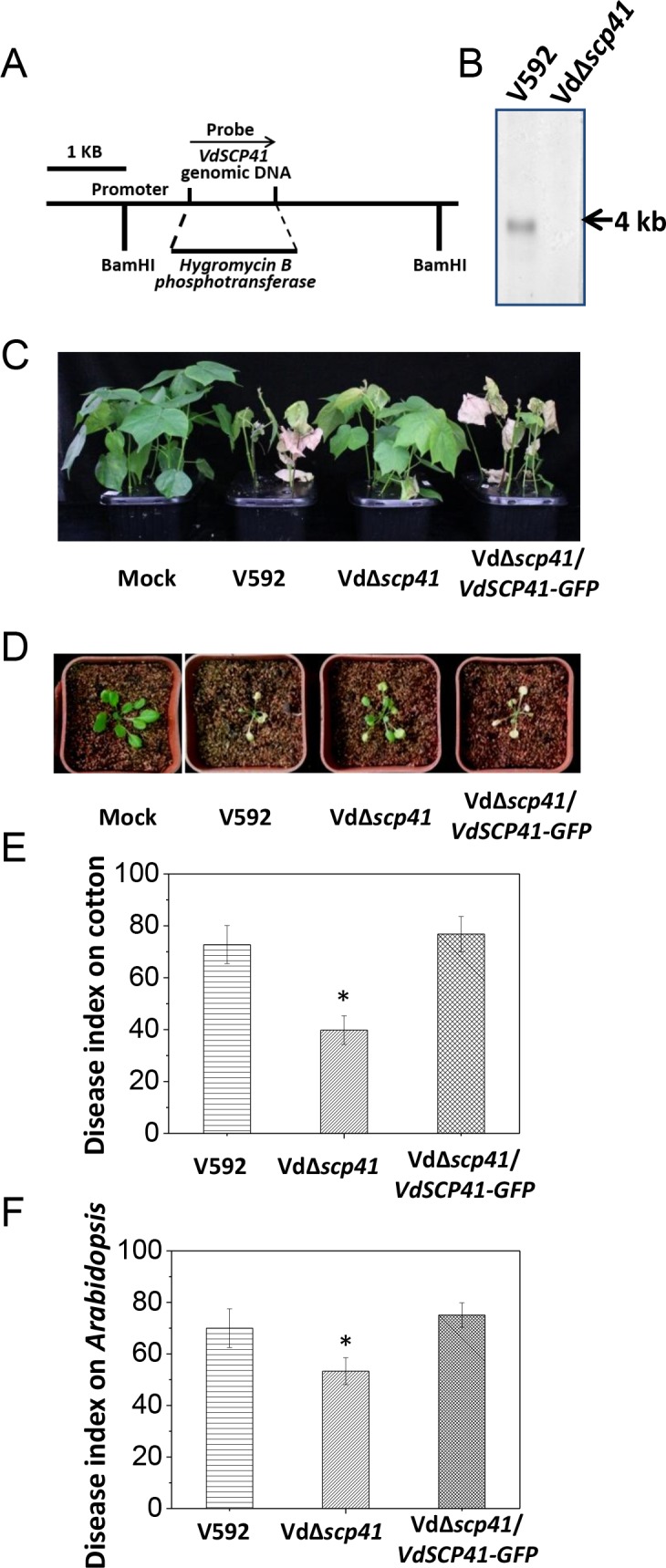
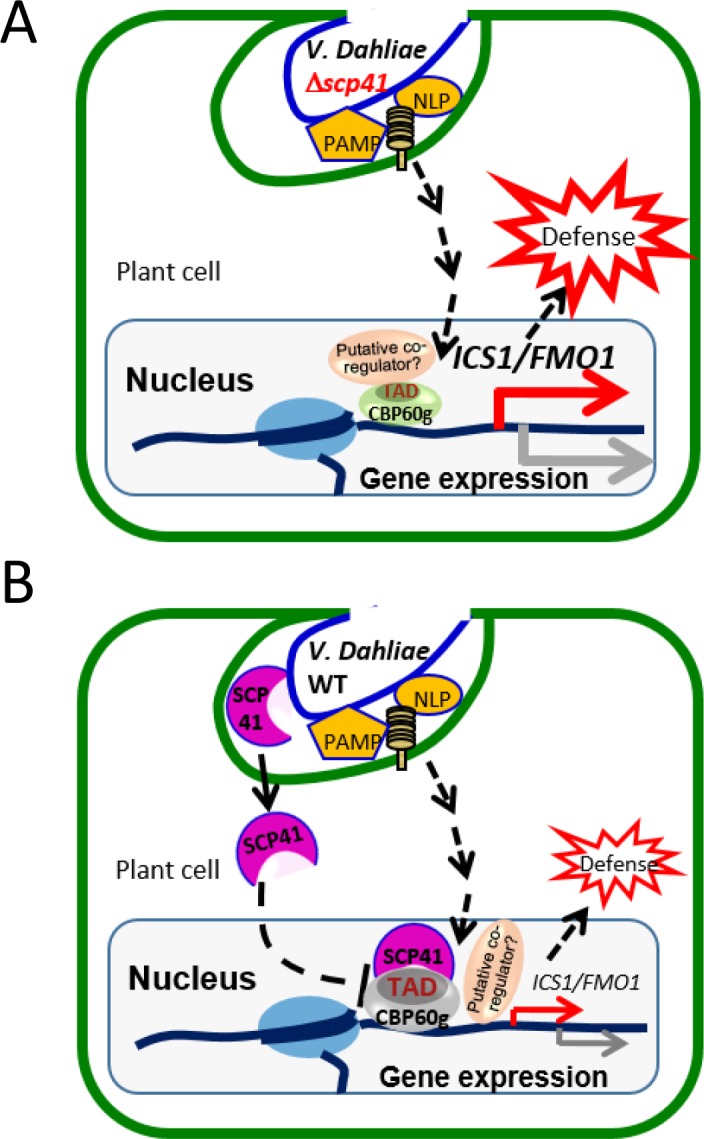
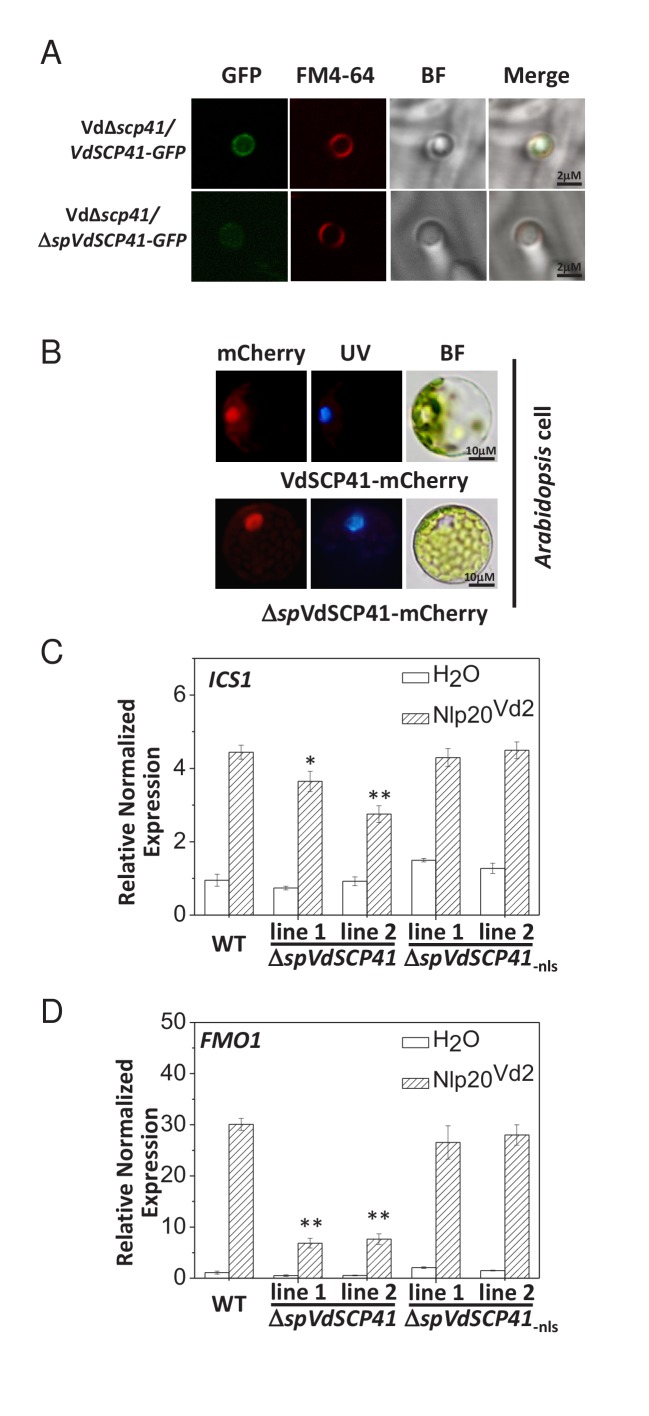
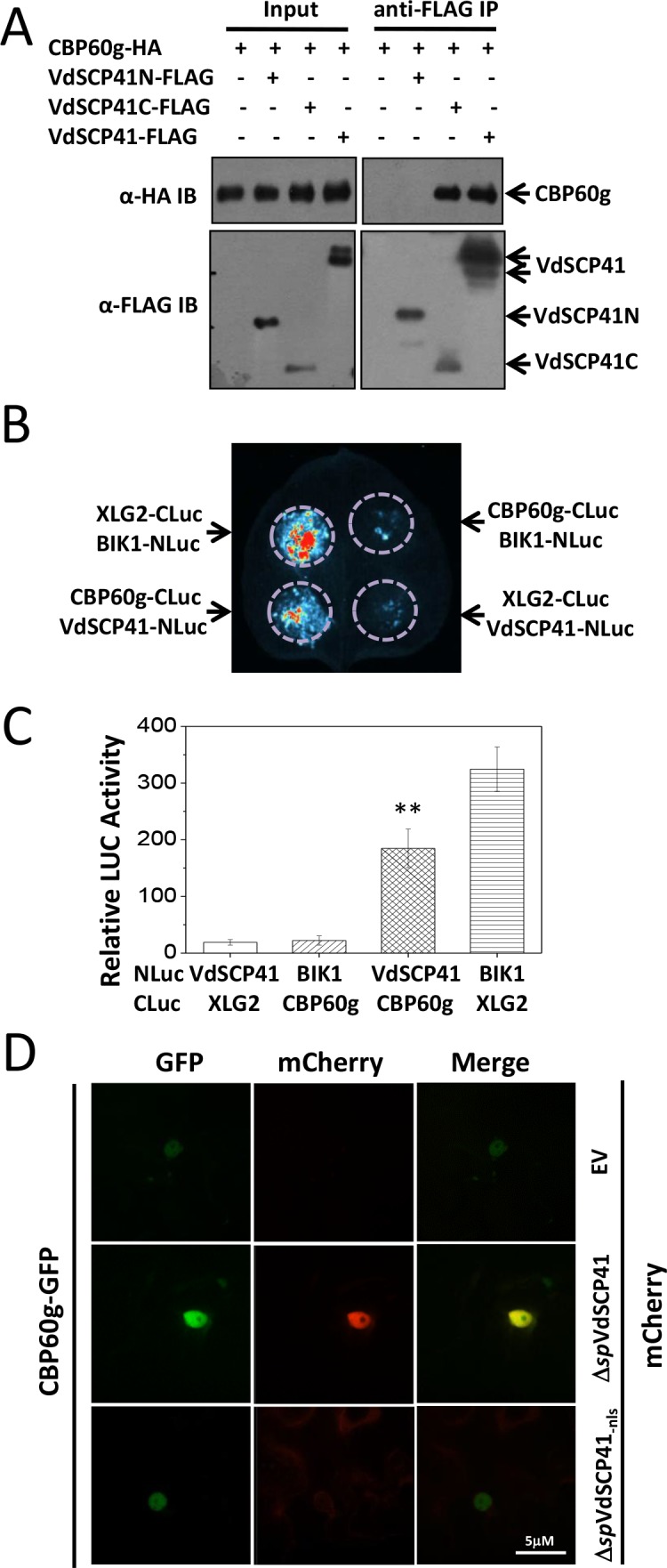
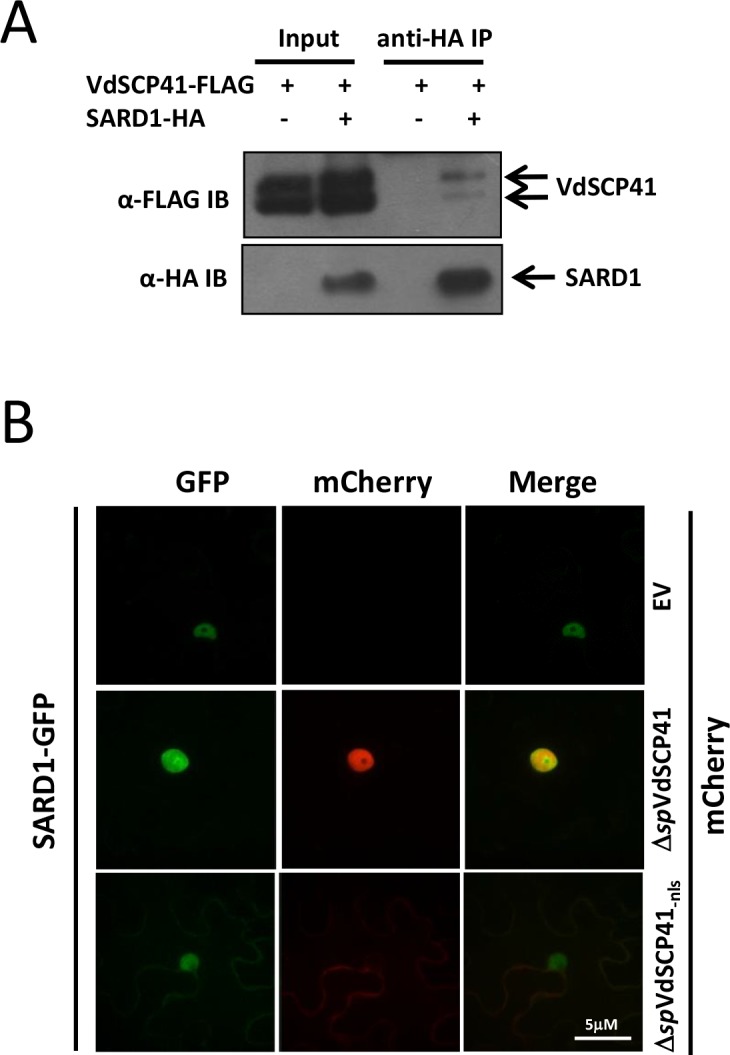
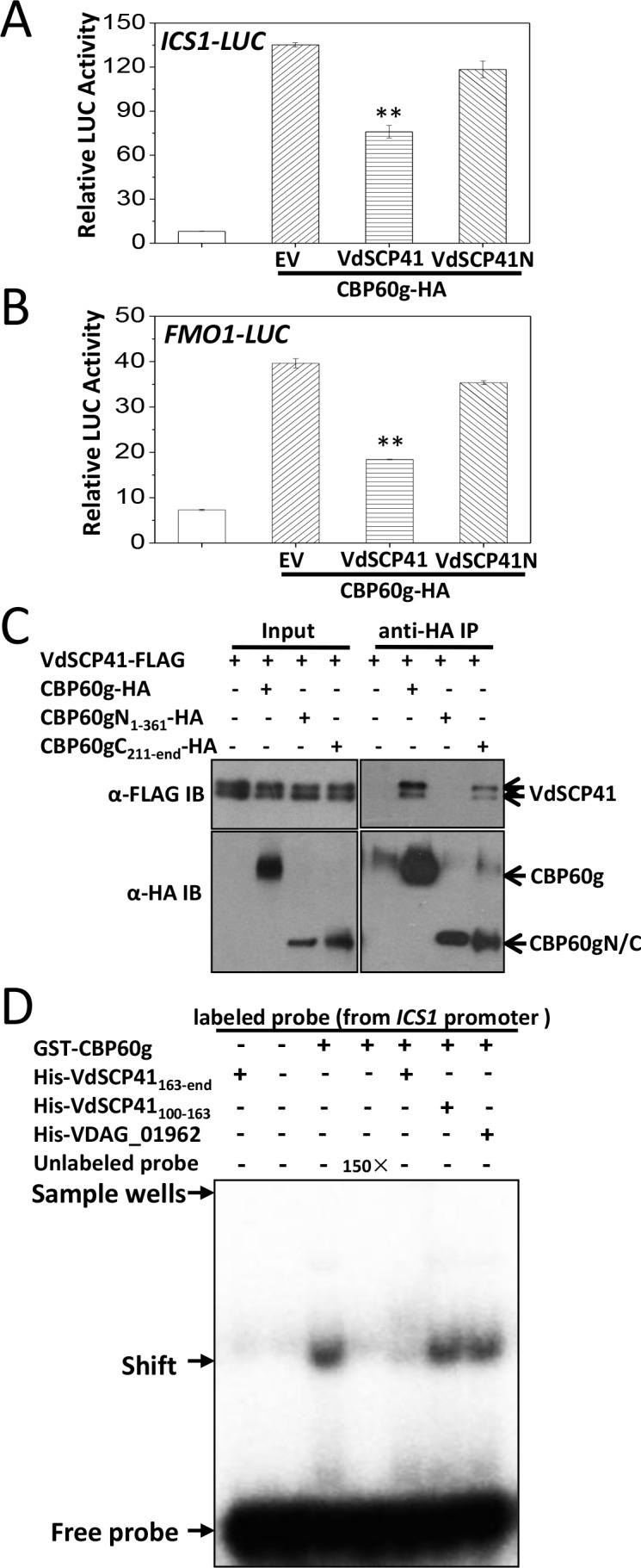
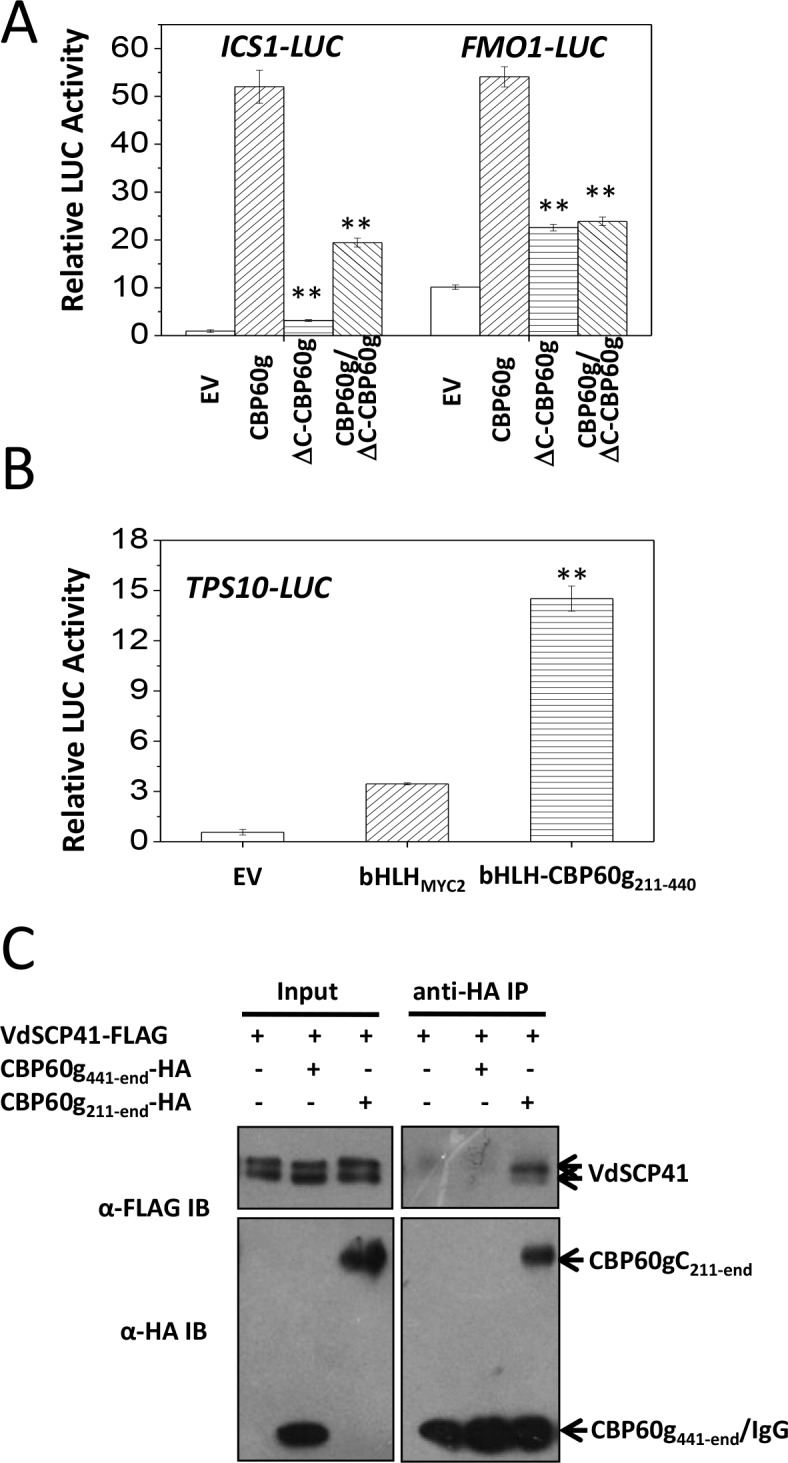
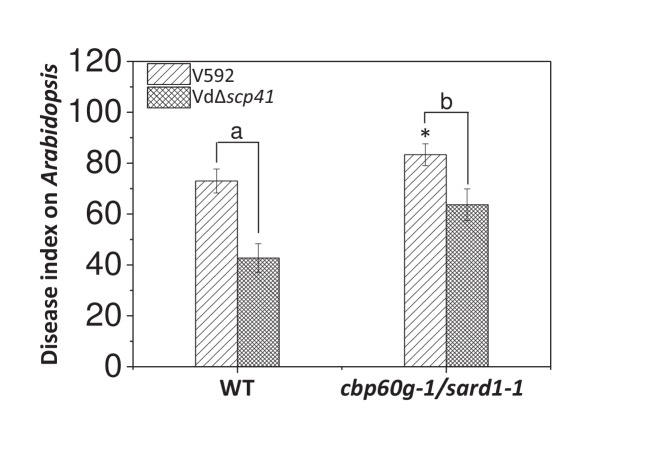
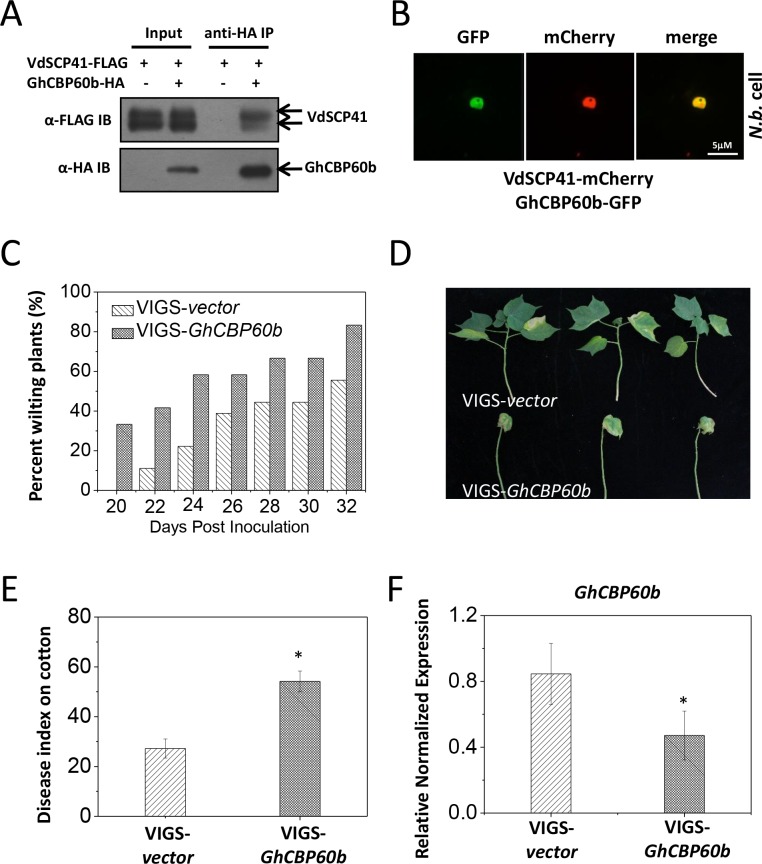
The vascular pathogen infects the roots of plants to cause wilt. The molecular mechanisms underlying virulence and host resistance remain elusive. Here, we demonstrate that a secretory protein, VdSCP41, functions as an intracellular effector that promotes virulence. The master immune regulators CBP60g and SARD1 and cotton GhCBP60b are targeted by VdSCP41. VdSCP41 binds the C-terminal portion of CBP60g to inhibit its transcription factor activity. Further analyses reveal a transcription activation domain within CBP60g that is required for VdSCP41 targeting. Mutations in both and compromise resistance against and partially impair VdSCP41-mediated virulence. Moreover, virus-induced silencing of compromises cotton resistance to . This work uncovers a virulence strategy in which the secretory protein VdSCP41 directly targets plant transcription factors to inhibit immunity, and reveals CBP60g, SARD1 and GhCBP60b as crucial components governing resistance.
血管病原体感染植物根部导致萎蔫。其毒力和宿主抗性的分子机制仍不清楚。在这里,我们证明了一种分泌蛋白 VdSCP41 作为一种促进毒力的细胞内效应物发挥作用。主要免疫调节剂 CBP60g 和 SARD1 以及棉花 GhCBP60b 是 VdSCP41 的靶标。VdSCP41 结合 CBP60g 的 C 端部分以抑制其转录因子活性。进一步的分析揭示了 CBP60g 内一个转录激活结构域,该结构域对于 VdSCP41 的靶向是必需的。 和 中的突变均会降低对 和部分削弱 VdSCP41 介导的毒力的抗性。此外,对 的病毒诱导沉默会削弱棉花对 的抗性。这项工作揭示了一种毒力策略,其中血管病原体的分泌蛋白 VdSCP41 直接靶向植物转录因子以抑制免疫,并揭示了 CBP60g、SARD1 和 GhCBP60b 作为调控 的抗性的关键组成部分。