Capossela Simona, Bertolo Alessandro, Gunasekera Kapila, Pötzel Tobias, Baur Martin, Stoyanov Jivko V
Biomedical Laboratories, Swiss Paraplegic Research, 6207, Nottwil, Switzerland.
Swiss Paraplegic Centre, Nottwil, Switzerland.
BMC Res Notes. 2018 May 22;11(1):333. doi: 10.1186/s13104-018-3441-3.
During degeneration of the intervertebral disc ingrowth of blood vessels and nerves into the disc are associated with back pain. Vascular endothelial growth factors promote vasculogenesis by binding to the membrane vascular endothelial growth factor receptor 1, while shorter soluble forms of this receptor can inhibit vascularization. We hypothesized that membrane and soluble receptor forms might change between stages of intervertebral disc degeneration.
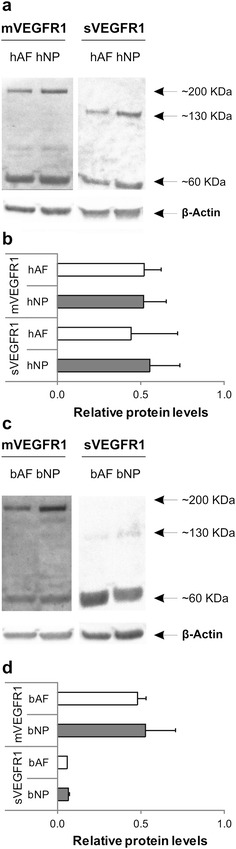
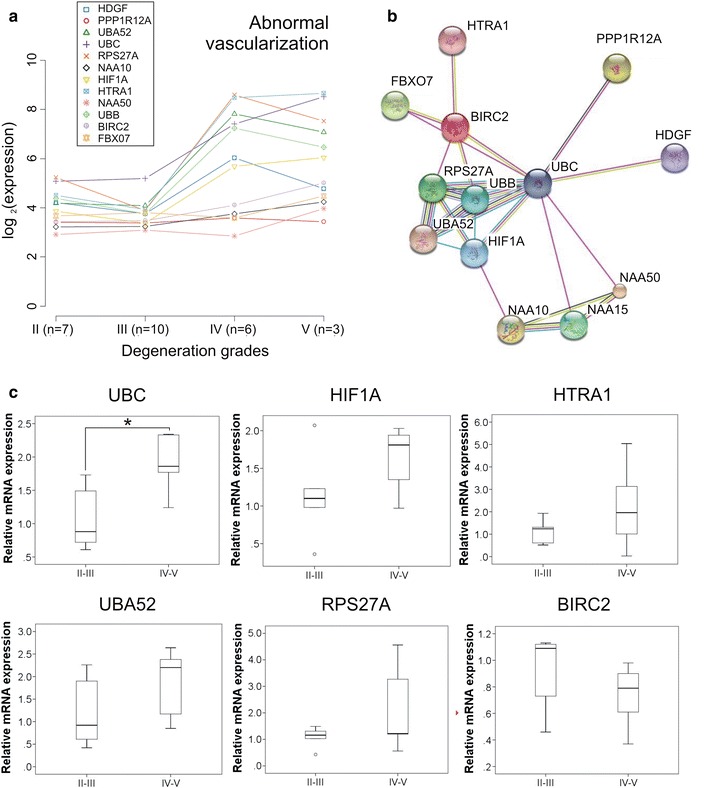
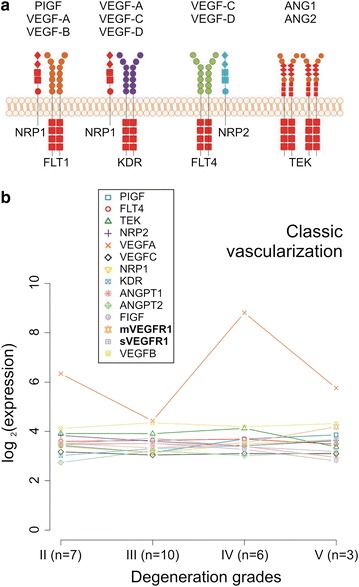
Expression of soluble and membrane forms of vascular endothelial growth factor receptor 1 in human degenerated intervertebral discs and healthy bovine caudal discs was assessed by qRT-PCR and immunoblot. Comparative microarray meta-analysis across disc degeneration grades showed that membrane and soluble forms of this receptor, together with other components of classic vascularization pathways, are constitutively expressed across human disc degeneration stages. Contrary to our hypothesis, we observed that expression of the classic vascularization pathway is stable across degeneration stages and we assume that soluble vascular endothelial growth factor receptor 1 does not contribute to prevent disc degeneration. However, we observed increased expression levels of genes involved in alternative vascularization signalling pathways in severely degenerated discs, suggesting that abnormal vascularization is part of the pathological progression of disc degeneration.
在椎间盘退变过程中,血管和神经长入椎间盘与背痛相关。血管内皮生长因子通过与膜血管内皮生长因子受体1结合促进血管生成,而该受体的较短可溶性形式可抑制血管形成。我们推测膜受体形式和可溶性受体形式可能在椎间盘退变的不同阶段发生变化。
通过qRT-PCR和免疫印迹法评估了人退变椎间盘和健康牛尾椎间盘血管内皮生长因子受体1的可溶性形式和膜形式的表达。对不同椎间盘退变等级的比较性微阵列荟萃分析表明,该受体的膜形式和可溶性形式以及经典血管生成途径的其他成分在人类椎间盘退变的各个阶段均有组成性表达。与我们的假设相反,我们观察到经典血管生成途径的表达在退变阶段是稳定的,并且我们认为可溶性血管内皮生长因子受体1无助于预防椎间盘退变。然而,我们观察到在严重退变的椎间盘中,参与替代血管生成信号通路的基因表达水平增加,这表明异常血管生成是椎间盘退变病理进展的一部分。