Faculty of Medicine, Institute of Physiotherapy, University of Rzeszow, Rzeszow, Poland.
Faculty of Physical Education and Sports, Institute of Sport, University School of Physical Education, Krakow, Poland.
Clin Interv Aging. 2018 May 11;13:903-912. doi: 10.2147/CIA.S157182. eCollection 2018.
Precision of movements responsible for maintaining balance deteriorates with age due to natural involutionary processes, thus prompting a research question whether the values of gender-related stability indicators might differ significantly among the study subjects over 60 years of age.
The study group comprised 136 seniors (89 women, 47 men; aged 60-90 years). The CQ-Stab 2P 2-platform posturograph was used as the main research device, whereas the Mann-Whitney -test was used to evaluate the gender-related differences in the average level of variables.
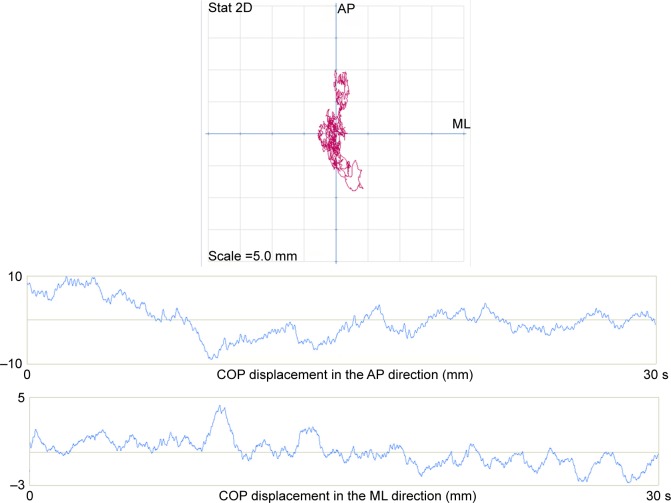
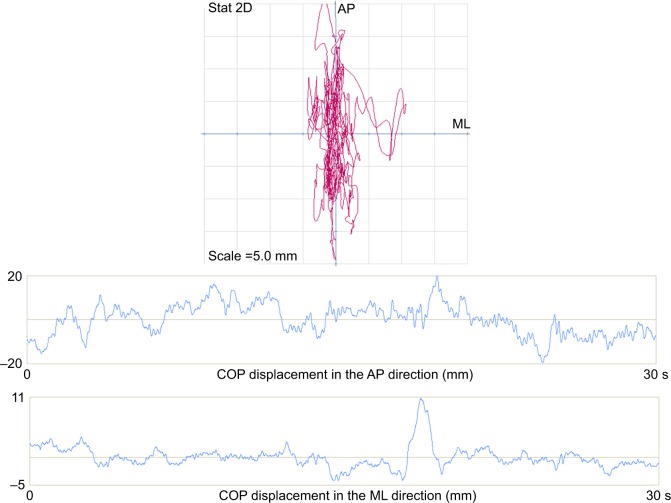
In the open-eye test, significant gender-related differences were observed with regard to the statokinesiogram's path length in the mediolateral (ML) direction in the subjects aged 60-69 years (=0.004), mean frequency of center of pressure (COP) displacement and number of COP displacements in the ML direction in the subjects aged 70-79 years (=0.028, =0.019), and mean COP displacement in the anteroposterior (AP) direction in the subjects aged 80-90 years (=0.026). When the subjects were deprived of visual control, gender-related differences were observed with regard to the mean frequency of COP displacement, number of COP displacements in the ML direction in the subjects aged 60-69 years (=0.045, =0.049), and the statokinesiogram's path length in the AP direction in the subjects aged 70-79 years (=0.015). In the oldest age group, the differences were noted in the statokinesiogram's path length in the AP direction (=0.001), a sway area delimited by the COP point (=0.003), range of AP stability (<0.001), and range of ML stability (=0.048).
Gender-related differences affecting postural stability were found in the elderly. Men were characterized by a lower level of postural stability when compared with women. This highlights the need to have the gender-related differences taken into account, when developing various preventive and therapeutic programs specifically aimed at compensating certain involution-dependent deficits.
由于自然衰老过程,负责维持平衡的动作精度会随着年龄的增长而下降,因此引发了一个研究问题,即 60 岁以上研究对象的性别相关稳定性指标值是否可能存在显著差异。
研究组由 136 名老年人(89 名女性,47 名男性;年龄 60-90 岁)组成。使用 CQ-Stab 2P 2 平台姿势描记器作为主要研究设备,而曼-惠特尼 -检验用于评估性别相关变量平均水平的差异。
在睁眼测试中,在 60-69 岁组中,静平衡运动描记器在中侧(ML)方向上的路径长度(=0.004)、中侧(ML)方向上的平均压力中心(COP)位移频率和 COP 位移数、80-90 岁组中前-后(AP)方向上的平均 COP 位移存在显著的性别差异(=0.026)。当受试者失去视觉控制时,在 60-69 岁组中,COP 位移的平均频率、ML 方向上的 COP 位移数(=0.045,=0.049)和 70-79 岁组中 AP 方向上的静平衡运动描记器路径长度存在显著的性别差异(=0.015)。在年龄最大的组中,AP 方向上的静平衡运动描记器路径长度(=0.001)、COP 点限定的摆动区域(=0.003)、AP 稳定性范围(<0.001)和 ML 稳定性范围(=0.048)存在差异。
在老年人中发现了影响姿势稳定性的性别差异。与女性相比,男性的姿势稳定性较低。这突出表明,在制定专门针对补偿某些与衰老相关的缺陷的各种预防和治疗计划时,需要考虑性别差异。