University of California, San Francisco, 550 16th St, 3rd floor, San Francisco, CA, 94158, USA.
St John's Research Institute, Bangalore, India.
AIDS Behav. 2018 Dec;22(12):3859-3868. doi: 10.1007/s10461-018-2157-7.
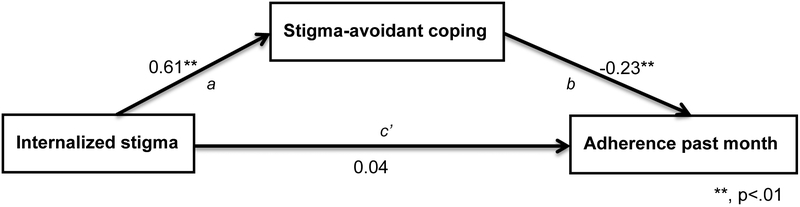
HIV stigma continues to be a barrier to physical and mental health among people living with HIV globally, especially in vulnerable populations. We examined how stigma is associated with health outcomes and quality of life among rural women living with HIV in South India (N = 600). Interviewer-administered measures assessed multiple dimensions of stigma, as well as loneliness, social support, ART adherence, time since diagnosis, and quality of life. Internalized stigma and a lack of social support were associated with a lower quality of life, while the association between internalized stigma and adherence was mediated by the use of stigma-avoidant coping strategies, suggesting that keeping one's diagnosis a secret may make it more difficult to take one's medications. These findings suggest that these women constitute a vulnerable population who need additional services to optimize their health and who might benefit from peer support interventions and stigma-reduction programs for family and community members.
艾滋病毒污名仍然是全球艾滋病毒感染者身心健康的障碍,尤其是在弱势群体中。我们研究了在印度南部的农村地区艾滋病毒感染者中,污名是如何与健康结果和生活质量相关联的(N=600)。调查员管理的措施评估了污名的多个维度,以及孤独感、社会支持、抗逆转录病毒治疗(ART)的依从性、诊断后的时间以及生活质量。内化的污名和缺乏社会支持与较低的生活质量相关,而内化的污名与依从性之间的关联则通过使用避免污名的应对策略来介导,这表明隐瞒自己的诊断可能会使服药更加困难。这些发现表明,这些女性构成了一个弱势群体,她们需要额外的服务来优化自己的健康,并且可能受益于同伴支持干预和针对家庭和社区成员的减少污名的计划。