Health Policy Research Center, Institute of Health, Student Research Committee, Shiraz University of Medical Sciences, Shiraz, Iran.
Research Center for Biochemistry and Nutrition in Metabolic Diseases, Kashan University of Medical Sciences, Kashan, Islamic Republic of Iran.
Lipids Health Dis. 2018 May 24;17(1):123. doi: 10.1186/s12944-018-0779-4.
Several studies have evaluated the effect of inositol supplementation on lipid profiles among population with metabolic diseases; however, the findings are controversial. This review of randomized controlled trials (RCTs) was performed to summarize the evidence of the effects of inositol supplementation on lipid profiles among population with metabolic diseases.
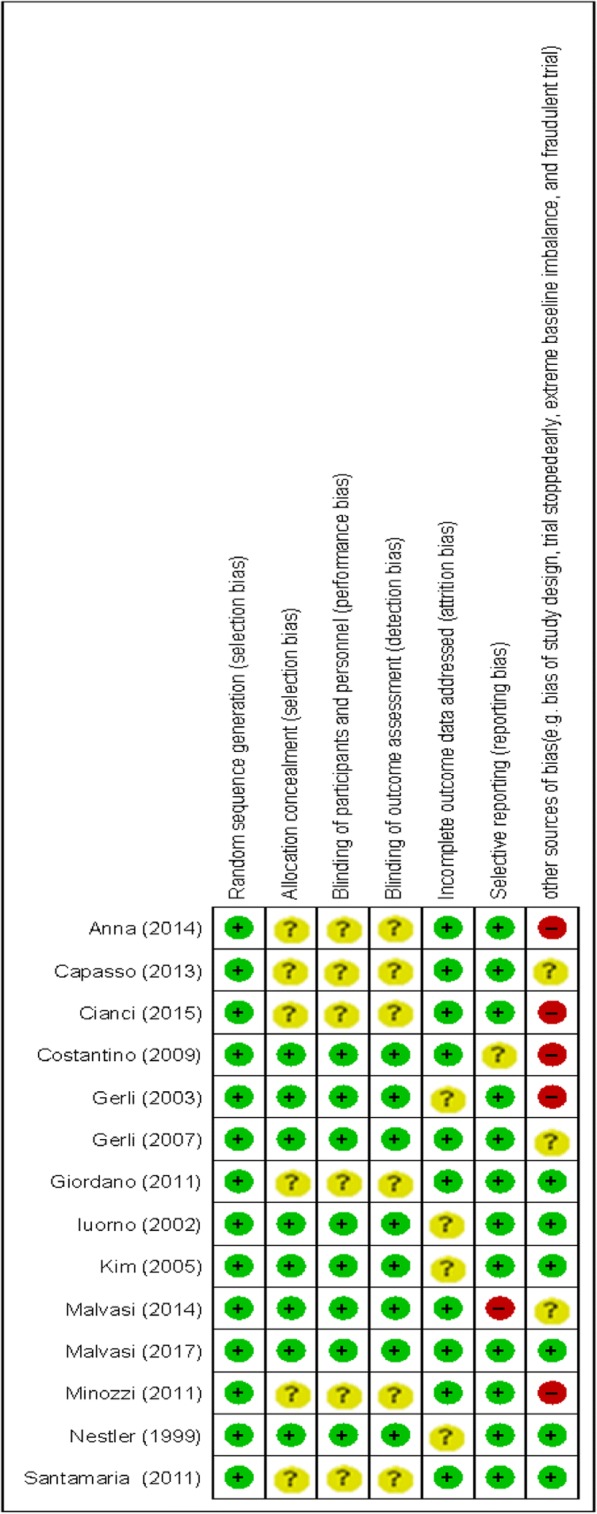
Relevant RCTs studies were searched in Cochrane Library, EMBASE, MEDLINE, and Web of Science until October 2017. Two researchers assessed study eligibility, extracted data, and evaluated risk of bias of included primary studies, independently. To check for the heterogeneity among included studies Q-test and I statistics were used. Data were pooled by using the random-effect model and standardized mean difference (SMD) was considered as summary of the effect size.
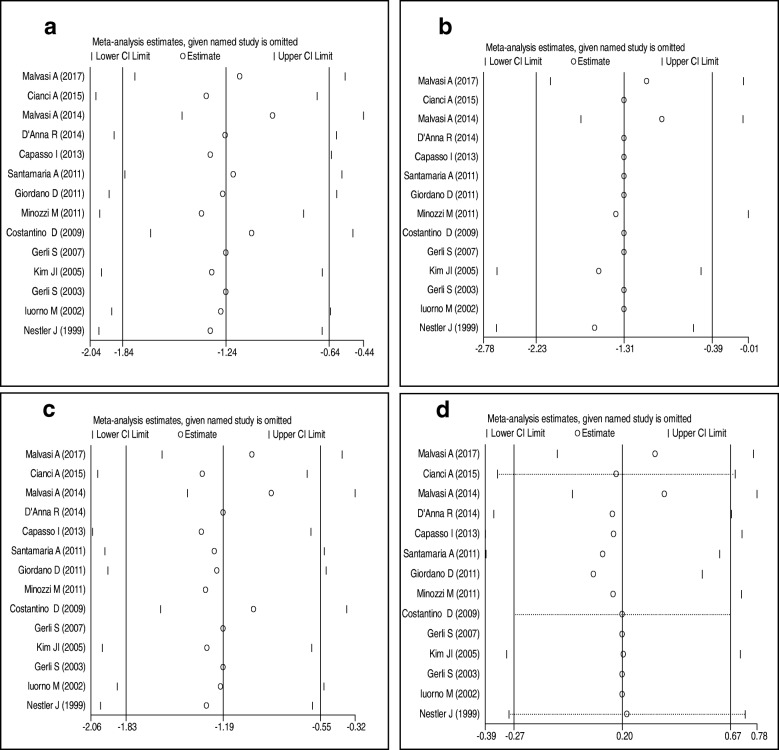
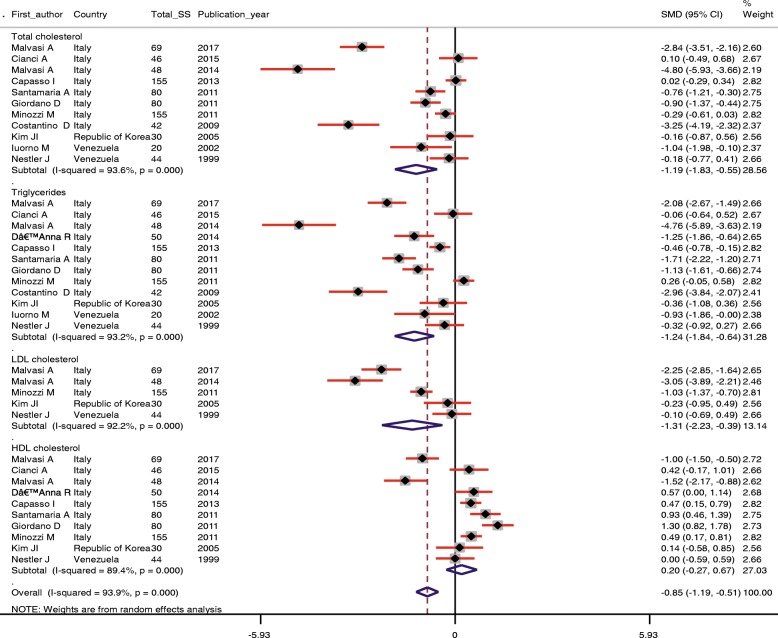
Overall, 14 RCTs were included into meta-analysis. Pooled results showed that inositol supplementation among patients with metabolic diseases significantly decreased triglycerides (SMD - 1.24; 95% CI, - 1.84, - 0.64; P < 0.001), total- (SMD - 1.09; 95% CI, - 1.83, - 0.55; P < 0.001), and LDL-cholesterol levels (SMD - 1.31; 95% CI, - 2.23, - 0.39; P = 0.005). There was no effect of inositol supplementation on HDL-cholesterol levels (SMD 0.20; 95% CI, - 0.27, 0.67; P = 0.40).
Inositol supplementation may result in reduction in triglycerides, total- and LDL-cholesterol levels, but did not affect HDL-cholesterol levels among patients with metabolic diseases. Additional prospective studies regarding the effect of inositol supplementation on lipid profiles in patients with metabolic diseases are necessary.
有几项研究评估了肌醇补充剂对代谢疾病患者血脂谱的影响,但结果存在争议。本综述对随机对照试验(RCT)进行了评估,旨在总结肌醇补充剂对代谢疾病患者血脂谱影响的证据。
我们在 Cochrane Library、EMBASE、MEDLINE 和 Web of Science 中检索了相关的 RCT 研究,检索时间截至 2017 年 10 月。两名研究人员独立评估了纳入的原始研究的研究资格、提取数据和评估偏倚风险。使用 Q 检验和 I 统计量评估纳入研究之间的异质性。使用随机效应模型汇总数据,并采用标准化均数差(SMD)作为效应量的总结。
共有 14 项 RCT 纳入荟萃分析。汇总结果表明,代谢疾病患者补充肌醇可显著降低甘油三酯(SMD -1.24;95%CI,-1.84,-0.64;P<0.001)、总胆固醇(SMD -1.09;95%CI,-1.83,-0.55;P<0.001)和 LDL 胆固醇水平(SMD -1.31;95%CI,-2.23,-0.39;P=0.005)。肌醇补充剂对 HDL 胆固醇水平无影响(SMD 0.20;95%CI,-0.27,0.67;P=0.40)。
肌醇补充剂可能降低代谢疾病患者的甘油三酯、总胆固醇和 LDL 胆固醇水平,但对 HDL 胆固醇水平无影响。有必要开展更多关于肌醇补充剂对代谢疾病患者血脂谱影响的前瞻性研究。