CERMAV, CNRS and Grenoble Alpes Université, BP53, 38000, Grenoble Cedex 9, France.
Centre National de la Recherche Scientifique (CNRS), UMR7257, Université Aix-Marseille, Marseille, 13288, France.
Sci Rep. 2018 May 23;8(1):8075. doi: 10.1038/s41598-018-26104-1.
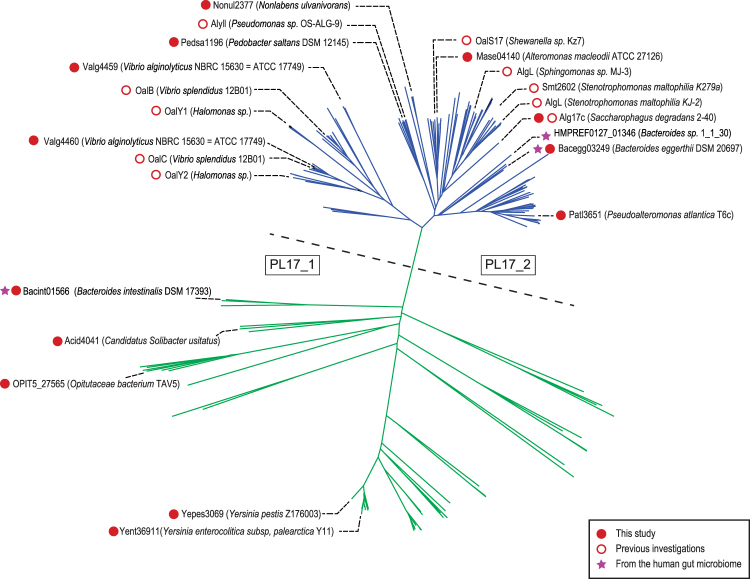
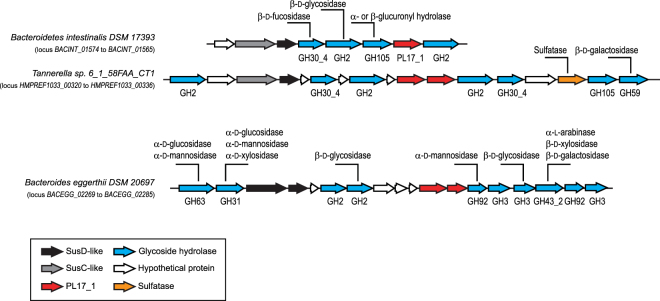
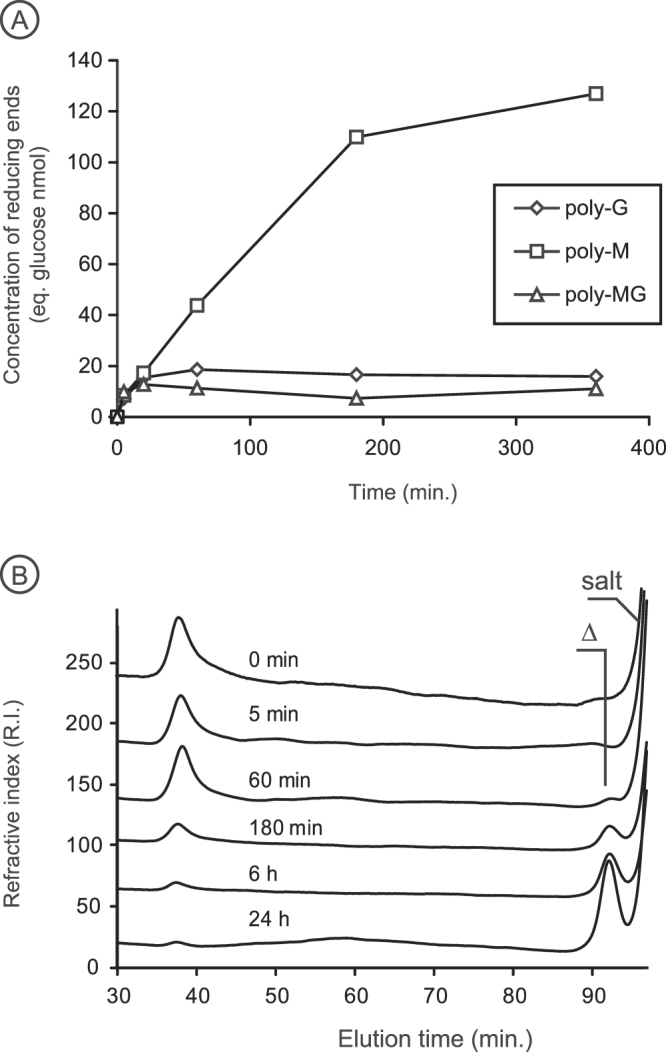
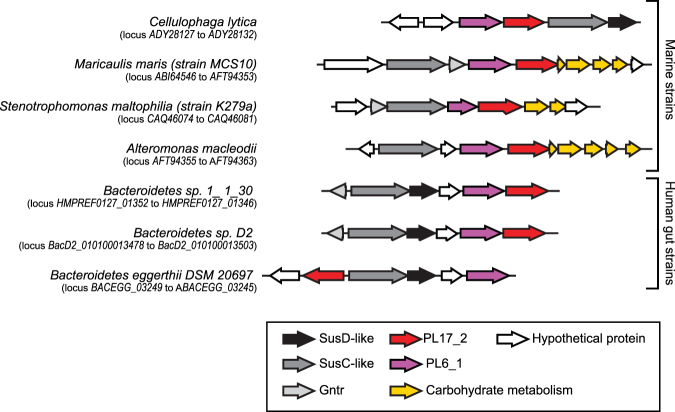
In bacteria from the phylum Bacteroidetes, the genes coding for enzymes involved in polysaccharide degradation are often colocalized and coregulated in so-called "polysaccharide utilization loci" (PULs). PULs dedicated to the degradation of marine polysaccharides (e.g. laminaran, ulvan, alginate and porphyran) have been characterized in marine bacteria. Interestingly, the gut microbiome of Japanese individuals acquired, by lateral transfer from marine bacteria, the genes involved in the breakdown of porphyran, the cell wall polysaccharide of the red seaweed used in maki. Sequence similarity analyses predict that the human gut microbiome also encodes enzymes for the degradation of alginate, the main cell wall polysaccharide of brown algae. We undertook the functional characterization of diverse polysaccharide lyases from family PL17, frequently found in marine bacteria as well as those of human gut bacteria. We demonstrate here that this family is polyspecific. Our phylogenetic analysis of family PL17 reveals that all alginate lyases, which have all the same specificity and mode of action, cluster together in a very distinct subfamily. The alginate lyases found in human gut bacteria group together in a single clade which is rooted deeply in the PL17 tree. These enzymes were found in PULs containing PL6 enzymes, which also clustered together in the phylogenetic tree of PL6. Together, biochemical and bioinformatics analyses suggest that acquisition of this system appears ancient and, because only traces of two successful transfers were detected upon inspection of PL6 and PL17 families, the pace of acquisition of marine polysaccharide degradation system is probably very slow.
在拟杆菌门的细菌中,参与多糖降解的酶的基因通常在所谓的“多糖利用基因座”(PULs)中局部共定位和共同调控。已经在海洋细菌中表征了专门用于降解海洋多糖(例如,昆布多糖、岩藻聚糖、海藻酸盐和卟啉聚糖)的 PUL。有趣的是,日本个体的肠道微生物组通过从海洋细菌的水平转移获得了参与分解卟啉聚糖的基因,卟啉聚糖是用于制作寿司卷的红海藻的细胞壁多糖。序列相似性分析预测,人类肠道微生物组还编码了用于降解褐藻主要细胞壁多糖海藻酸盐的酶。我们对来自 PL17 家族的多种多糖裂解酶进行了功能表征,这些酶经常在海洋细菌以及人类肠道细菌中发现。我们在这里证明,这个家族具有多特异性。我们对 PL17 家族的系统发育分析表明,所有具有相同特异性和作用模式的海藻酸盐裂解酶都聚集在一个非常独特的亚家族中。在人类肠道细菌中发现的海藻酸盐裂解酶聚集在一个单独的分支中,该分支在 PL17 树中深深扎根。这些酶存在于含有 PL6 酶的 PUL 中,PL6 酶也在 PL6 家族的系统发育树中聚集在一起。综合生物化学和生物信息学分析表明,这种系统的获得似乎是古老的,并且由于在检查 PL6 和 PL17 家族时仅检测到两次成功转移的痕迹,因此海洋多糖降解系统的获得速度可能非常缓慢。