Sorbonne Université, CNRS, Integrative Biology of Marine Models (LBI2M), Station Biologique de Roscoff (SBR), 29680 Roscoff, France.
Norwegian Biopolymer Laboratory (NOBIPOL), Department of Biotechnology and Food Science, NTNU Norwegian University of Science and Technology, Sem Sælands vei 6/8, N-7491 Trondheim, Norway.
Glycobiology. 2021 Nov 18;31(10):1364-1377. doi: 10.1093/glycob/cwab058.
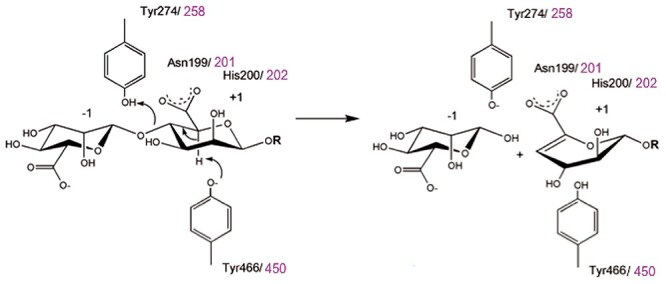
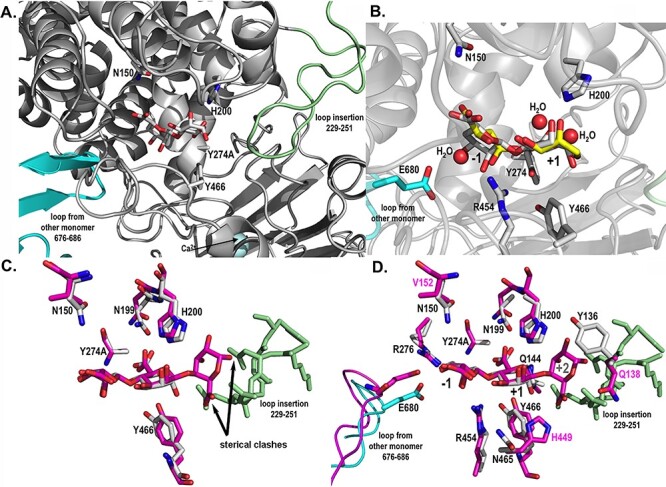
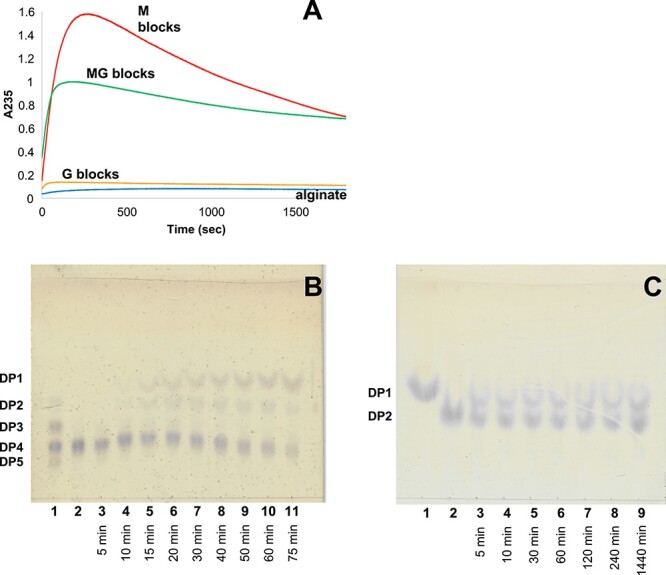
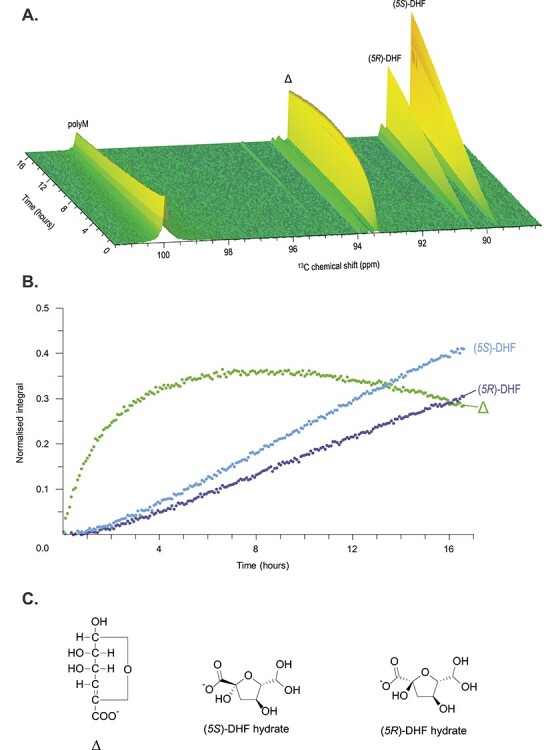
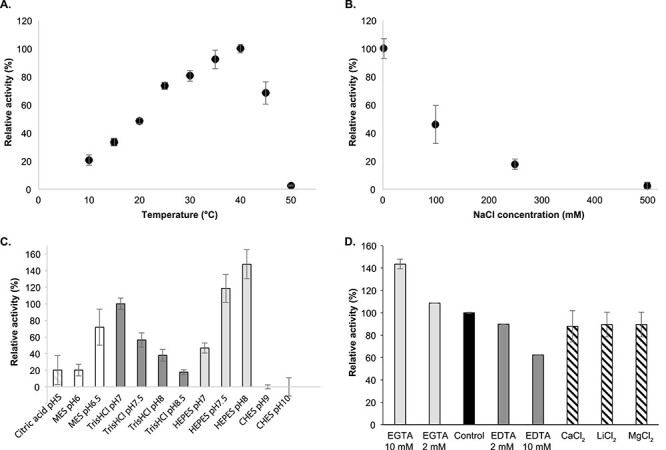
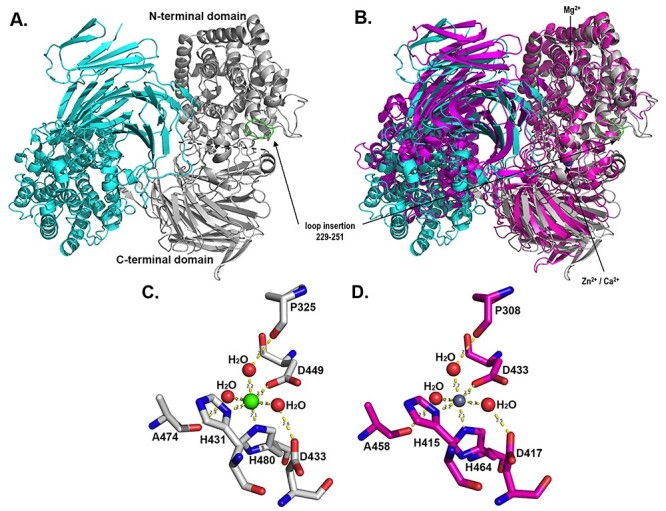
Alginate is a major compound of brown macroalgae and as such an important carbon and energy source for heterotrophic marine bacteria. Despite the rather simple composition of alginate only comprising mannuronate and guluronate units, these bacteria feature complex alginolytic systems that can contain up to seven alginate lyases. This reflects the necessity of large enzyme systems for the complete degradation of the abundant substrate. Numerous alginate lyases have been characterized. They belong to different polysaccharide lyase (PL) families, but only one crystal structure of a family 17 (PL17) alginate lyase has been reported to date, namely Alg17c from the gammaproteobacterium Saccharophagus degradans. Biochemical and structural characterizations are helpful to link sequence profiles to function, evolution of functions and niche-specific characteristics. Here, we combined detailed biochemical and crystallographic analysis of AlyA3, a PL17 alginate lyase from the marine flavobacteria Zobellia galactanivorans DsijT, providing the first structure of a PL17 in the Bacteroidetes phylum. AlyA3 is exo-lytic and highly specific of mannuronate stretches. As part of an "alginate utilizing locus", its activity is complementary to that of other characterized alginate lyases from the same bacterium. Structural comparison with Alg17c highlights a common mode of action for exo-lytic cleavage of the substrate, strengthening our understanding of the PL17 catalytic mechanism. We show that unlike Alg17c, AlyA3 contains an inserted flexible loop at the entrance to the catalytic groove, likely involved in substrate recognition, processivity and turn over.
藻酸盐是褐藻的主要化合物,因此是异养海洋细菌的重要碳源和能量来源。尽管藻酸盐的组成相当简单,仅由甘露糖醛酸和古洛糖醛酸单元组成,但这些细菌具有复杂的藻酸盐分解系统,其中可能包含多达七种藻酸盐裂解酶。这反映了完全降解丰富底物所需的大型酶系统的必要性。已经对许多藻酸盐裂解酶进行了表征。它们属于不同的多糖裂解酶(PL)家族,但迄今为止仅报道了一种属于第 17 家族(PL17)的藻酸盐裂解酶的晶体结构,即来自γ变形菌 Saccharophagus degradans 的 Alg17c。生化和结构特征有助于将序列特征与功能、功能进化和特定生态位特征联系起来。在这里,我们结合了海洋黄杆菌 Zobellia galactanivorans DsijT 的 PL17 藻酸盐裂解酶 AlyA3 的详细生化和晶体学分析,提供了 Bacteroidetes 门中第一个 PL17 的结构。AlyA3 是外切酶,对甘露糖醛酸盐链具有高度特异性。作为“利用藻酸盐基因座”的一部分,其活性与来自同一细菌的其他已鉴定的藻酸盐裂解酶互补。与 Alg17c 的结构比较突出了外切酶切割底物的共同作用模式,增强了我们对 PL17 催化机制的理解。我们表明,与 Alg17c 不同,AlyA3 在催化沟入口处含有一个插入的柔性环,可能参与了底物识别、连续性和周转率。