Starbuck Kristen, Al-Alem Linah, Eavarone David A, Hernandez Silvia Fatima, Bellio Chiara, Prendergast Jillian M, Stein Jenna, Dransfield Daniel T, Zarrella Bianca, Growdon Whitfield B, Behrens Jeff, Foster Rosemary, Rueda Bo R
Vincent Center for Reproductive Biology, Department of Obstetrics and Gynecology, Massachusetts General Hospital, Boston, MA, USA.
Harvard Medical School, Boston, MA, USA.
Oncotarget. 2018 May 1;9(33):23289-23305. doi: 10.18632/oncotarget.25289.
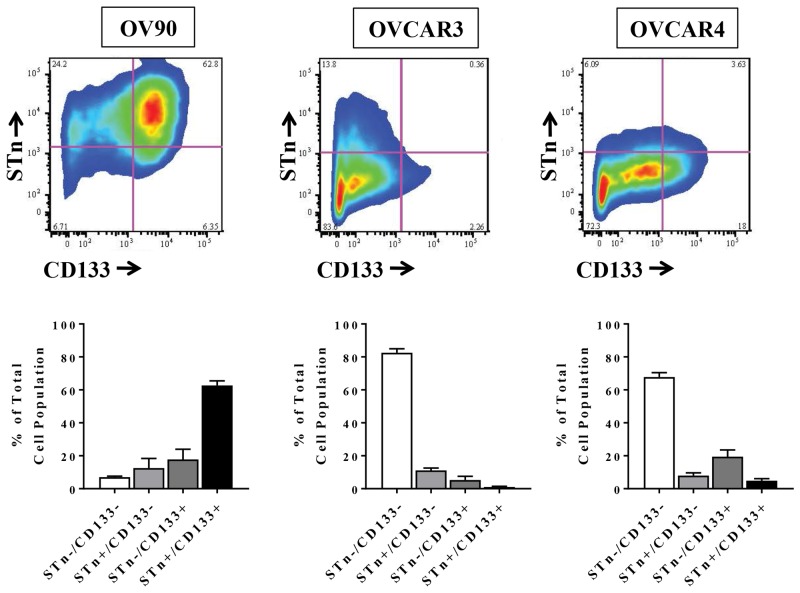
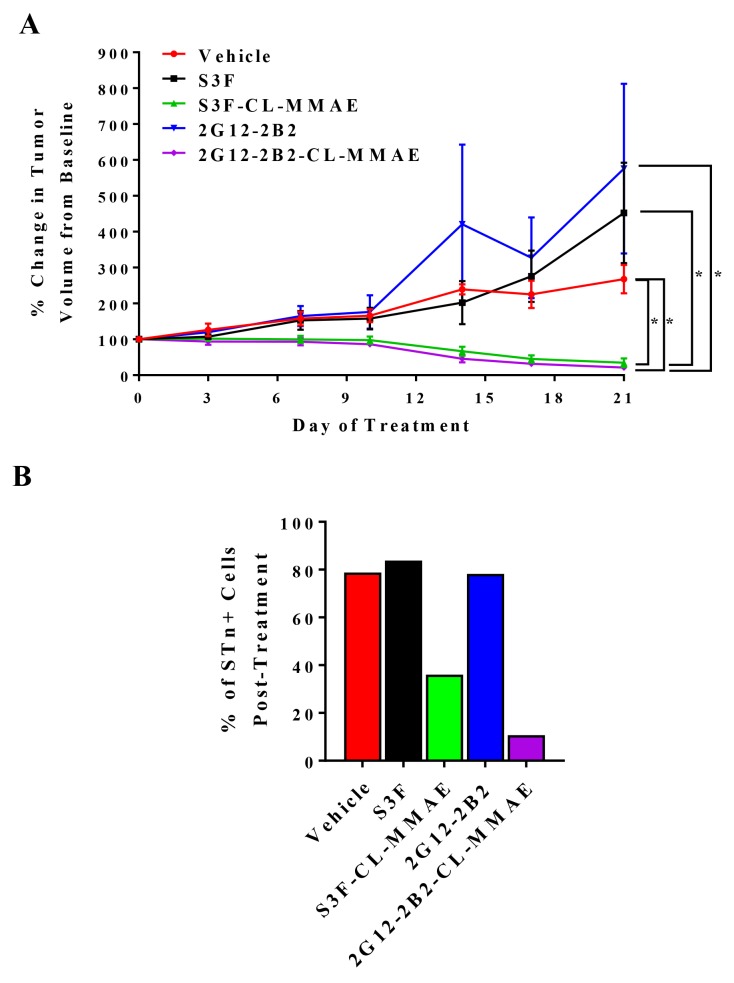
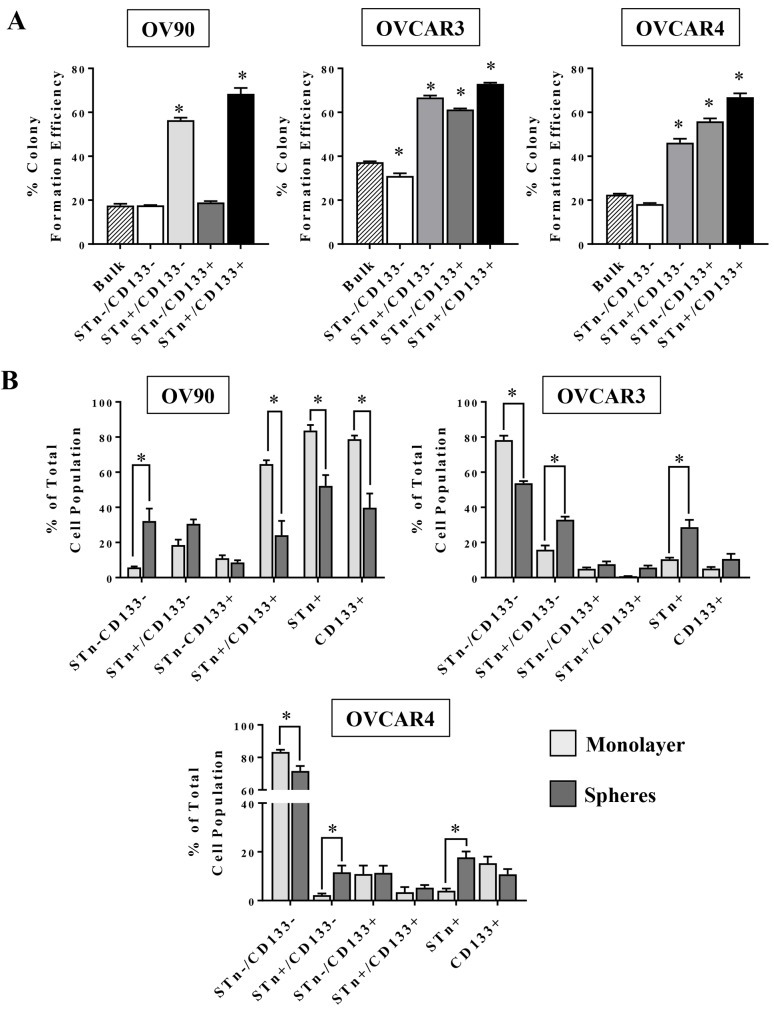
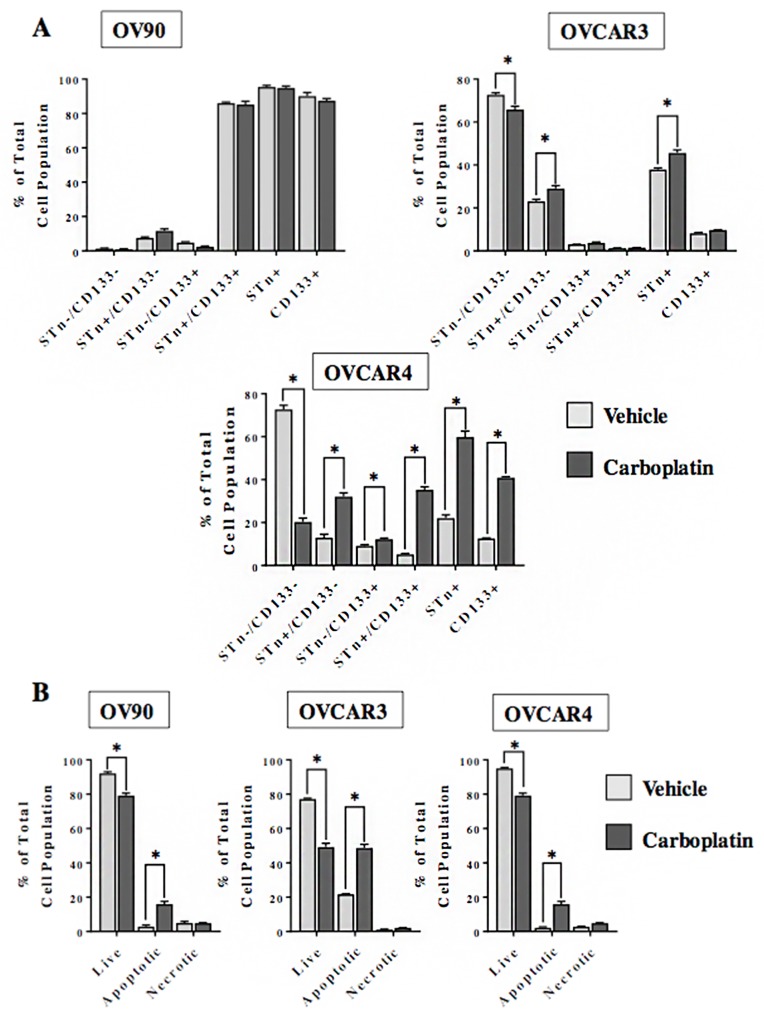
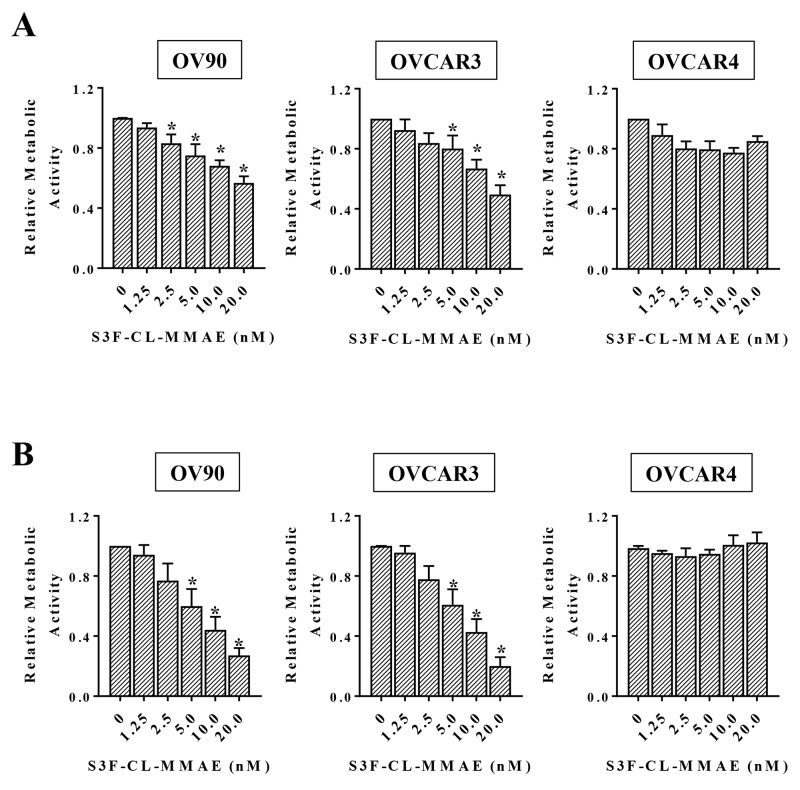
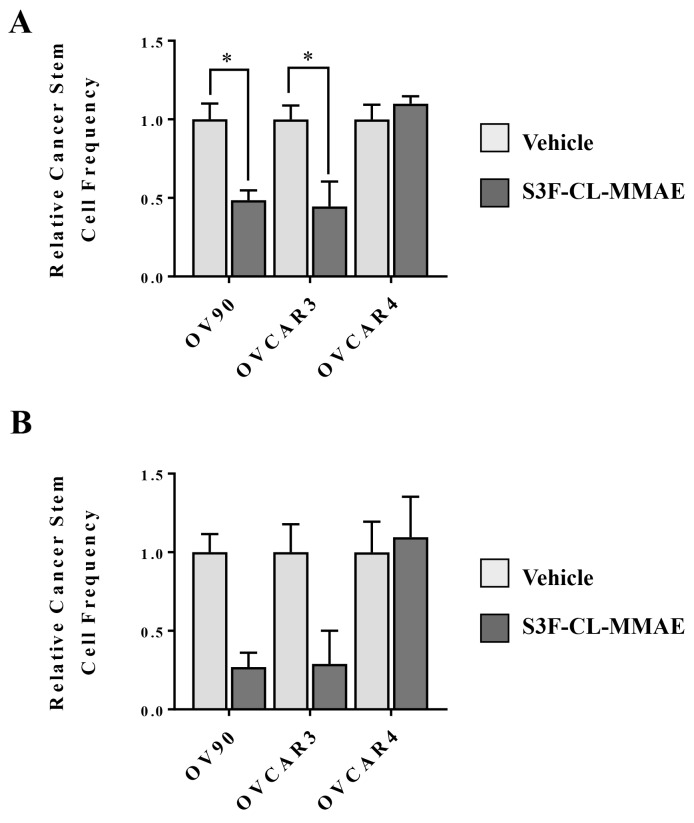
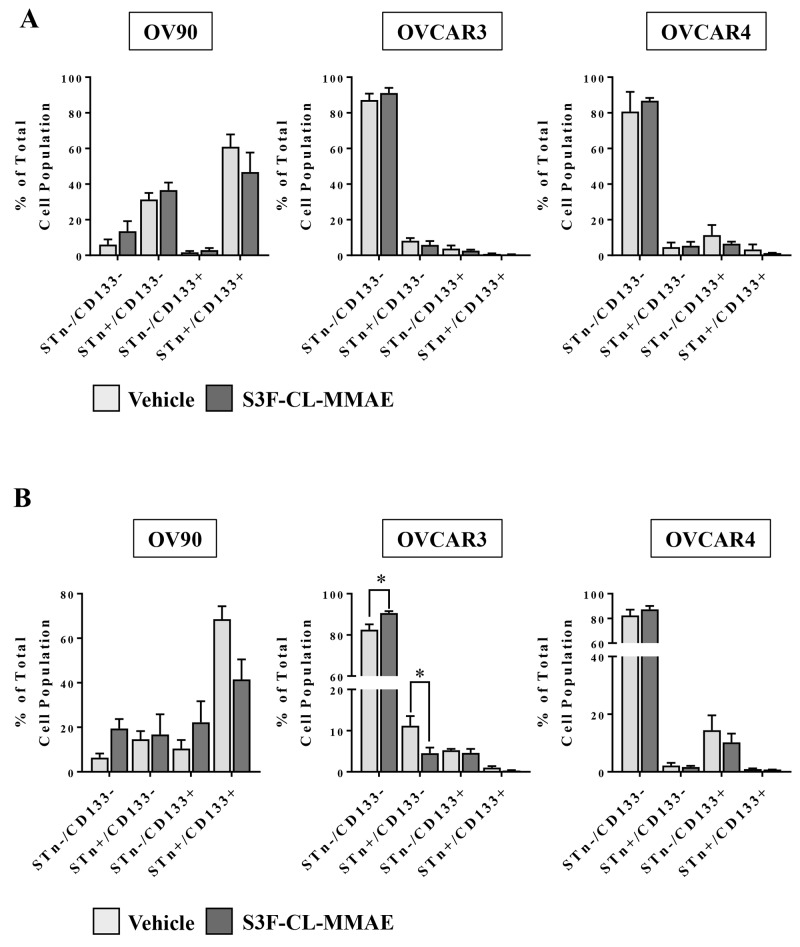
Recurrent ovarian cancer (OvCa) is thought to result in part from the inability to eliminate rare quiescent cancer stem cells (CSCs) that survive cytotoxic chemotherapy and drive tumor resurgence. The Sialyl-Thomsen-nouveau antigen (STn) is a carbohydrate moiety present on protein markers of CSCs in pancreatic, colon, and gastric malignancies. We have demonstrated that human OvCa cell lines contain varying levels of cells that independently express either STn or the ovarian CSC marker CD133. Here we determine co-expression of STn and CD133 in a subset of human OvCa cell lines. Analyses of colony and sphere forming capacity and of response to standard-of-care cytotoxic therapy suggest a subset of OvCa STn cells display some CSC features. The effect of the anti-STn antibody-drug conjugates (ADCs) S3F-CL-MMAE and 2G12-2B2-CL-MMAE on OvCa cell viability and was also assessed. Treatment with S3F-CL-MMAE reduced the viability of two of three OvCa cell lines and exposure to either S3F-CL-MMAE or 2G12-2B2-CL-MMAE reduced OVCAR3-derived xenograft volume , depleting STn tumor cells. In summary, STn cells demonstrate some stem-like properties and specific therapeutic targeting of STn in ovarian tumors may be an effective clinical strategy to eliminate both STn CSC and STn non-CSC populations.
复发性卵巢癌(OvCa)被认为部分是由于无法清除罕见的静止癌症干细胞(CSCs)所致,这些干细胞在细胞毒性化疗中存活并驱动肿瘤复发。唾液酸 - 汤姆森 - 新抗原(STn)是胰腺、结肠和胃恶性肿瘤中CSCs蛋白质标志物上存在的碳水化合物部分。我们已经证明,人卵巢癌细胞系含有不同水平的细胞,这些细胞独立表达STn或卵巢CSC标志物CD133。在这里,我们确定了人卵巢癌细胞系亚群中STn和CD133的共表达情况。对集落和球体形成能力以及对标准护理细胞毒性疗法反应的分析表明,一部分卵巢癌STn细胞表现出一些CSC特征。还评估了抗STn抗体 - 药物偶联物(ADCs)S3F - CL - MMAE和2G12 - 2B2 - CL - MMAE对卵巢癌细胞活力的影响。用S3F - CL - MMAE处理降低了三种卵巢癌细胞系中两种的活力,并且暴露于S3F - CL - MMAE或2G12 - 2B2 - CL - MMAE均可减少源自OVCAR3的异种移植瘤体积,耗尽STn肿瘤细胞。总之,STn细胞表现出一些干细胞样特性,在卵巢肿瘤中对STn进行特异性治疗靶向可能是消除STn CSC和STn非CSC群体的有效临床策略。