Krych Aaron J, Hevesi Mario, Desai Vishal S, Camp Christopher L, Stuart Michael J, Saris Daniel B F
Department of Orthopedic Surgery, Mayo Clinic, Rochester, Minnesota, USA.
Department of Orthopedic Surgery, University Medical Center Utrecht, Utrecht University, Utrecht, the Netherlands.
Orthop J Sports Med. 2018 May 17;6(5):2325967118773041. doi: 10.1177/2325967118773041. eCollection 2018 May.
As the number of cartilage restoration procedures is increasing, so is the number of revision procedures. However, there remains limited information on the reasons for failure of primary cartilage restoration procedures.
To determine the common modes of failure in primary cartilage restoration procedures to improve surgical decision making and patient outcomes.
Case series; Level of evidence, 4.
Patients who presented for revision after failed cartilage repair surgery were evaluated for factors contributing to failure of the primary procedure. All revision cases performed by a single surgeon at a tertiary center for failed cartilage restoration over a 6-year time frame were identified. In all cases, the medical records, preoperative radiographs, and magnetic resonance imaging scans were reviewed by 2 experienced cartilage surgeons. The cause for failure was categorized as malalignment, meniscal deficiency, graft or biologic failure, or instability. Univariate and descriptive statistics regarding patient demographics, index procedure, lesion location and size, and mechanism of failure were analyzed.
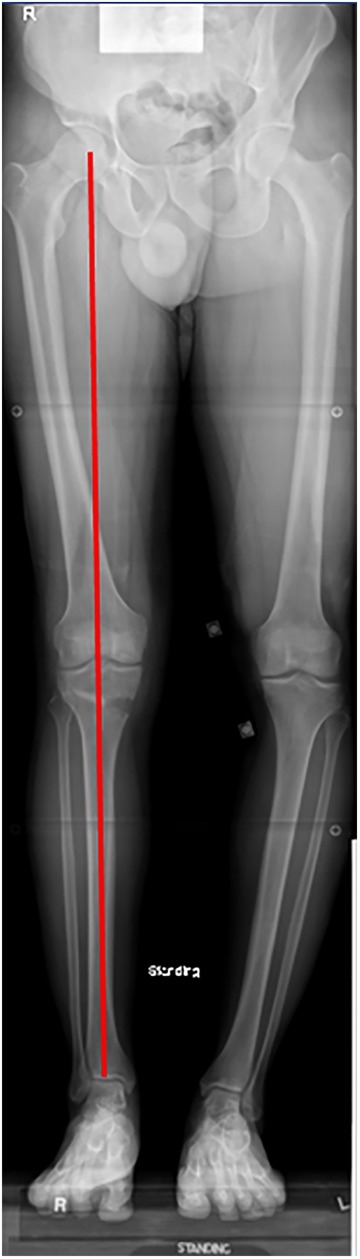
A total of 59 cases in 53 patients (32 male, 21 female) met the inclusion criteria. The mean patient age at the time of revision was 27.6 years, and the mean body mass index was 28.4 kg/m. Failed index surgical procedures included 35 microfractures (59%), 12 osteochondral allograft transplantations (20%), 10 osteochondral autograft transfers (17%), 2 nonviable osteochondral allografts (3%), and 2 particulated juvenile chondral allografts (3%). The mean lesion size was 4.4 cm. Reasons for failure included 33 cases with untreated malalignment (56%), 16 with graft failure (27%), 11 with untreated meniscal deficiency (19%), and 3 with untreated instability (5%); 4 cases demonstrated multiple reasons for failure.
The most commonly recognized reason for failure was untreated malalignment. While biologic and graft failures will occur, the majority of failures were attributed to untreated background factors such as malalignment, meniscal deficiency, and instability. The stepwise approach of considering and addressing alignment, meniscal volume, and stability remains essential in cartilage restoration surgery.
随着软骨修复手术数量的增加,翻修手术的数量也在增加。然而,关于初次软骨修复手术失败原因的信息仍然有限。
确定初次软骨修复手术失败的常见模式,以改善手术决策和患者预后。
病例系列;证据等级,4级。
对软骨修复手术失败后前来翻修的患者评估导致初次手术失败的因素。确定了一位外科医生在一家三级中心6年内进行的所有软骨修复失败翻修病例。所有病例的病历、术前X线片和磁共振成像扫描均由2名经验丰富的软骨外科医生进行审查。失败原因分为对线不良、半月板缺损、移植物或生物材料失败或不稳定。分析了关于患者人口统计学、初次手术、病变位置和大小以及失败机制的单变量和描述性统计数据。
53例患者(32例男性,21例女性)共59例符合纳入标准。翻修时患者的平均年龄为27.6岁,平均体重指数为28.4kg/m。失败的初次手术包括35例微骨折(59%)、12例骨软骨异体移植(20%)、10例骨软骨自体移植(17%)、2例无活力的骨软骨异体移植(3%)和2例颗粒状青少年软骨异体移植(3%)。平均病变大小为4.4cm。失败原因包括33例未治疗的对线不良(56%)、16例移植物失败(27%)、11例未治疗的半月板缺损(19%)和3例未治疗的不稳定(5%);4例显示多种失败原因。
最常见的失败原因是未治疗的对线不良。虽然会发生生物材料和移植物失败,但大多数失败归因于未治疗的背景因素,如对线不良、半月板缺损和不稳定。在软骨修复手术中,逐步考虑和解决对线、半月板体积和稳定性仍然至关重要。