1Biostatistics and Modelling Division, Bureau of Food Surveillance and Science Integration, Food Directorate, Health Canada, Ottawa, ON, Canada.
2Department of Animal Science, McGill University, Ste-Anne-de-Bellevue, QC, Canada.
Microb Genom. 2018 Jun;4(6). doi: 10.1099/mgen.0.000182. Epub 2018 May 29.
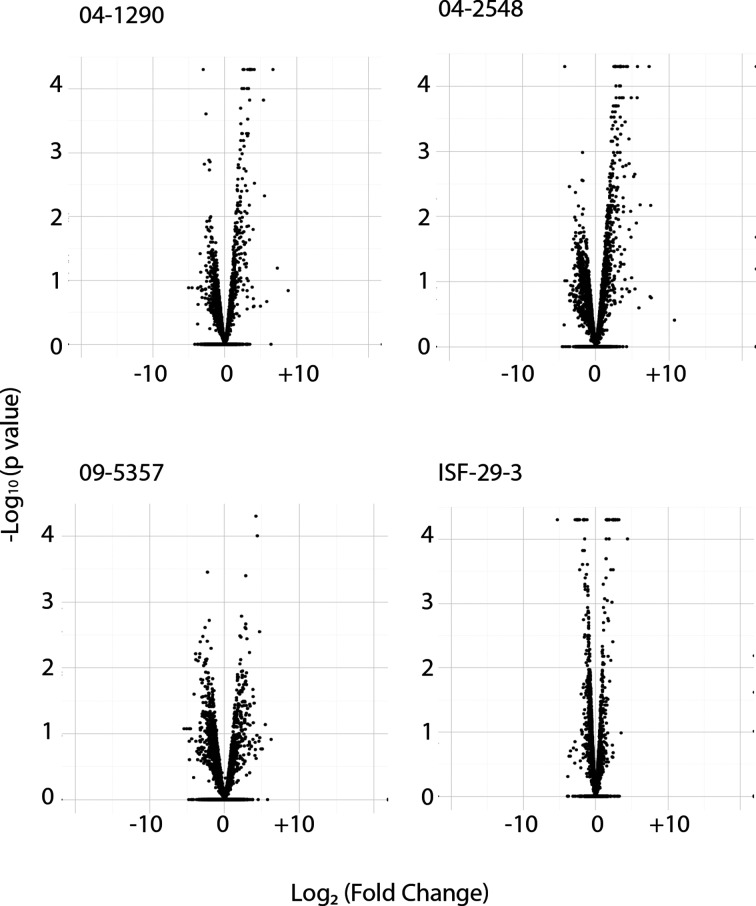
Most Vibrio parahaemolyticus isolates found in marine environments are non-pathogenic; however, certain lineages have acquired genomic pathogenicity islands (PAIs) that enable these isolates to cause human illness. The V. parahaemolyticus PAI contains one or both of two toxins: thermostable direct haemolysin (TDH) or TDH-related haemolysin (TRH) and type III secretion system 2 (T3SS2). Recently, a few V. parahaemolyticus isolates that do not have this PAI were obtained from clinical samples, and there has been interest in determining whether these isolates possess novel virulence factors. In this investigation, we have selected four V. parahaemolyticus isolates: a canonical pathogenic strain containing TDH, TRH and T3SS2; two strains from clinical cases which do not contain a PAI; and an environmental isolate which also does not contain a PAI. For each isolate, we analyzed differential gene expression after crude bile exposure. Several enteric bacterial pathogens are known to use bile as a signal to enhance virulence gene expression. We have shown that in the tdh-positive trh-positive pathotype gene virulence gene expression was not up-regulated in response to crude bile, strongly indicating that the current dogma of virulence gene regulation in V. parahaemolyticus needs to be revisited and separately investigated for each pathotype. In addition, we have created a list of genes of interest that were up-regulated in the non-canonical pathotypes which may contribute to virulence in these isolates.
大多数在海洋环境中发现的副溶血性弧菌分离株是无毒的;然而,某些谱系获得了基因组致病性岛 (PAI),使这些分离株能够引起人类疾病。副溶血性弧菌 PAI 包含一种或两种毒素:耐热直接溶血素 (TDH) 或 TDH 相关溶血素 (TRH) 和 III 型分泌系统 2 (T3SS2)。最近,从临床样本中获得了一些没有这种 PAI 的副溶血性弧菌分离株,人们一直有兴趣确定这些分离株是否具有新的毒力因子。在这项研究中,我们选择了四个副溶血性弧菌分离株:一个含有 TDH、TRH 和 T3SS2 的典型致病性菌株;两个来自临床病例的菌株,它们不含有 PAI;以及一个同样不含有 PAI 的环境分离株。对于每个分离株,我们分析了粗胆盐暴露后的差异基因表达。已知几种肠道细菌病原体将胆汁用作增强毒力基因表达的信号。我们已经表明,在 tdh 阳性 trh 阳性型基因中,毒力基因表达没有被粗胆盐上调,这强烈表明副溶血性弧菌毒力基因调节的当前教条需要重新审视,并分别针对每种型进行调查。此外,我们创建了一个在非典型型中上调的感兴趣基因列表,这些基因可能有助于这些分离株的毒力。