Department of Physiology, New Jersey Medical School Rutgers, 185 S Orange Ave, Newark, NJ 07103, USA.
Department of Physiology and Biophysics, College of Medicine, Howard University, 520 W Street, NW, #2309, Washington, DC 20059, USA.
Int J Environ Res Public Health. 2018 May 28;15(6):1083. doi: 10.3390/ijerph15061083.
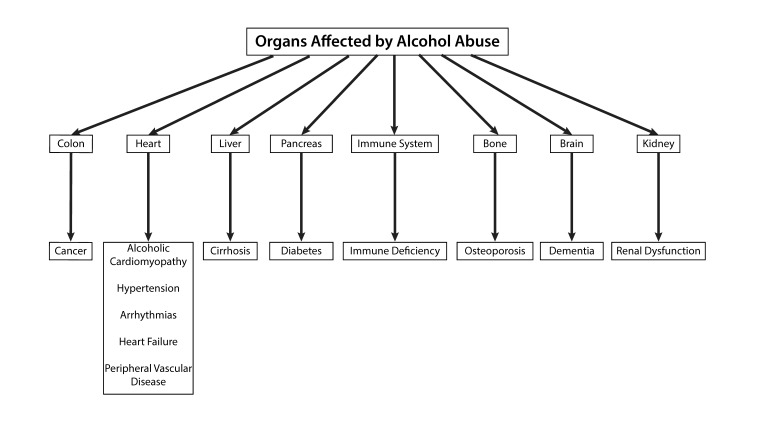
Alcohol abuse can affect more than the heart and the liver. Many observers often do not appreciate the complex and differing aspects of alcohol's effects in pathophysiologies that have been reported in multiple organs. Chronic alcohol abuse is known to be associated with pathophysiological changes that often result in life-threatening clinical outcomes, e.g., breast and colon cancer, pancreatic disease, cirrhosis of the liver, diabetes, osteoporosis, arthritis, kidney disease, immune system dysfunction, hypertension, coronary artery disease, cardiomyopathy, and can be as far-reaching as to cause central nervous system disorders. In this review article, we will discuss the various organs impacted by alcohol abuse. The lack of clear guidelines on the amount and frequency of alcohol intake, complicated by personal demographics, make extrapolations to real-life practices at best difficult for public health policy-makers.
酗酒不仅会影响心脏和肝脏。许多观察人士通常没有意识到,在多个器官中报告的生理病理学中,酒精的影响具有复杂和不同的方面。众所周知,慢性酗酒与生理病理学变化有关,这些变化常常导致危及生命的临床后果,例如乳腺癌和结肠癌、胰腺疾病、肝硬化、糖尿病、骨质疏松症、关节炎、肾脏疾病、免疫系统功能障碍、高血压、冠心病、心肌病,甚至可能导致中枢神经系统紊乱。在这篇综述文章中,我们将讨论受酒精滥用影响的各种器官。由于缺乏关于饮酒量和频率的明确准则,再加上个人人口统计学因素,使得公共卫生政策制定者最多只能难以将其推断到实际生活实践中。