Department of General Surgery, Gastrointestinal Surgery, The First Hospital of China Medical University, Shenyang, Liaoning 110001, P.R. China.
Department of Pathology, The First Affiliated Hospital and College of Basic Medical Sciences of China Medical University, Shenyang, Liaoning, P.R. China.
Oncol Rep. 2018 Aug;40(2):589-598. doi: 10.3892/or.2018.6463. Epub 2018 May 24.
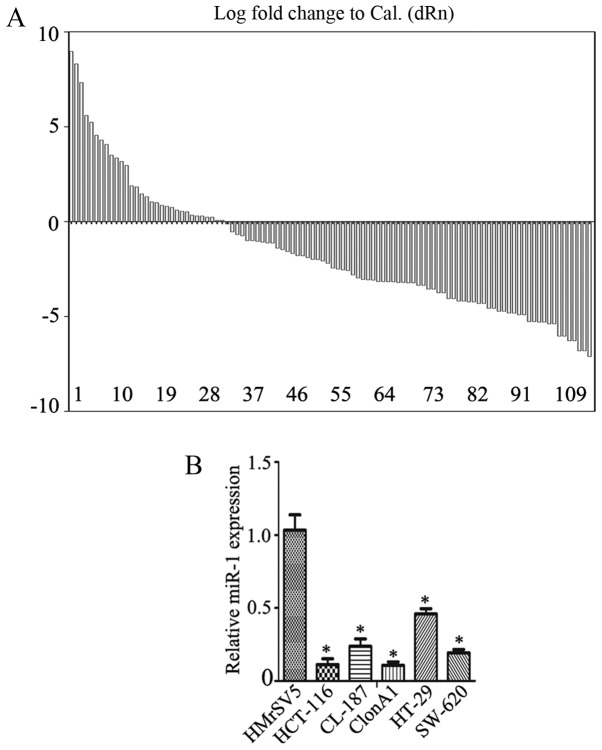
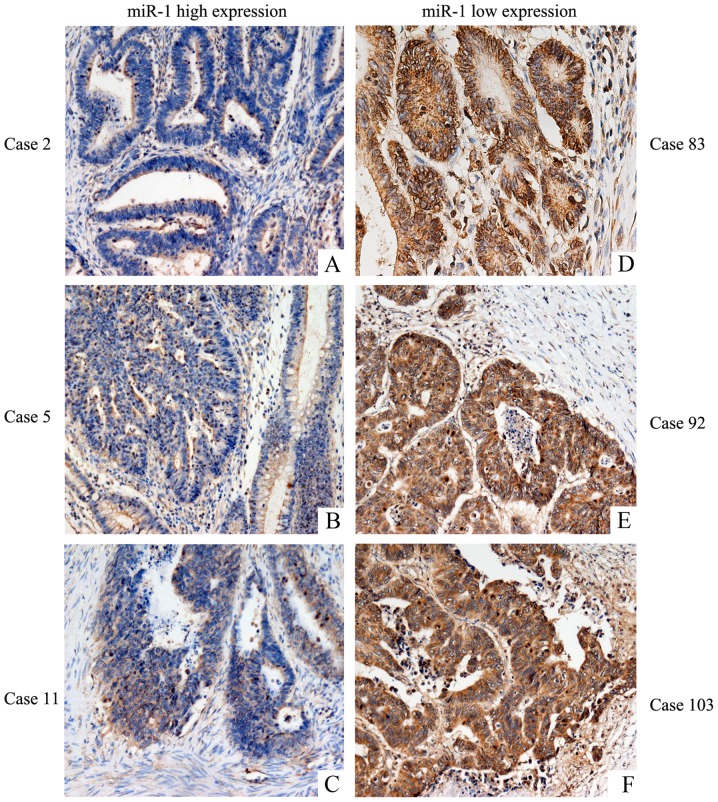
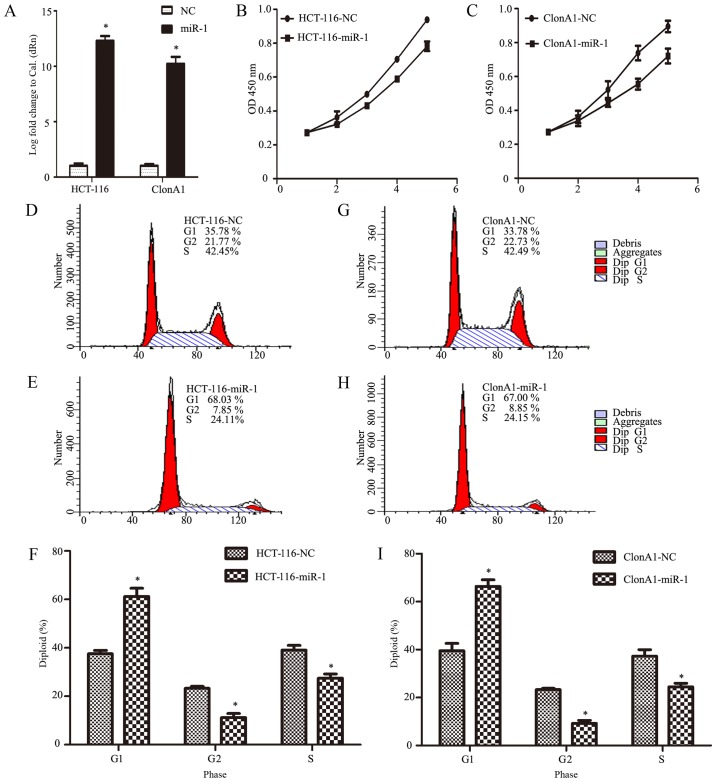
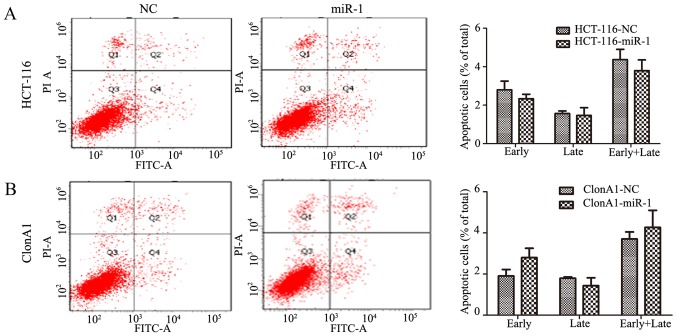
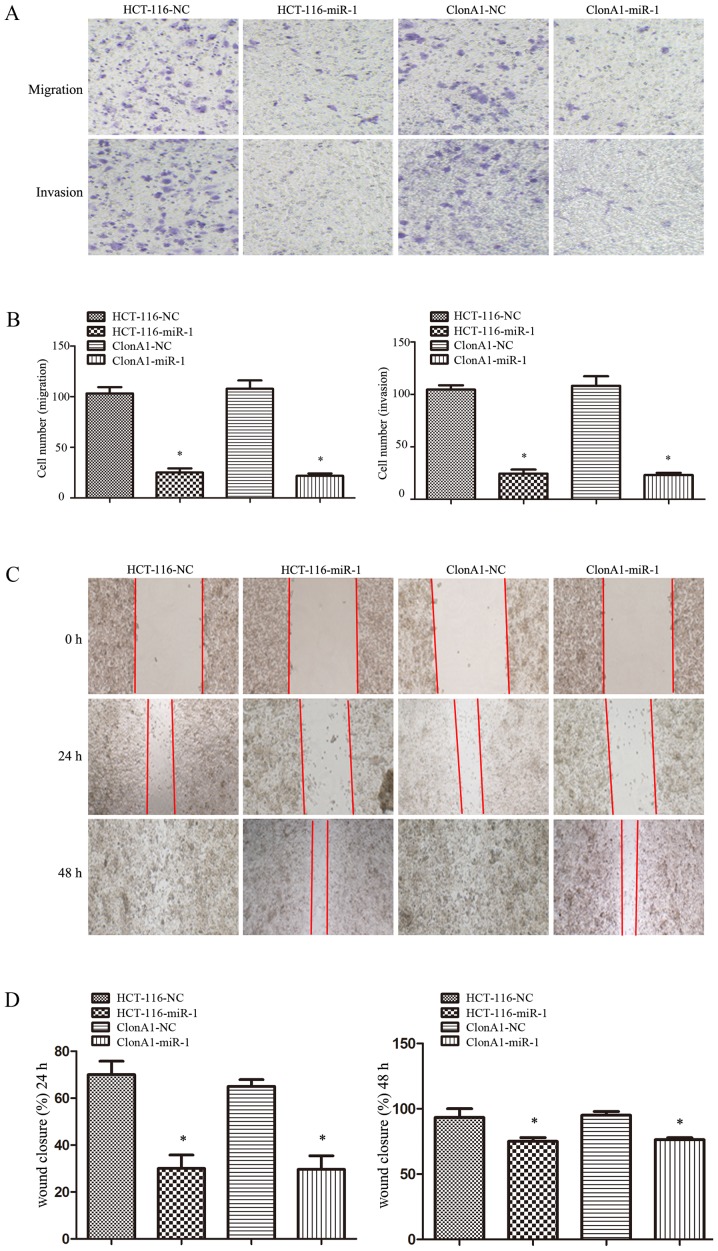
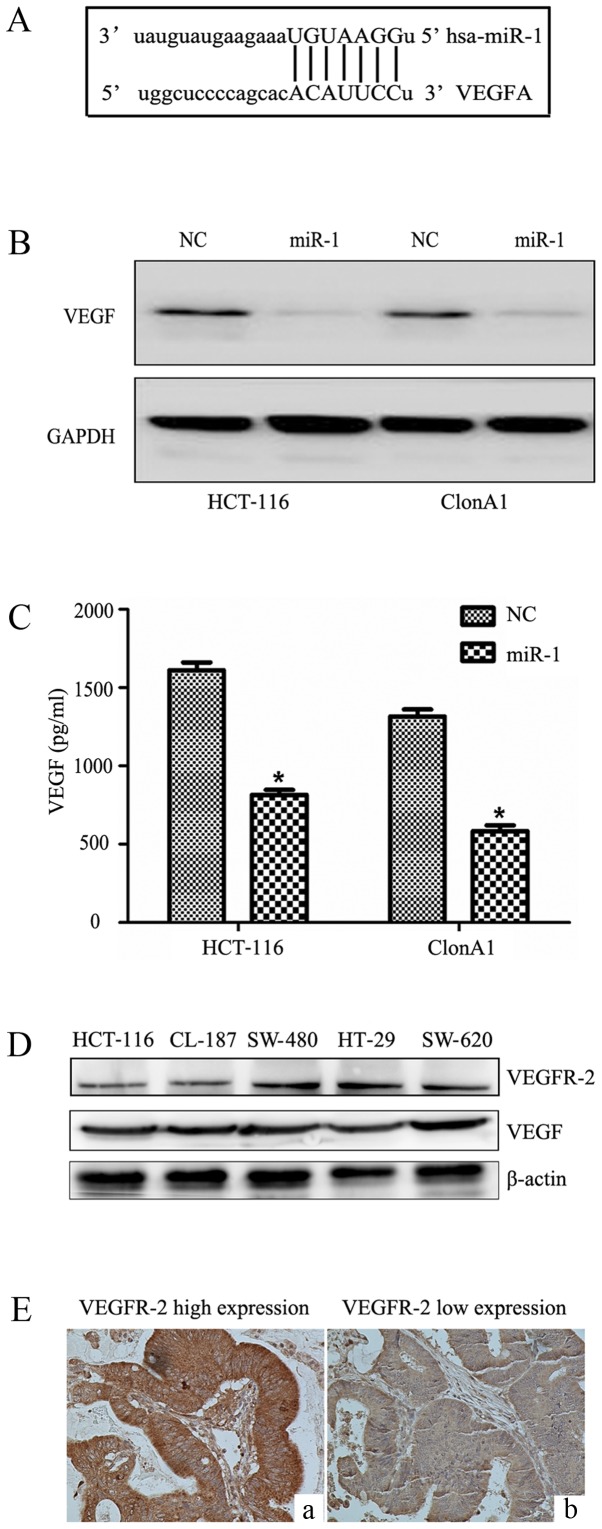
MicroRNA (miR)‑1 is associated with various human malignancies through repressing tumor growth, migration and angiogenesis. Recently, high‑throughput transcriptional profiling confirmed that miR‑1 is markedly downregulated in metastatic colorectal cancer; however, its biological functions and the specific underlying mechanisms in colorectal cancer (CRC) require further investigation. In this study, the expression of miR‑1 in 111 CRC and paired normal tissue samples was measured using quantitative polymerase chain reaction analysis, and the association between miR‑1 expression and clinical characteristics was evaluated. miR‑1 was found to be significantly downregulated in CRC tissues compared with paired normal tissues, and in CRC cell lines compared with non‑cancer cells (P<0.001), and was negatively associated with tumor size (P=0.001), differentiation (P=0.011), lymph node metastasis (P=0.001) and TNM stage (P=0.001). Further experiments revealed that miR‑1 inhibited the migration and invasion of HCT116 and ClonA1 cells, and inhibited cell proliferation by affecting the cell cycle. Vascular endothelial growth factor (VEGF) was found to be a potential target of miR‑1 by biological prediction, and further investigation confirmed that miR‑1 significantly inhibited the expression and paracrine function of VEGF. In CRC tissues, the expression of VEGF was negatively correlated with miR‑1. The low expression of miR‑1 in CRC may be one of the reasons for the abnormally high expression of VEGF; the upregulation of miR‑1 expression may inhibit cancer progression by downregulating VEGF. These findings indicate that treatment with miR‑1 may be a novel method of tumor suppression, and provide a theoretical and experimental basis for the further targeted treatment of CRC through the regulation of miR‑1 and VEGF expression.
微小 RNA(miR)-1 通过抑制肿瘤生长、迁移和血管生成与各种人类恶性肿瘤相关。最近,高通量转录谱分析证实 miR-1 在转移性结直肠癌中显著下调;然而,其在结直肠癌(CRC)中的生物学功能和具体潜在机制仍需要进一步研究。在本研究中,通过定量聚合酶链反应分析测量了 111 例 CRC 和配对正常组织样本中的 miR-1 表达,并评估了 miR-1 表达与临床特征之间的关联。与配对正常组织相比,CRC 组织中 miR-1 的表达明显下调,与非癌细胞相比,CRC 细胞系中 miR-1 的表达也明显下调(P<0.001),且与肿瘤大小(P=0.001)、分化(P=0.011)、淋巴结转移(P=0.001)和 TNM 分期(P=0.001)呈负相关。进一步的实验表明,miR-1 抑制了 HCT116 和 ClonA1 细胞的迁移和侵袭,并通过影响细胞周期抑制细胞增殖。通过生物预测发现血管内皮生长因子(VEGF)是 miR-1 的潜在靶标,进一步的研究证实 miR-1 显著抑制了 VEGF 的表达和旁分泌功能。在 CRC 组织中,VEGF 的表达与 miR-1 呈负相关。CRC 中 miR-1 的低表达可能是 VEGF 异常高表达的原因之一;上调 miR-1 的表达可能通过下调 VEGF 抑制癌症进展。这些发现表明,miR-1 的治疗可能是一种新的肿瘤抑制方法,为通过调节 miR-1 和 VEGF 表达进一步靶向治疗 CRC 提供了理论和实验依据。