Texas Therapeutics Institute, Brown Foundation Institute of Molecular Medicine, University of Texas Health Science Center at Houston, Houston, TX 77030, USA.
Graduate School of Biomedical Sciences, University of Texas Health Science Center at Houston, Houston, TX 77030, USA.
Asian J Androl. 2019 May-Jun;21(3):253-259. doi: 10.4103/aja.aja_32_18.
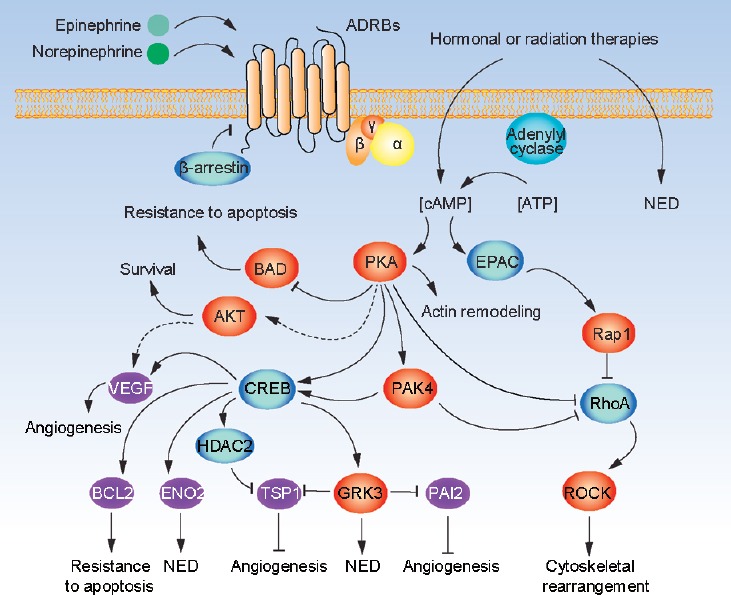
Prostate cancer is a complex, heterogeneous disease that mainly affects the older male population with a high-mortality rate. The mechanisms underlying prostate cancer progression are still incompletely understood. Beta-adrenergic signaling has been shown to regulate multiple cellular processes as a mediator of chronic stress. Recently, beta-adrenergic signaling has been reported to affect the development of aggressive prostate cancer by regulating neuroendocrine differentiation, angiogenesis, and metastasis. Here, we briefly summarize and discuss recent advances in these areas and their implications in prostate cancer therapeutics. We aim to provide a better understanding of the contribution of beta-adrenergic signaling to the progression of aggressive prostate cancer.
前列腺癌是一种复杂的、异质性的疾病,主要影响老年男性,死亡率较高。前列腺癌进展的机制尚不完全清楚。β-肾上腺素能信号已被证明作为慢性应激的介质调节多种细胞过程。最近,β-肾上腺素能信号通过调节神经内分泌分化、血管生成和转移被报道影响侵袭性前列腺癌的发展。在这里,我们简要总结和讨论了这些领域的最新进展及其在前列腺癌治疗中的意义。我们旨在更好地了解β-肾上腺素能信号对侵袭性前列腺癌进展的贡献。