Department of Anaesthesiology, Renmin Hospital of Wuhan University, Wuhan, China.
J Diabetes Res. 2018 Apr 4;2018:9502895. doi: 10.1155/2018/9502895. eCollection 2018.
Patients with diabetes are more vulnerable to myocardial ischemia reperfusion injury (IRI), which is involved in PKC2 activation and mitochondrial dysfunction. Glycine has been documented as a cytoprotective agent to attenuate diabetes-related abnormalities and reduce myocardial IRI, but the underlying mechanisms are still unclear. We determined whether glycine could attenuate high glucose- (HG-) and hypoxia/reoxygenation- (H/R-) induced injury by inhibiting PKC2 activation and improving mitochondrial quality in cultured H9C2 cells.
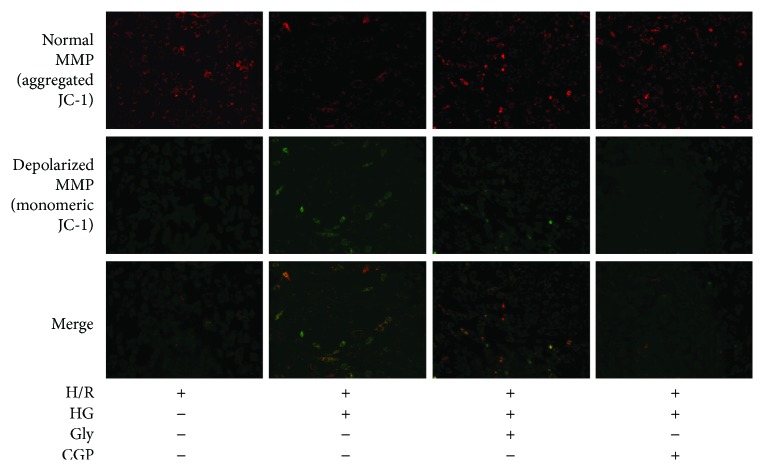
H9C2 cells were either exposed to low glucose (LG) or HG conditions with or without treatment of glycine or CGP53353 (a selective inhibitor of PKC2) for 48 h, then subjected to 4 h of hypoxia followed by 2 h of reoxygenation (H/R). Cell viability, lactate dehydrogenase (LDH) release, mitochondrial membrane potential (MMP), superoxide dismutase (SOD) activity, and malondialdehyde (MDA) concentration were detected using corresponding commercial kits. Mitochondrial quality control-related proteins (LC-3II, Mfn-2, and Cyt-C) and PKC2 activation were detected by Western blot.
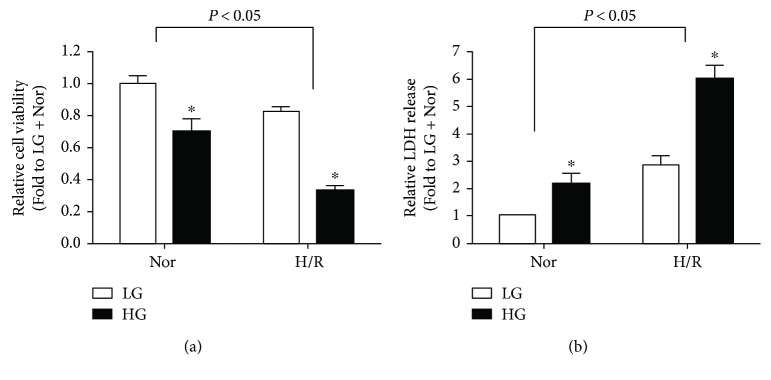
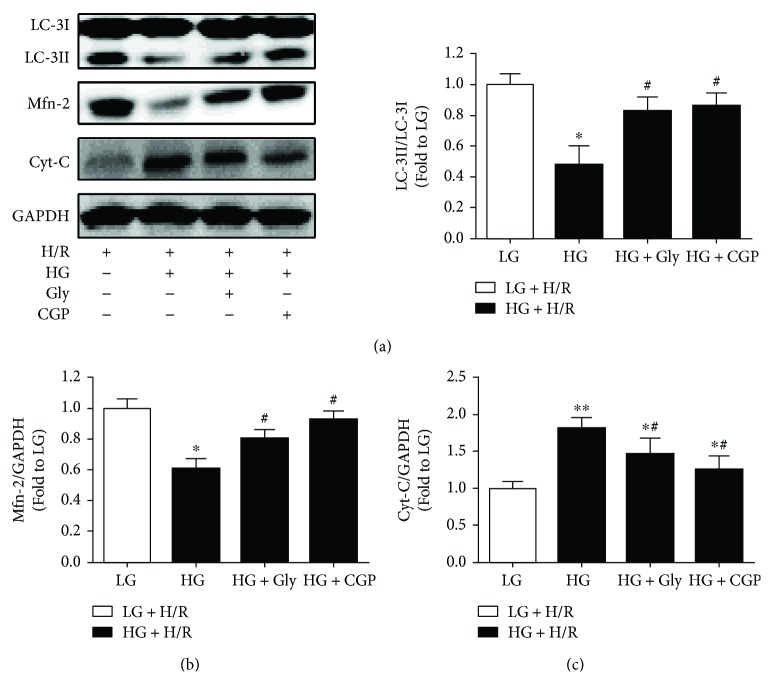
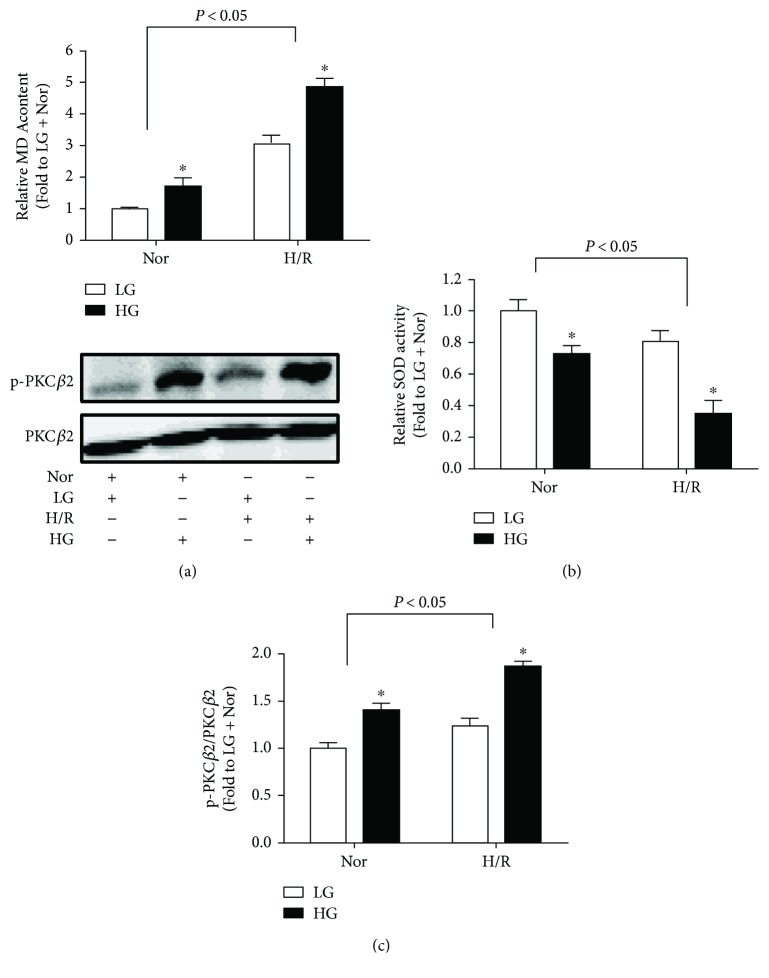
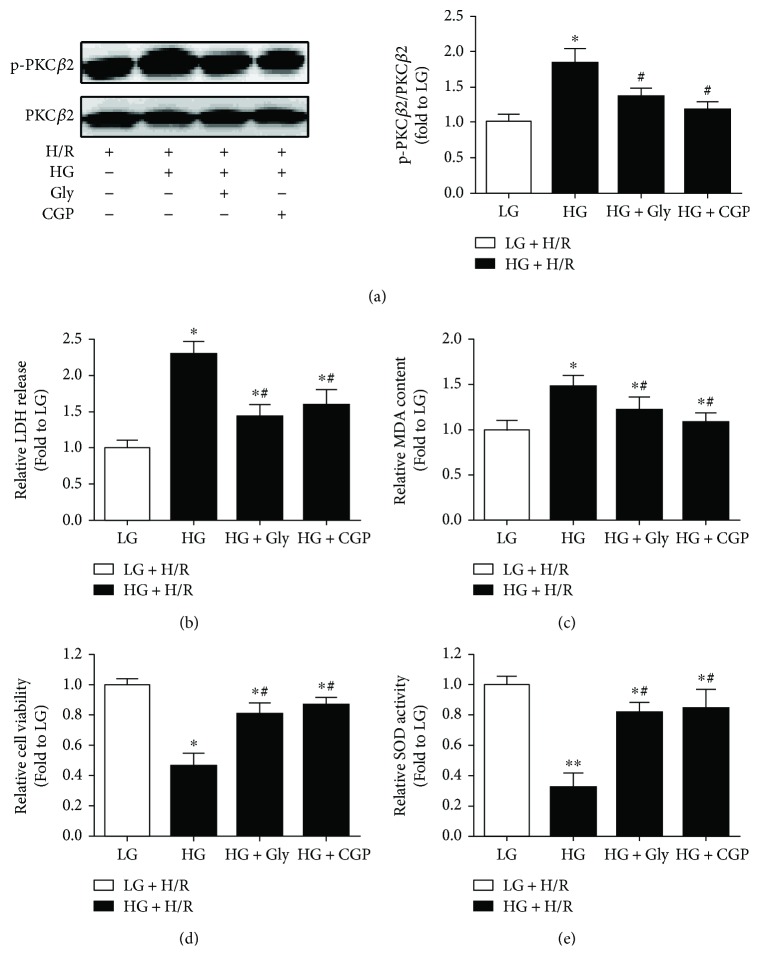
HG stimulation significantly decreased cell viability and SOD activity and increased LDH release, MDA production, and PKC2 activation as compared to LG group, all of which changes were further increased by H/R insult. Glycine or CGP53353 treatment significantly reduced the increase of LDH release, MDA production, PKC2 activation, and Cyt-C expression and the decrease of cell viability, SOD activity, MMP, Mfn-2 expression, and LC-3II/LC-3I ratio induced by HG and H/R stimulation.
Supplementary glycine protects H9C2 cells from HG- and H/R-induced cellular injury by suppressing PKC2 activation and improving mitochondria quality.
患有糖尿病的患者更容易发生心肌缺血再灌注损伤(IRI),这与蛋白激酶 C2(PKC2)的激活和线粒体功能障碍有关。甘氨酸已被证明是一种细胞保护剂,可减轻与糖尿病相关的异常并减少心肌 IRI,但潜在机制尚不清楚。我们确定甘氨酸是否可以通过抑制 PKC2 的激活和改善培养的 H9C2 细胞中线粒体的质量来减轻高葡萄糖(HG)和缺氧/复氧(H/R)诱导的损伤。
将 H9C2 细胞暴露于低葡萄糖(LG)或 HG 条件下,或用甘氨酸或 CGP53353(PKC2 的选择性抑制剂)处理 48 小时,然后进行 4 小时缺氧,接着进行 2 小时复氧(H/R)。使用相应的商业试剂盒检测细胞活力、乳酸脱氢酶(LDH)释放、线粒体膜电位(MMP)、超氧化物歧化酶(SOD)活性和丙二醛(MDA)浓度。通过 Western blot 检测线粒体质量控制相关蛋白(LC-3II、Mfn-2 和 Cyt-C)和 PKC2 的激活。
与 LG 组相比,HG 刺激显著降低了细胞活力和 SOD 活性,增加了 LDH 释放、MDA 生成和 PKC2 的激活,而这些变化在 H/R 损伤后进一步增加。甘氨酸或 CGP53353 处理可显著降低 HG 和 H/R 刺激引起的 LDH 释放、MDA 生成、PKC2 激活和 Cyt-C 表达的增加,以及细胞活力、SOD 活性、MMP、Mfn-2 表达和 LC-3II/LC-3I 比值的降低。
补充甘氨酸通过抑制 PKC2 的激活和改善线粒体质量来保护 H9C2 细胞免受 HG 和 H/R 引起的细胞损伤。