US Army Medical Research Institute for Infectious Disease (USAMRIID), Fort Detrick, MD 21702, USA.
Unite de Biotechnologie des Anticorps, Institut de Recherche Biomedicale des Armees (IRBA-CRSSA), La Tronche 38516, France.
Viruses. 2018 May 26;10(6):286. doi: 10.3390/v10060286.
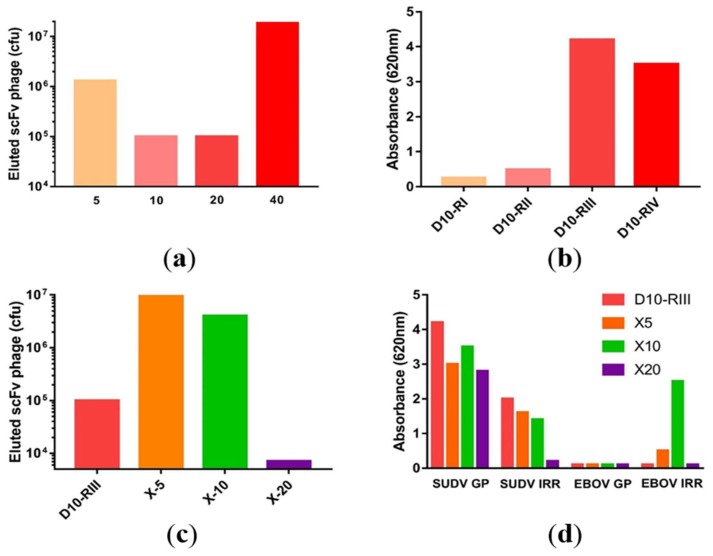
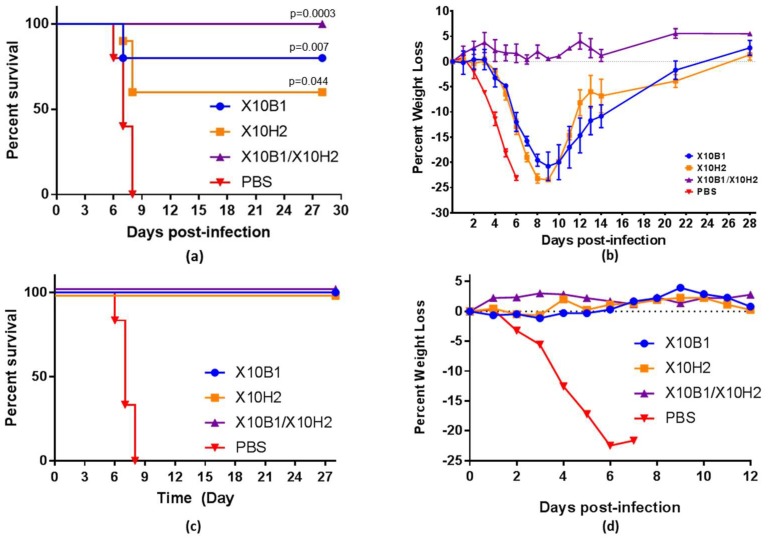
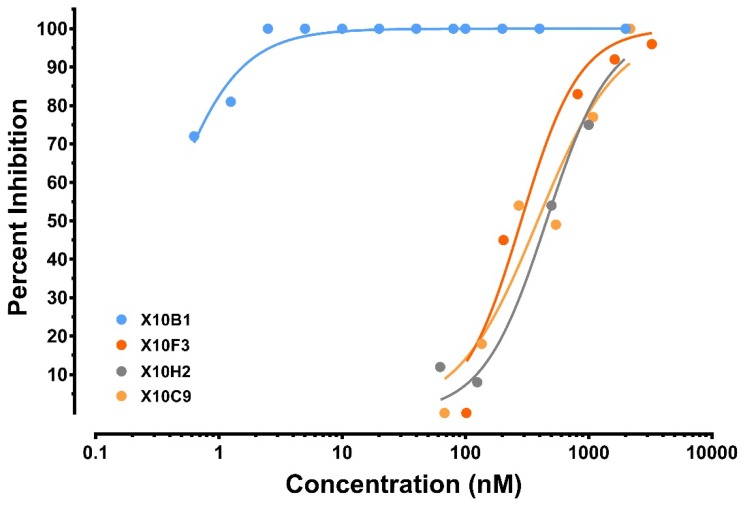
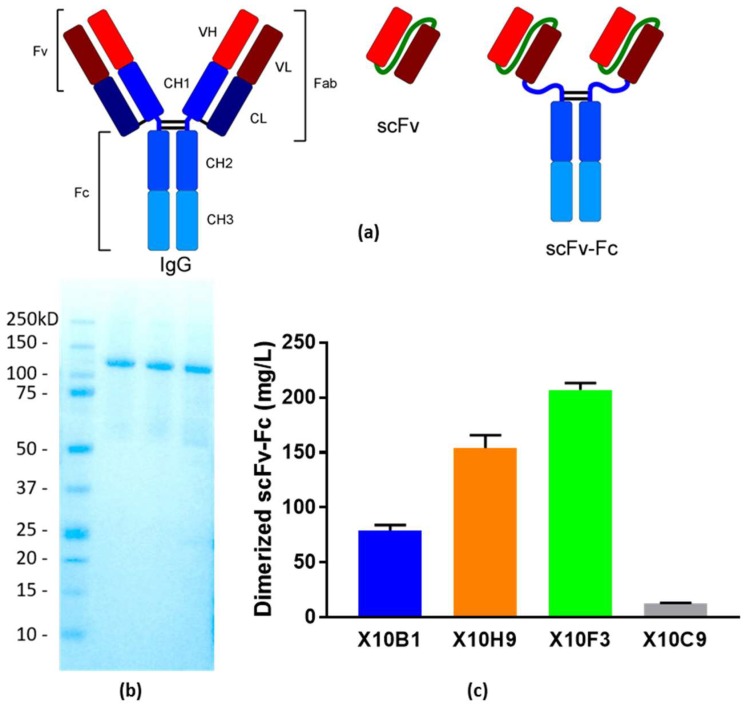
Sudan virus (SUDV) and Ebola viruses (EBOV) are both members of the genus and have been sources of epidemics and outbreaks for several decades. We present here the generation and characterization of cross-reactive antibodies to both SUDV and EBOV, which were produced in a cell-free system and protective against SUDV in mice. A non-human primate, cynomolgus macaque, was immunized with viral-replicon particles expressing the glycoprotein of SUDV-Boniface (8A). Two separate antibody fragment phage display libraries were constructed after four immunogen injections. Both libraries were screened first against the SUDV and a second library was cross-selected against EBOV-Kikwit. Sequencing of 288 selected clones from the two distinct libraries identified 58 clones with distinct V and V sequences. Many of these clones were cross-reactive to EBOV and SUDV and able to neutralize SUDV. Three of these recombinant antibodies (X10B1, X10F3, and X10H2) were produced in the scFv-Fc format utilizing a cell-free production system. Mice that were challenged with SUDV-Boniface receiving 100µg of the X10B1/X10H2 scFv-Fc combination 6 and 48-h post-exposure demonstrated partial protection individually and complete protection as a combination. The data herein suggests these antibodies may be promising candidates for further therapeutic development.
苏丹病毒(SUDV)和埃博拉病毒(EBOV)均属于丝状病毒属,几十年来一直是引发疫情和爆发的源头。我们在此介绍了针对 SUDV 和 EBOV 的交叉反应性抗体的产生和特性,这些抗体是在无细胞系统中产生的,可在小鼠中预防 SUDV。使用表达 SUDV-Boniface(8A)糖蛋白的病毒复制子颗粒对食蟹猴进行免疫。在四次免疫接种后,构建了两个独立的抗体片段噬菌体展示文库。两个文库首先针对 SUDV 进行筛选,第二个文库针对 EBOV-Kikwit 进行交叉筛选。对来自两个不同文库的 288 个选定克隆进行测序,确定了 58 个具有独特 V 和 V 序列的克隆。这些克隆中的许多都对 EBOV 和 SUDV 具有交叉反应性,并能中和 SUDV。这三种重组抗体(X10B1、X10F3 和 X10H2)以 scFv-Fc 形式利用无细胞生产系统进行生产。在暴露后 6 和 48 小时接受 100µg X10B1/X10H2 scFv-Fc 组合的接受 SUDV-Boniface 挑战的小鼠分别表现出部分保护和完全保护。本文的数据表明,这些抗体可能是进一步治疗开发的有前途的候选物。