Ishibe Atsushi, Ota Mitsuyoshi, Takeshita Akemi, Tsuboi Hiroshi, Kizuka Satoko, Oka Hidenori, Suwa Yusuke, Suzuki Shinsuke, Nakagawa Kazuya, Suwa Hirokazu, Momiyama Masashi, Watanabe Jun, Taguri Masataka, Kunisaki Chikara, Endo Itaru
Department of Gastroenterological Surgery Yokohama City University Graduate School Medicine Yokohama Japan.
Department of Surgery Gastroenterological Center Graduate School of Medicine Yokohama City University Yokohama Japan.
Ann Gastroenterol Surg. 2018 Jan 11;2(2):147-153. doi: 10.1002/ags3.12056. eCollection 2018 Mar.
The fecal occult blood test (FOBT) is widely accepted as the most economic and non-invasive screening method for colorectal cancer (CRC). However, the FOBT is inconvenient because it requires a fecal sample and shows limited accuracy. Alternatively, we hypothesized that fecal gas compounds from bowel movements may be a non-invasive biomarker for CRC.
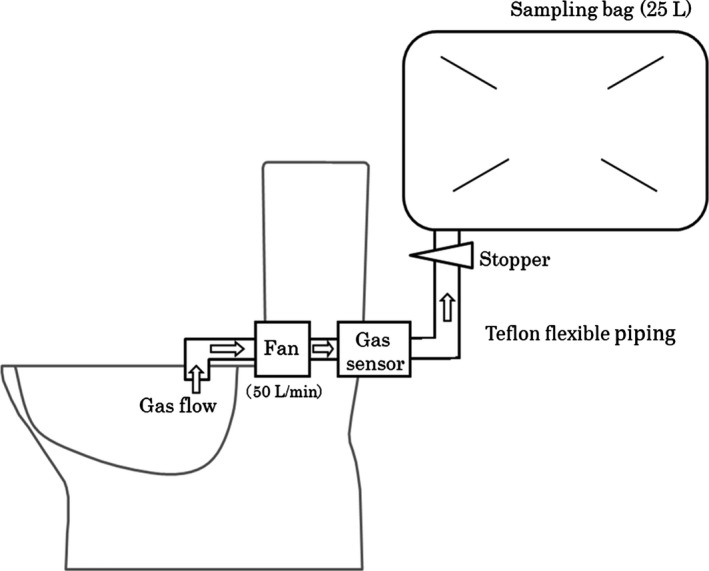
Gas compounds were collected from the bowel movements of 30 patients with CRC and from 26 healthy controls. The patient group comprised 17 males and 13 females, and the average age was 68 years. Additionally, 22 patients had colon cancer, and eight patients had rectal cancer. Gas compounds were analyzed using gas chromatography and compared with those from healthy controls.
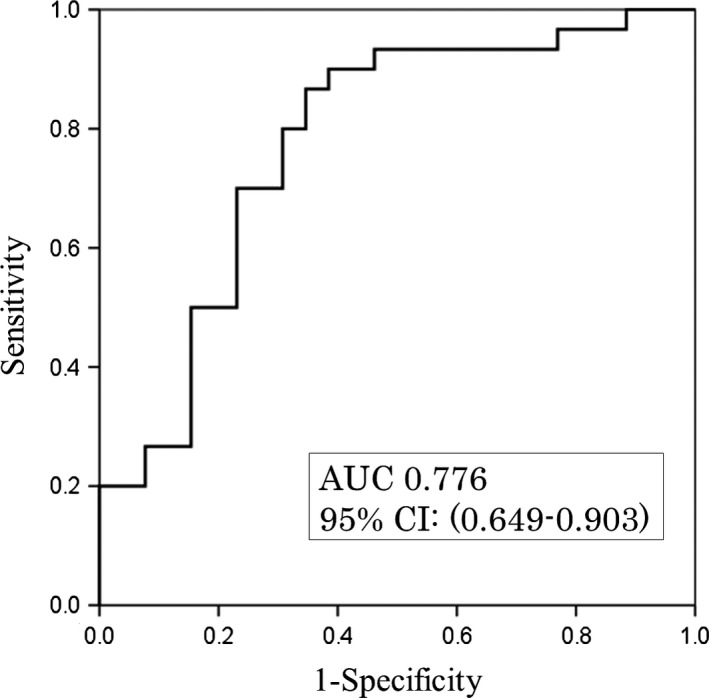
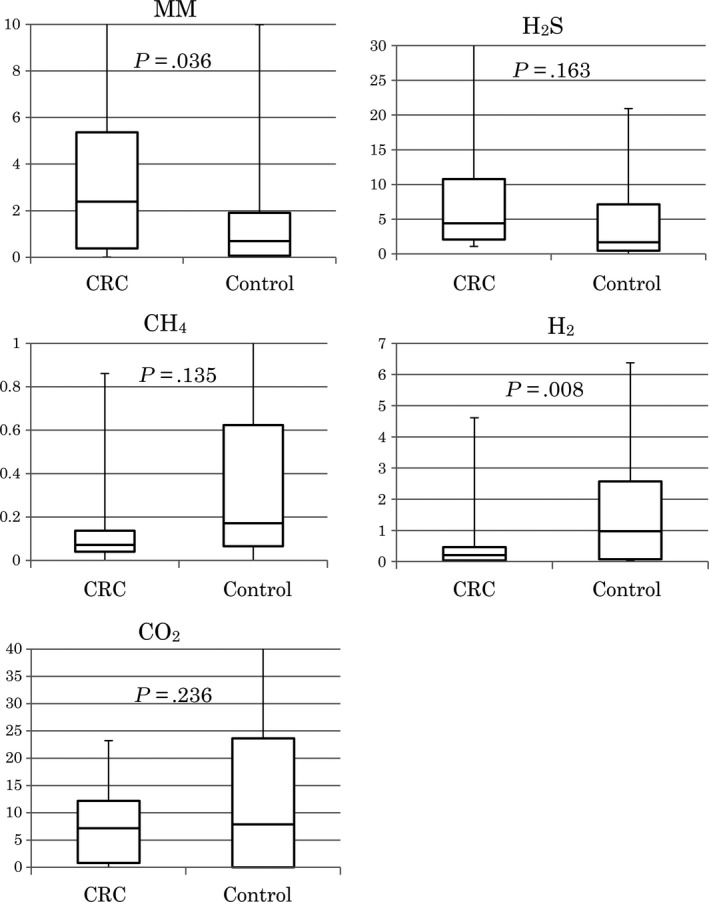
In the gas analysis, methyl mercaptan was significantly higher in the CRC group than in the control group. Hydrogen was significantly lower in the CRC group than in the control group and was correlated with tumor depth and advanced disease stage. Sensitivity, specificity, and accuracy of detection by a discriminant formula were 90%, 57.7%, and 75%, respectively.
Gas compounds from defecation constitute a promising, novel non-invasive approach for CRC screening. (UMIN000028256).
粪便潜血试验(FOBT)被广泛认为是结直肠癌(CRC)最经济且无创的筛查方法。然而,FOBT不方便,因为它需要粪便样本且准确性有限。另外,我们推测排便产生的粪便气体化合物可能是CRC的一种无创生物标志物。
收集30例CRC患者和26例健康对照者的排便气体化合物。患者组包括17名男性和13名女性,平均年龄为68岁。此外,22例患者患有结肠癌,8例患者患有直肠癌。使用气相色谱法分析气体化合物,并与健康对照者的进行比较。
在气体分析中,CRC组的甲硫醇显著高于对照组。CRC组的氢气显著低于对照组,且与肿瘤深度和疾病晚期相关。判别公式检测的敏感性、特异性和准确性分别为90%、57.7%和75%。
排便产生的气体化合物构成了一种有前景的新型CRC筛查无创方法。(UMIN000028256)