Li Xiang, Huang Lei, Lu Jianhua, Cheng Yihui, You Qingbo, Wang Lijun, Song Xuejiao, Zhou Xinan, Jiao Yongqing
Key Laboratory of Biology and Genetic Improvement of Oil Crops, Ministry of Agriculture, Oil Crops Research Institute, Chinese Academy of Agricultural Sciences, Wuhan, China.
The College of Life Science, Yangtze University, Jingzhou, China.
Front Plant Sci. 2018 May 9;9:631. doi: 10.3389/fpls.2018.00631. eCollection 2018.
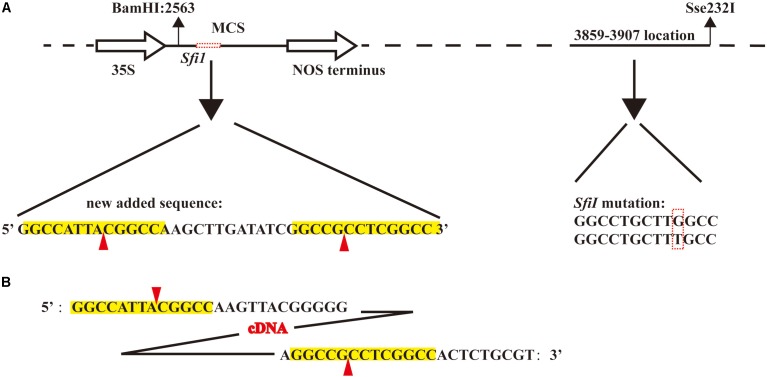
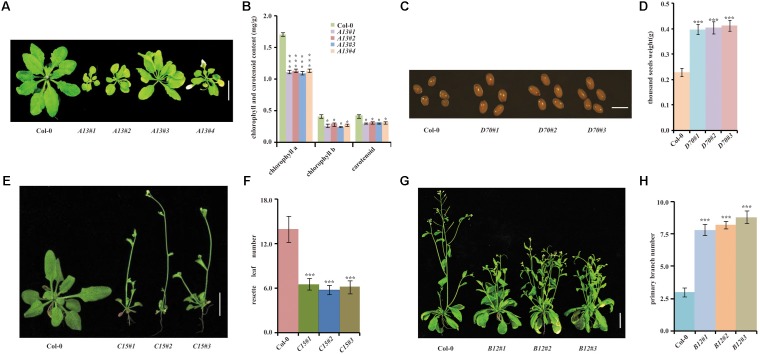
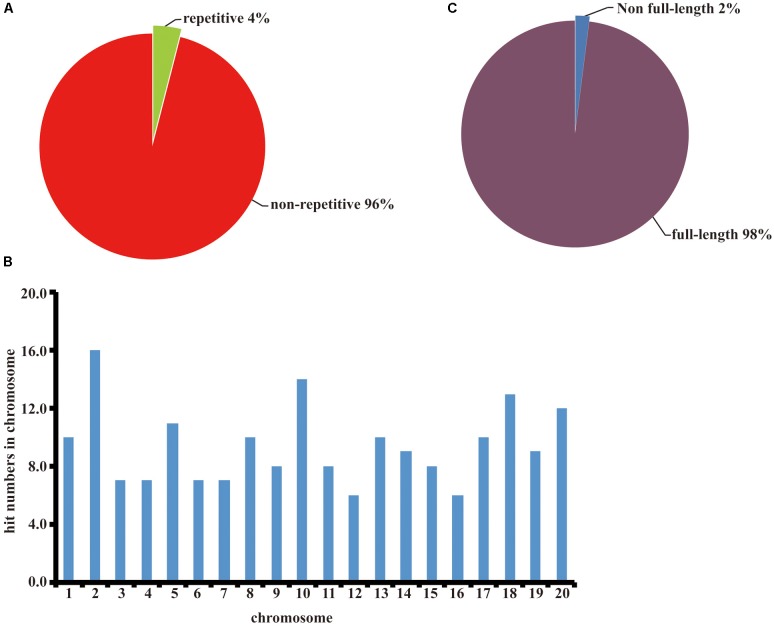
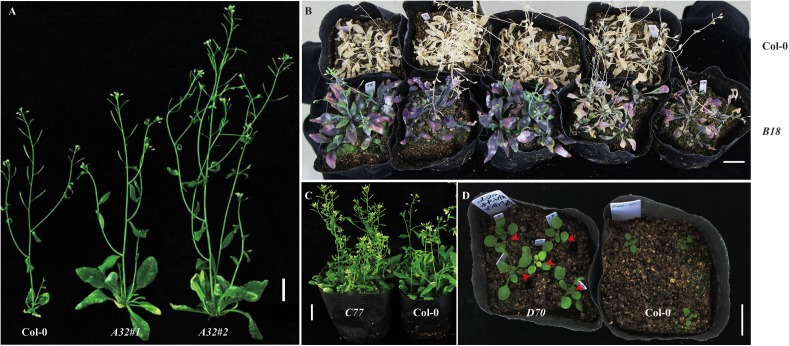
Molecular breeding has become an important approach for crop improvement, and a prerequisite for molecular breeding is elucidation of the functions of genetic loci or genes. Soybean is one of the most important food and oil crops worldwide. However, due to the difficulty of genetic transformation in soybean, studies of its functional genomics lag far behind those of other crops such as rice, which severely impairs the progress of molecular improvement in soybean. Here, we describe an effective large-scale strategy to investigate the functions of soybean genes via overexpression of a full-length soybean cDNA library in . The overexpression vector was modified for use in the construction of a normalized full-length cDNA library. The constructed cDNA library showed good quality; repetitive clones represented approximately 4%, insertion fragments were approximately 2.2 kb, and the full-length rate was approximately 98%. This cDNA library was then overexpressed in , and approximately 2000 transgenic lines were preliminarily obtained. Phenotypic analyses of the positive T transgenic plants showed that more than 5% of the T transgenic lines displayed abnormal developmental phenotypes, and approximately 1% of the transgenic lines exhibited potentially favorable traits. We randomly amplified 4 genes with obvious phenotypes (enlarged seeds, yellowish leaves, more branches, and dense siliques) and repeated the transgenic analyses in . Subsequent phenotypic observation demonstrated that these phenotypes were indeed due to the overexpression of soybean genes. We believe our strategy represents an effective large-scale approach to investigate the functions of soybean genes and further reveal genes favorable for molecular improvement in soybean.
分子育种已成为作物改良的重要途径,而分子育种的一个前提是阐明基因位点或基因的功能。大豆是全球最重要的粮食和油料作物之一。然而,由于大豆遗传转化困难,其功能基因组学研究远远落后于水稻等其他作物,这严重阻碍了大豆分子改良的进程。在此,我们描述了一种有效的大规模策略,通过在[具体物种]中过表达全长大豆cDNA文库来研究大豆基因的功能。对过表达载体进行了修饰,用于构建标准化全长cDNA文库。构建的cDNA文库质量良好;重复克隆约占4%,插入片段约为2.2 kb,全长率约为98%。然后将该cDNA文库在[具体物种]中过表达,初步获得了约2000个转基因株系。对阳性T转基因植株的表型分析表明,超过5%的T转基因株系表现出异常发育表型,约1%的转基因株系表现出潜在的优良性状。我们随机扩增了4个具有明显表型(种子增大、叶片发黄、分枝增多和角果密集)的基因,并在[具体物种]中重复了转基因分析。随后的表型观察表明,这些表型确实是由于大豆基因的过表达所致。我们相信我们的策略代表了一种有效的大规模方法来研究大豆基因的功能,并进一步揭示有利于大豆分子改良的基因。