Institute for Cell Biology, ZMBE, Muenster, Germany.
Department of Developmental Biology, Washington University School of Medicine, St Louis, Missouri.
Elife. 2018 Jun 6;7:e33574. doi: 10.7554/eLife.33574.
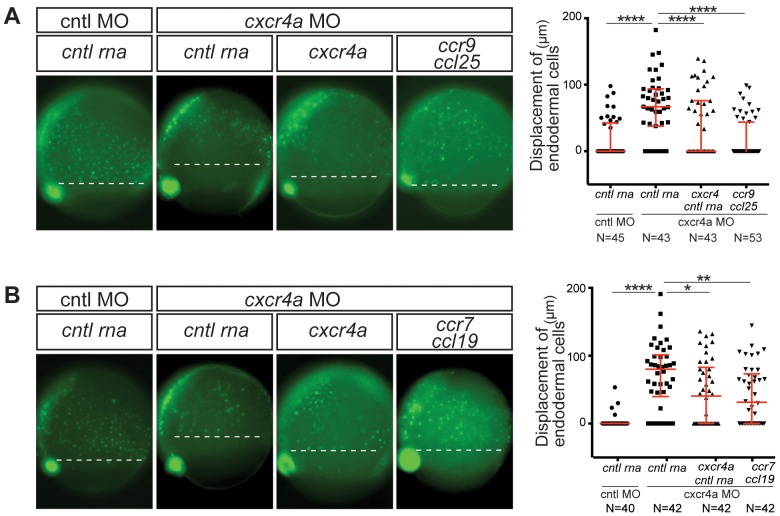
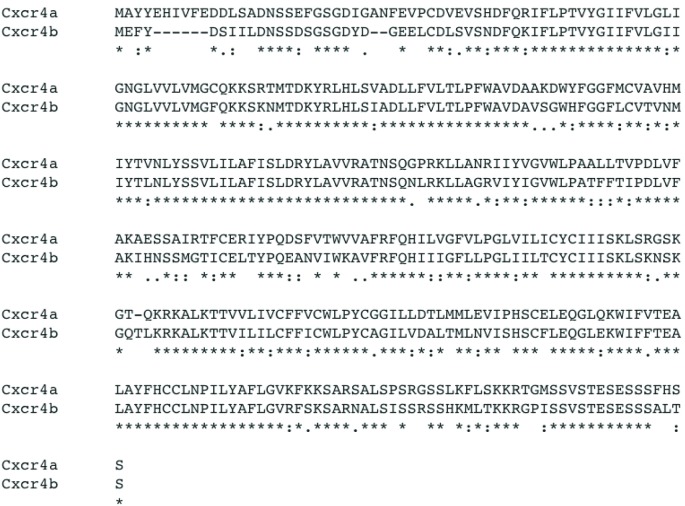
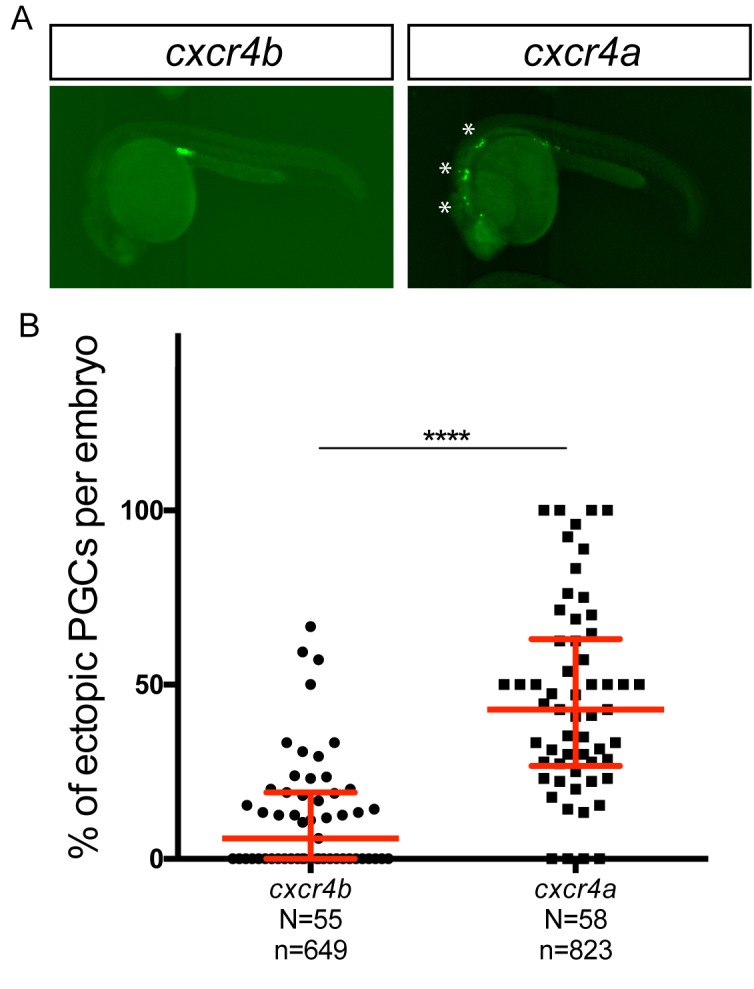
Chemokines are secreted proteins that regulate a range of processes in eukaryotic organisms. Interestingly, different chemokine receptors control distinct biological processes, and the same receptor can direct different cellular responses, but the basis for this phenomenon is not known. To understand this property of chemokine signaling, we examined the function of the chemokine receptors Cxcr4a, Cxcr4b, Ccr7, Ccr9 in the context of diverse processes in embryonic development in zebrafish. Our results reveal that the specific response to chemokine signaling is dictated by cell-type-specific chemokine receptor signal interpretation modules (CRIM) rather than by chemokine-receptor-specific signals. Thus, a generic signal provided by different receptors leads to discrete responses that depend on the specific identity of the cell that receives the signal. We present the implications of employing generic signals in different contexts such as gastrulation, axis specification and single-cell migration.
趋化因子是分泌蛋白,可调节真核生物的一系列过程。有趣的是,不同的趋化因子受体控制着不同的生物学过程,而同一受体可以引导不同的细胞反应,但这种现象的基础尚不清楚。为了理解趋化因子信号的这种特性,我们在斑马鱼胚胎发育的不同过程中研究了趋化因子受体 Cxcr4a、Cxcr4b、Ccr7 和 Ccr9 的功能。我们的结果表明,对趋化因子信号的特定反应是由细胞类型特异性趋化因子受体信号解释模块 (CRIM) 决定的,而不是由趋化因子受体特异性信号决定的。因此,不同受体提供的通用信号会导致依赖于接收信号的细胞的特定身份的离散反应。我们介绍了在不同背景下(如原肠胚形成、轴突指定和单细胞迁移)使用通用信号的意义。