Department of Biomedical Engineering, Hanyang University, Seoul 04763, Korea.
Department of Biomedical Engineering, Chonnam National University, Yeosu 59626, Korea.
Sensors (Basel). 2018 Jun 5;18(6):1827. doi: 10.3390/s18061827.
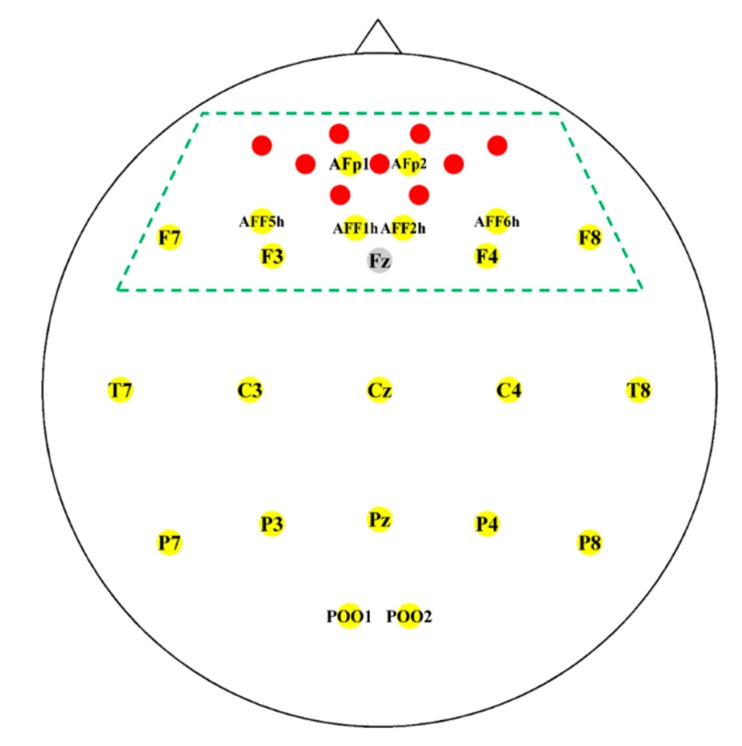
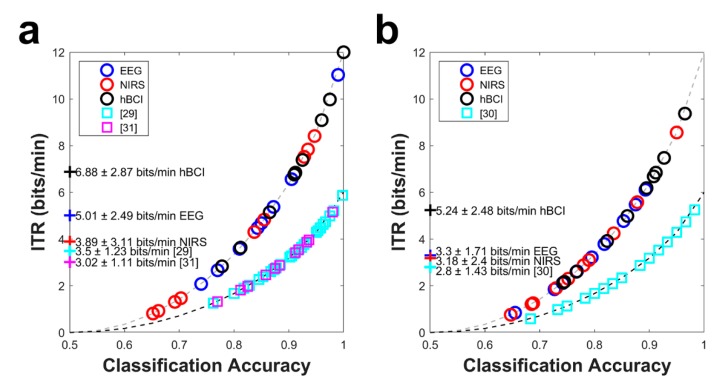
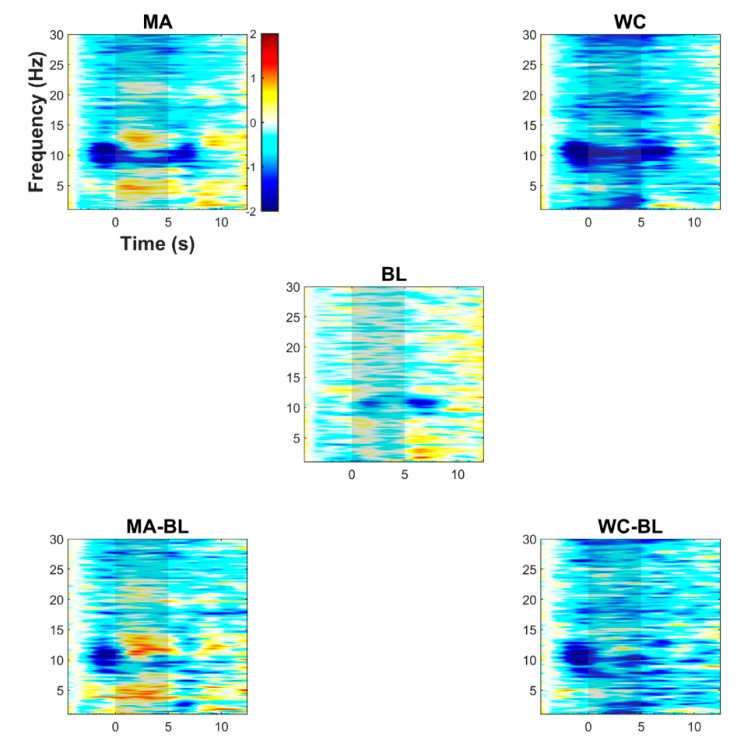
Electroencephalography (EEG) and near-infrared spectroscopy (NIRS) are non-invasive neuroimaging methods that record the electrical and metabolic activity of the brain, respectively. Hybrid EEG-NIRS brain-computer interfaces (hBCIs) that use complementary EEG and NIRS information to enhance BCI performance have recently emerged to overcome the limitations of existing unimodal BCIs, such as vulnerability to motion artifacts for EEG-BCI or low temporal resolution for NIRS-BCI. However, with respect to NIRS-BCI, in order to fully induce a task-related brain activation, a relatively long trial length (≥10 s) is selected owing to the inherent hemodynamic delay that lowers the information transfer rate (ITR; bits/min). To alleviate the ITR degradation, we propose a more practical hBCI operated by intuitive mental tasks, such as mental arithmetic (MA) and word chain (WC) tasks, performed within a short trial length (5 s). In addition, the suitability of the WC as a BCI task was assessed, which has so far rarely been used in the BCI field. In this experiment, EEG and NIRS data were simultaneously recorded while participants performed MA and WC tasks without preliminary training and remained relaxed (baseline; BL). Each task was performed for 5 s, which was a shorter time than previous hBCI studies. Subsequently, a classification was performed to discriminate MA-related or WC-related brain activations from BL-related activations. By using hBCI in the offline/pseudo-online analyses, average classification accuracies of 90.0 ± 7.1/85.5 ± 8.1% and 85.8 ± 8.6/79.5 ± 13.4% for MA vs. BL and WC vs. BL, respectively, were achieved. These were significantly higher than those of the unimodal EEG- or NIRS-BCI in most cases. Given the short trial length and improved classification accuracy, the average ITRs were improved by more than 96.6% for MA vs. BL and 87.1% for WC vs. BL, respectively, compared to those reported in previous studies. The suitability of implementing a more practical hBCI based on intuitive mental tasks without preliminary training and with a shorter trial length was validated when compared to previous studies.
脑电图(EEG)和近红外光谱(NIRS)是两种非侵入性神经影像学方法,分别记录大脑的电活动和代谢活动。最近出现了混合 EEG-NIRS 脑机接口(hBCI),它使用互补的 EEG 和 NIRS 信息来增强 BCI 的性能,以克服现有单模态 BCI 的局限性,例如 EEG-BCI 对运动伪影敏感或 NIRS-BCI 的时间分辨率低。然而,对于 NIRS-BCI 而言,为了充分引起与任务相关的大脑激活,由于固有的血液动力学延迟降低了信息传输率(ITR;位/分钟),因此选择相对较长的试验长度(≥10 秒)。为了缓解 ITR 下降,我们提出了一种更实用的 hBCI,它由直观的心理任务操作,例如心算(MA)和单词链(WC)任务,在较短的试验长度(5 秒)内完成。此外,评估了 WC 作为 BCI 任务的适用性,迄今为止,WC 在 BCI 领域很少使用。在这项实验中,同时记录参与者在没有预训练的情况下执行 MA 和 WC 任务时的 EEG 和 NIRS 数据,并且保持放松(基线;BL)。每个任务持续 5 秒,这比以前的 hBCI 研究时间更短。随后,进行分类以区分 MA 相关或 WC 相关的大脑激活与 BL 相关的激活。通过离线/伪在线分析使用 hBCI,MA 与 BL 和 WC 与 BL 的平均分类准确率分别为 90.0±7.1%和 85.5±8.1%,85.8±8.6%和 79.5±13.4%,这在大多数情况下均明显高于单模态 EEG 或 NIRS-BCI。考虑到较短的试验长度和提高的分类准确性,与之前的研究相比,MA 与 BL 的平均 ITR 提高了 96.6%以上,WC 与 BL 的平均 ITR 提高了 87.1%。与之前的研究相比,验证了在没有预训练和较短试验长度的情况下基于直观心理任务实现更实用的 hBCI 的可行性和优越性。