Disdier Clémence, Chen Xiaodi, Kim Jeong-Eun, Threlkeld Steven W, Stonestreet Barbara S
Department of Pediatrics, Women & Infants Hospital of Rhode Island, The Alpert Medical School of Brown University, Providence, RI 02905, USA.
Department of Neuroscience, Regis College, Weston, MA 02493, USA.
Brain Sci. 2018 Jun 7;8(6):101. doi: 10.3390/brainsci8060101.
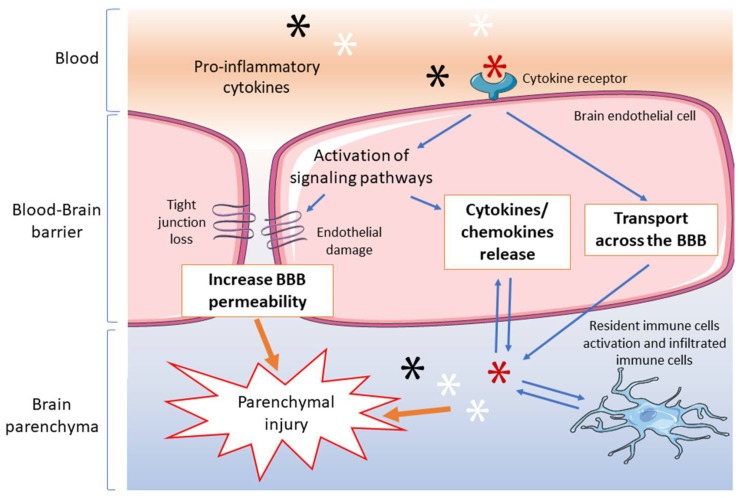
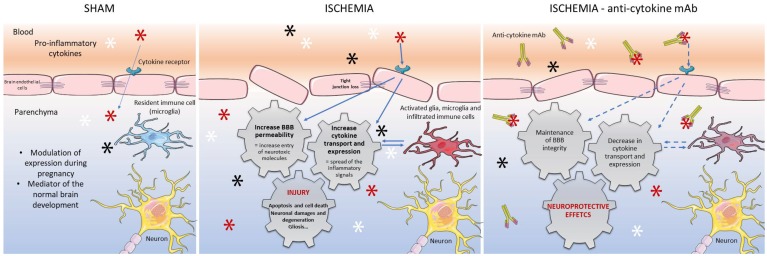
Perinatal brain injury is a major cause of morbidity and long-standing disability in newborns. Hypothermia is the only therapy approved to attenuate brain injury in the newborn. However, this treatment is unfortunately only partially neuroprotective and can only be used to treat hypoxic-ischemic encephalopathy in full term infants. Therefore, there is an urgent need for adjunctive therapeutic strategies. Post-ischemic neuro-inflammation is a crucial contributor to the evolution of brain injury in neonates and constitutes a promising therapeutic target. Recently, we demonstrated encouraging neuroprotective capacities of anti-cytokine monoclonal antibodies (mAbs) in an ischemic-reperfusion (I/R) model of brain injury in the ovine fetus. The purpose of this review is to summarize the current knowledge regarding the inflammatory response in the perinatal sheep brain after I/R injury and to review our recent findings regarding the beneficial effects of treatment with anti-cytokine mAbs.
围产期脑损伤是新生儿发病和长期残疾的主要原因。低温是唯一被批准用于减轻新生儿脑损伤的疗法。然而,不幸的是,这种治疗仅具有部分神经保护作用,且仅可用于治疗足月儿的缺氧缺血性脑病。因此,迫切需要辅助治疗策略。缺血后神经炎症是新生儿脑损伤进展的关键因素,也是一个有前景的治疗靶点。最近,我们在绵羊胎儿脑缺血再灌注(I/R)模型中证明了抗细胞因子单克隆抗体(mAb)具有令人鼓舞的神经保护能力。本综述的目的是总结目前关于围产期绵羊脑I/R损伤后炎症反应的知识,并回顾我们最近关于抗细胞因子mAb治疗有益效果的研究发现。