School of Psychology and Center for Studies of Psychological Application, South China Normal University, Guangzhou, China.
School of Life Sciences, South China Normal University, Guangzhou, China.
Sci Rep. 2018 Jun 11;8(1):8848. doi: 10.1038/s41598-018-27252-0.
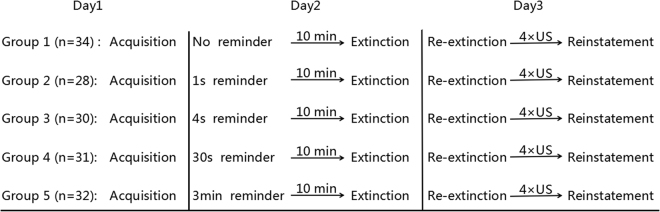
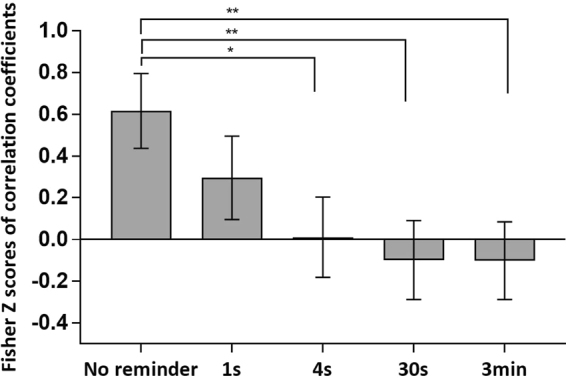
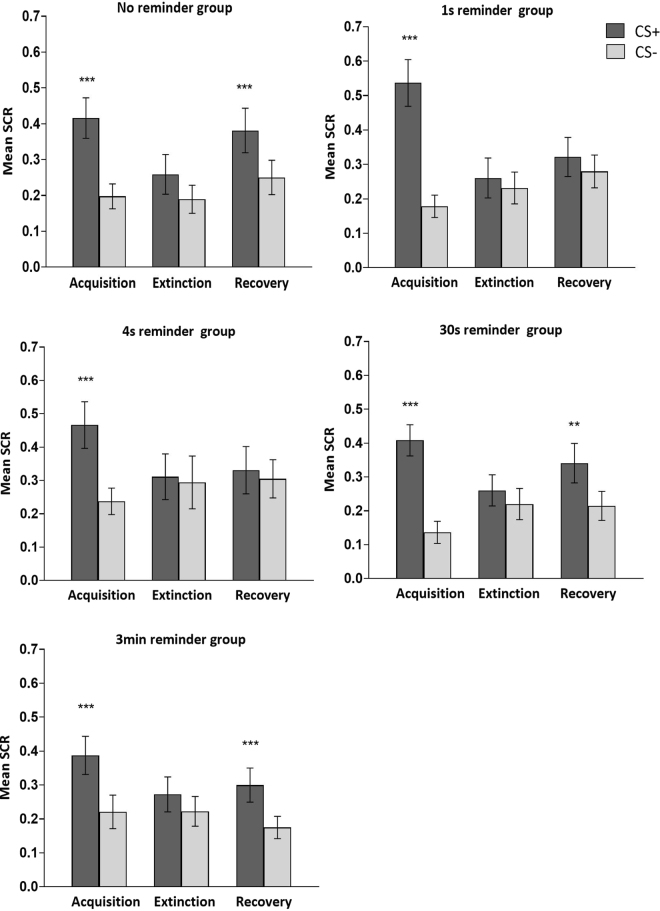
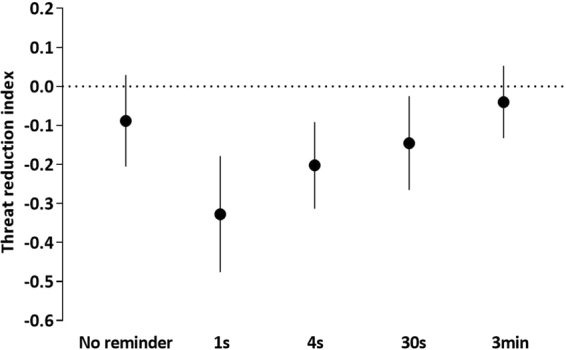
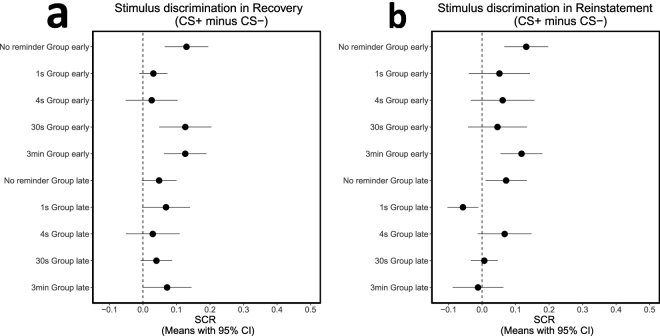
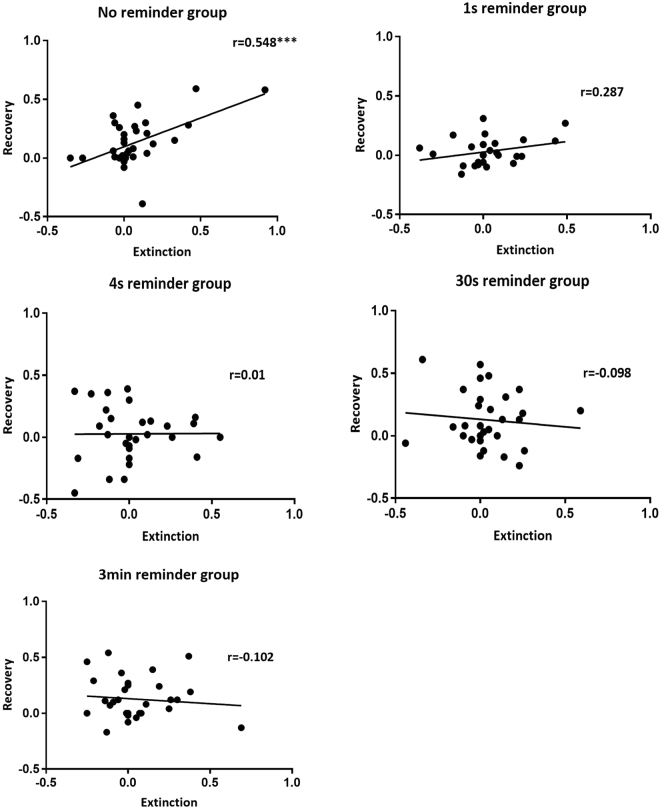
Memory reminders can return a memory into an unstable state such that it will decay unless actively restabilized into long-term memory through reconsolidation. Exposure to a memory reminder, however, does not always lead to destabilization. The 'trace dominance' principle posits that the extent of exposure to memory reminders governs memory susceptibility to disruption. Here, we provide a first systematic investigation of reminder duration effects on threat memory modification in humans. Reminder duration was parametrically varied across 155 participants in a three-day protocol. We found that short reminders (1 s and 4 s) made the memory prone to interference from post-retrieval extinction, suggesting that the memory had been updated. In contrast, no reminder or long reminders (30 s and 3 min) made the memory resistant to such interference, and robustly return. Reminder duration therefore influences memory stability and may be a critical determinant of therapeutic efficacy.
记忆提示可以使记忆回到不稳定状态,如果不通过再巩固将其主动重新稳定到长期记忆中,记忆将会衰退。然而,接触记忆提示并不总是会导致不稳定。“痕迹优势”原则假设,接触记忆提示的程度会影响记忆对破坏的敏感性。在这里,我们首次系统地研究了在人类中,记忆提示持续时间对威胁记忆修改的影响。在一个为期三天的方案中,我们在 155 名参与者中对记忆提示持续时间进行了参数变化。我们发现,短记忆提示(1 秒和 4 秒)使记忆容易受到检索后消退的干扰,这表明记忆已经被更新。相比之下,没有提示或长记忆提示(30 秒和 3 分钟)使记忆不易受到这种干扰,并能稳定恢复。因此,记忆提示持续时间会影响记忆的稳定性,可能是治疗效果的关键决定因素。