Pisciotta Alessandra, Bertoni Laura, Riccio Massimo, Mapelli Jonathan, Bigiani Albertino, La Noce Marcella, Orciani Monia, de Pol Anto, Carnevale Gianluca
Department of Surgery, Medicine, Dentistry and Morphological Sciences with Interest in Transplant, Oncology and Regenerative Medicine, University of Modena and Reggio Emilia, Modena, Italy.
Department of Biomedical, Metabolic and Neural Sciences, Center for Neuroscience and Neurotechnology, University of Modena and Reggio Emilia, Modena, Italy.
Front Physiol. 2018 May 28;9:547. doi: 10.3389/fphys.2018.00547. eCollection 2018.
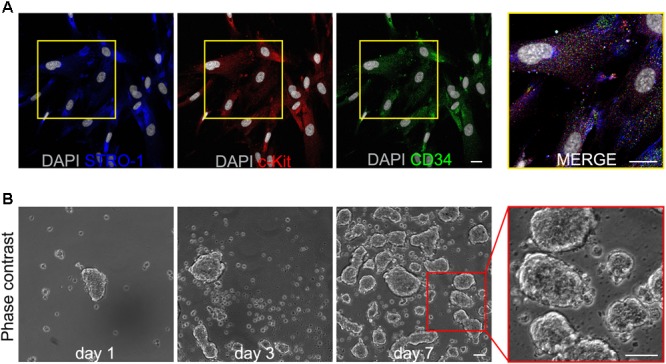
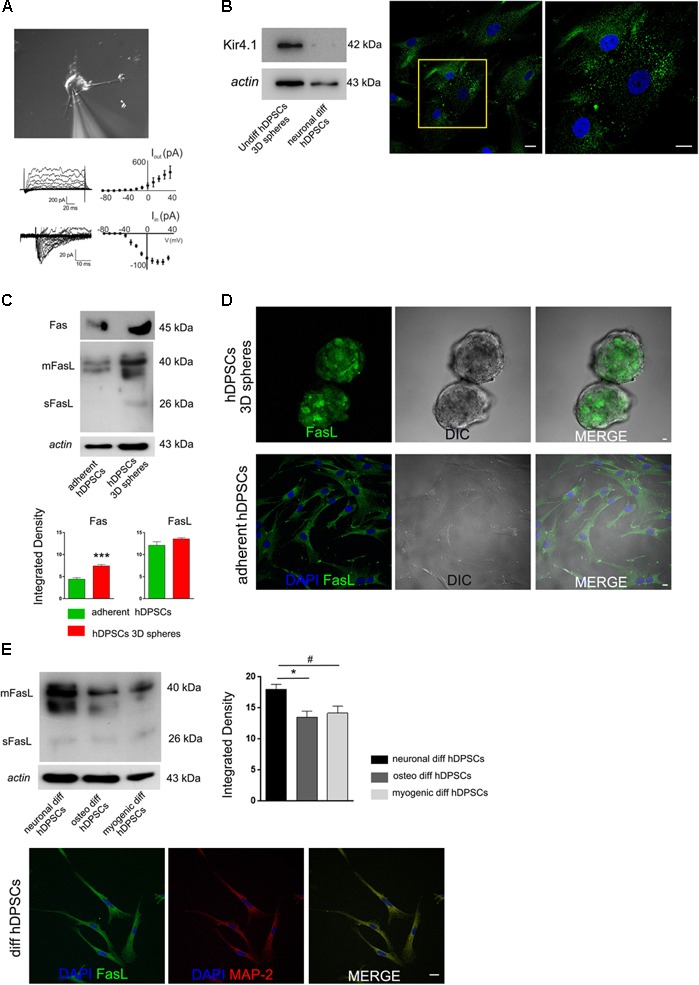
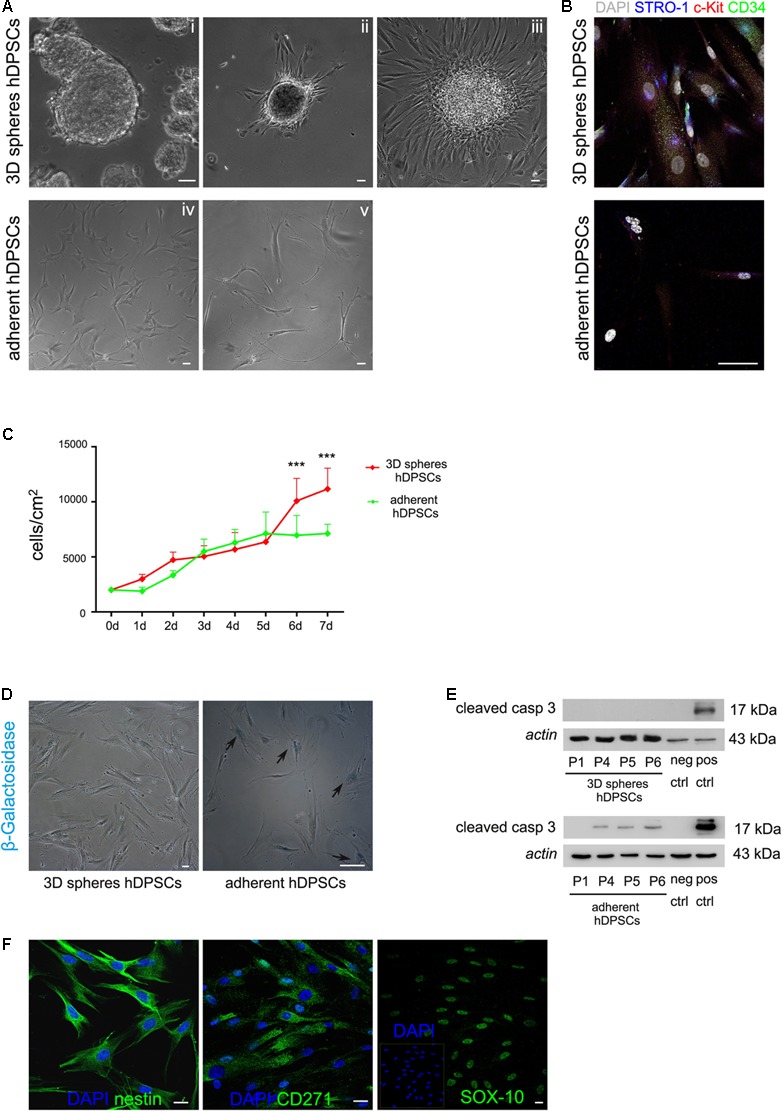
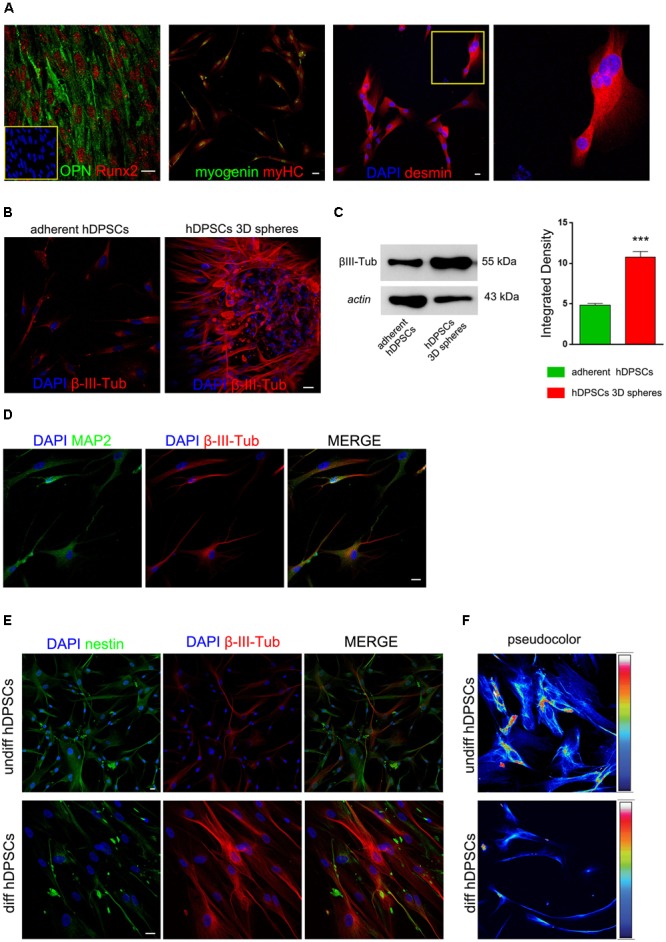
Human dental pulp is considered an interesting source of adult stem cells, due to the low-invasive isolation procedures, high content of stem cells and its peculiar embryological origin from neural crest. Based on our previous findings, a dental pulp stem cells sub-population, enriched for the expression of STRO-1, c-Kit, and CD34, showed a higher neural commitment. However, their biological properties were compromised when cells were cultured in adherent standard conditions. The aim of this study was to evaluate the ability of three dimensional floating spheres to preserve embryological and biological properties of this sub-population. In addition, the expression of the inwardly rectifying potassium channel Kir4.1, Fas and FasL was investigated in 3D-sphere derived hDPSCs. Our data showed that 3D sphere-derived hDPSCs maintained their fibroblast-like morphology, preserved stemness markers expression and proliferative capability. The expression of neural crest markers and Kir4.1 was observed in undifferentiated hDPSCs, furthermore this culture system also preserved hDPSCs differentiation potential. The expression of Fas and FasL was observed in undifferentiated hDPSCs derived from sphere culture and, noteworthy, FasL was maintained even after the neurogenic commitment was reached, with a significantly higher expression compared to osteogenic and myogenic commitments. These data demonstrate that 3D sphere culture provides a favorable micro-environment for neural crest-derived hDPSCs to preserve their biological properties.
由于其低侵入性的分离程序、干细胞含量高以及源自神经嵴的特殊胚胎学起源,人牙髓被认为是成体干细胞的一个有趣来源。基于我们之前的研究结果,一个富含STRO-1、c-Kit和CD34表达的牙髓干细胞亚群表现出更高的神经分化倾向。然而,当细胞在标准贴壁条件下培养时,它们的生物学特性会受到损害。本研究的目的是评估三维悬浮球体保留该亚群胚胎学和生物学特性的能力。此外,还研究了三维球体来源的人牙髓干细胞中内向整流钾通道Kir4.1、Fas和FasL的表达。我们的数据表明,三维球体来源的人牙髓干细胞保持其成纤维细胞样形态,保留干细胞标志物表达和增殖能力。在未分化的人牙髓干细胞中观察到神经嵴标志物和Kir4.1的表达,此外,这种培养系统也保留了人牙髓干细胞的分化潜能。在球体培养来源的未分化人牙髓干细胞中观察到Fas和FasL的表达,值得注意的是,即使在达到神经分化后,FasL仍能维持表达,与成骨分化和肌分化相比,其表达显著更高。这些数据表明,三维球体培养为神经嵴来源的人牙髓干细胞提供了一个有利的微环境,以保留其生物学特性。