Molecular Modeling and Simulation Group, Department of Quantum Beam Life Science, National Institutes for Quantum and Radiological Science and Technology, Kizugawa, Kyoto 619-0215, Japan.
Laboratory of Structural Biology, Graduate School of Advanced Science and Engineering, Waseda University, 2-2 Wakamatsu-cho, Shinjuku-ku, Tokyo 162-8480, Japan.
Nucleic Acids Res. 2018 Aug 21;46(14):7124-7137. doi: 10.1093/nar/gky502.
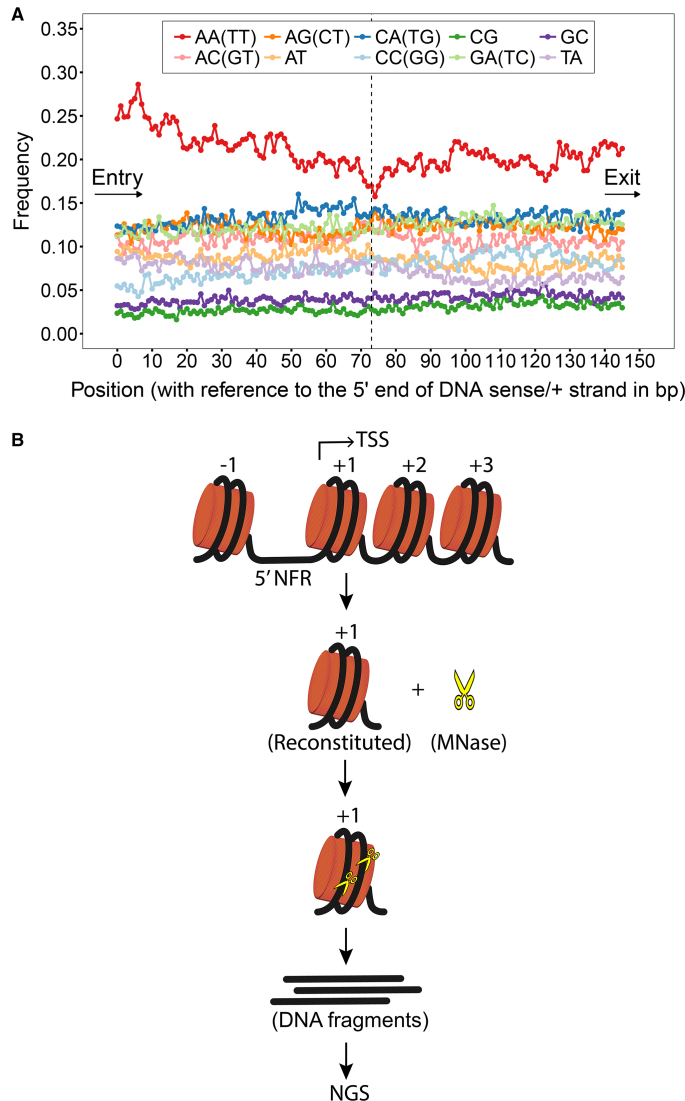
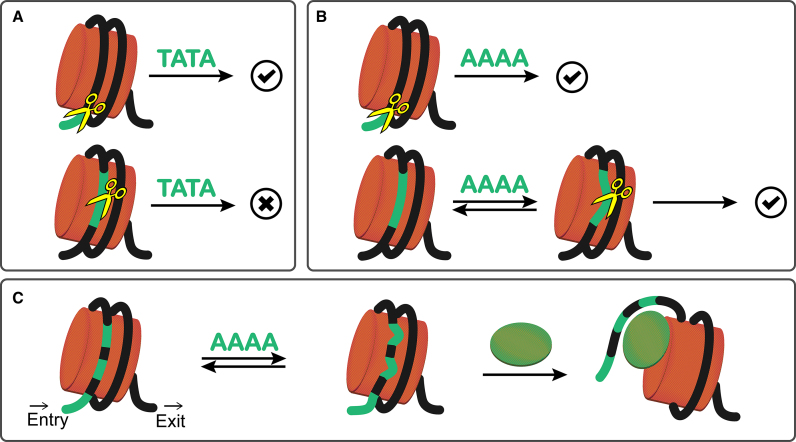
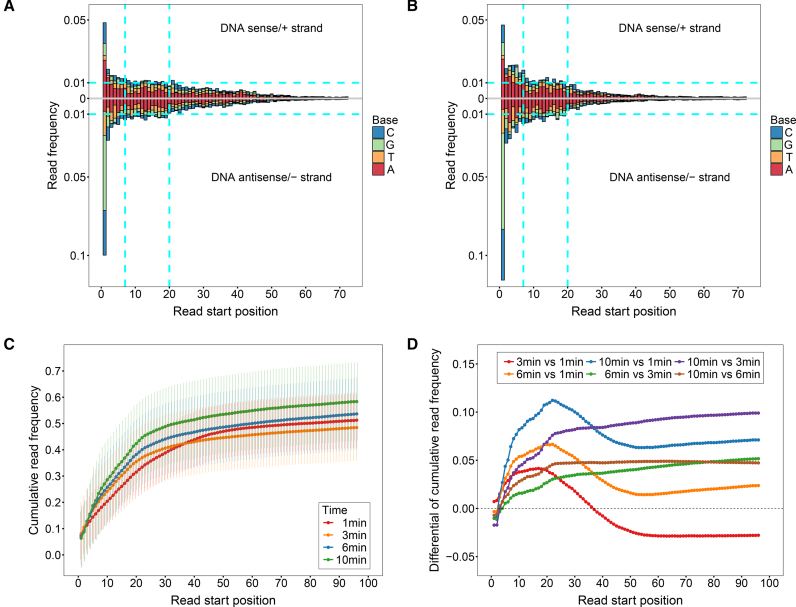
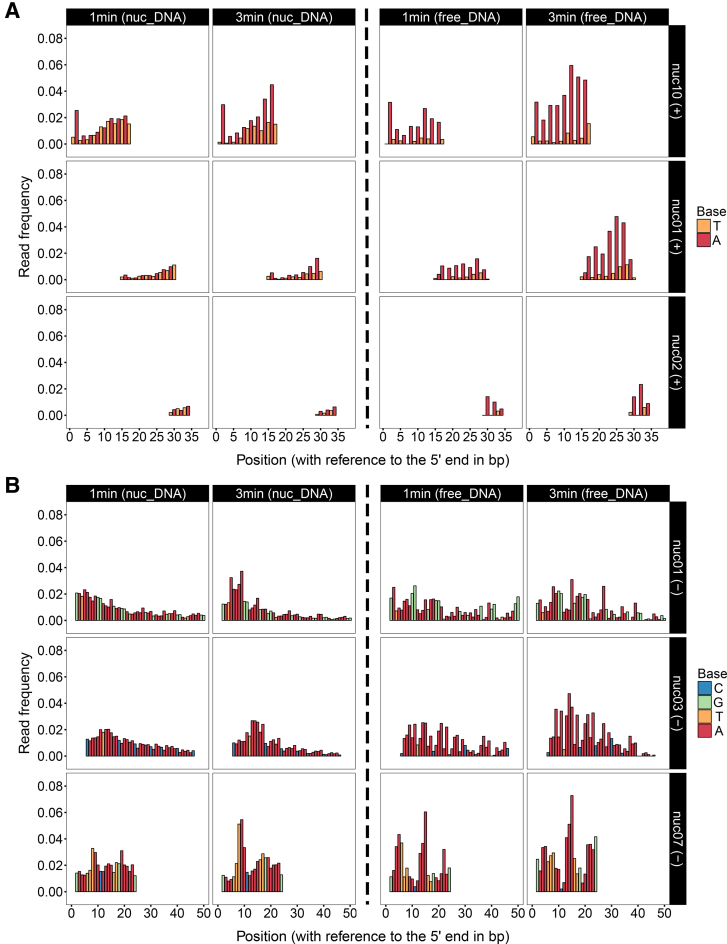
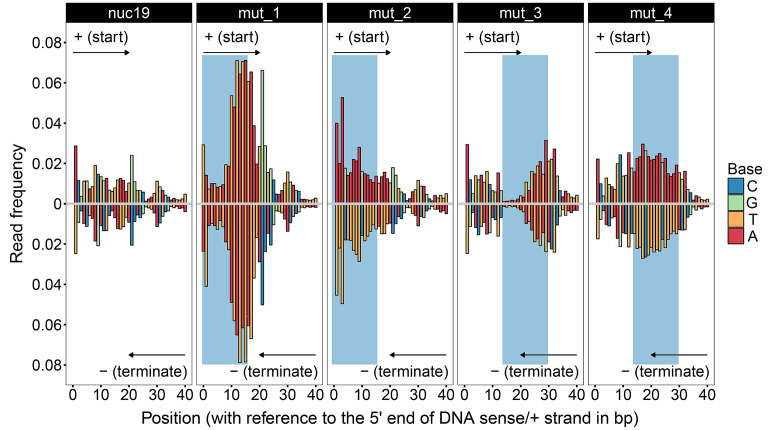
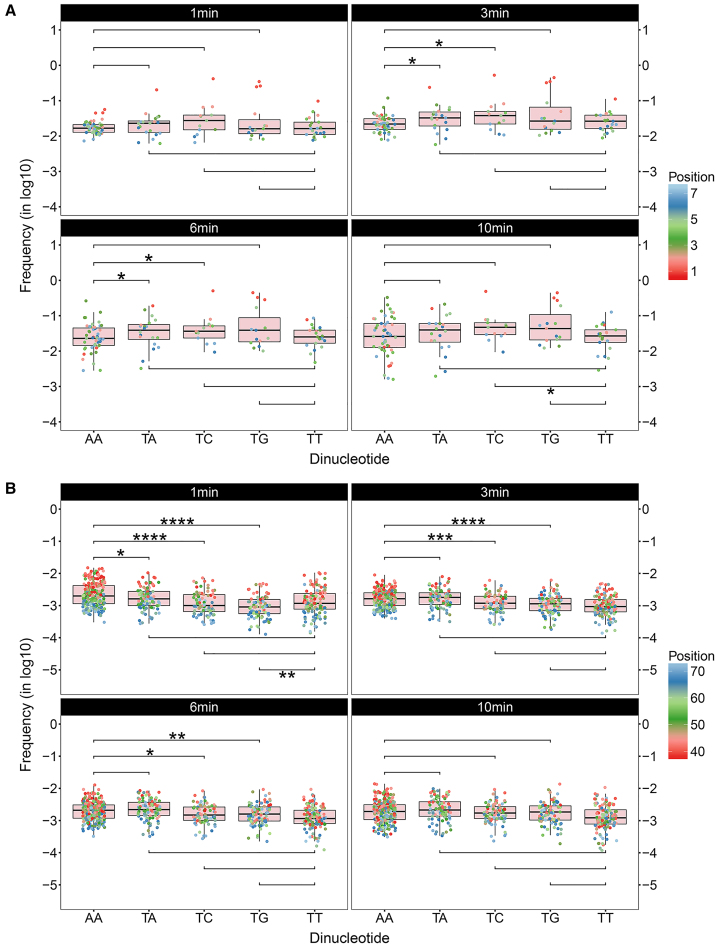
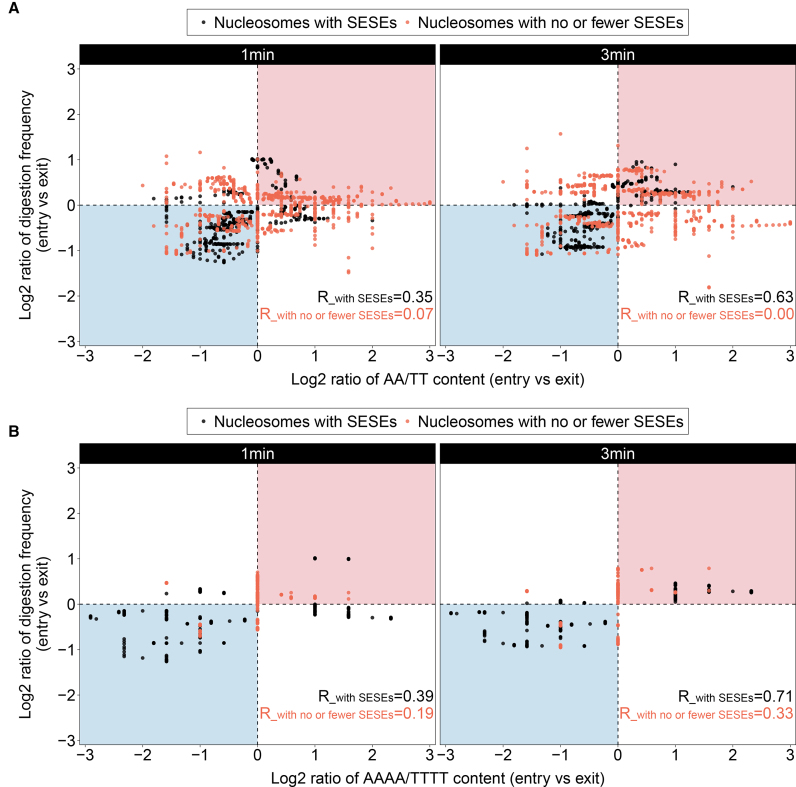
The first nucleosomes in the downstream of transcription starting sites are called +1 nucleosomes, which are expected to be readily unwrapped for DNA transcription. To investigate DNA accessibility in +1 nucleosomes, MNase-seq experiments were carried out with 20 reconstituted +1 nucleosomes of budding yeast. Although MNase has been known for its sequence preference in DNA digestions, we confirmed that this sequence preference is overwhelmed by DNA accessibility by identifying the sequence-driven and accessibility-driven cleavages. Specifically, we find that sequences favoured by MNase at the end regions such as TA dinucleotide are prohibited from cleavage at the internal sites in the early stage of digestion. Nevertheless, sequences less favoured by MNase at the end regions such as AA/TT dinucleotide are predominantly cleaved at the internal sites in the early stage of digestion. Since AA/TT is known as a rigid dinucleotide step resistant to DNA bending, these internal cleavages reflect the local site exposures induced by DNA mechanics. As the DNA entry site of +1 nucleosomes in yeast is found AA/TT-rich, this sequence element may play a role in gene activation by reducing DNA-histone affinities along the direction of DNA transcription.
转录起始位点下游的第一个核小体称为+1 核小体,其 DNA 通常处于转录起始状态。为了研究+1 核小体中的 DNA 可及性,我们对 20 个体外重建的酵母+1 核小体进行了 MNase-seq 实验。尽管 MNase 在 DNA 切割中具有序列偏好性,但我们通过识别序列驱动和可及性驱动的切割,证实了这种序列偏好性被 DNA 可及性所掩盖。具体来说,我们发现 MNase 在末端区域(如 TA 二核苷酸)偏好的序列在消化早期的内部位点被禁止切割。然而,在末端区域(如 AA/TT 二核苷酸)MNase 偏好性较低的序列在消化早期主要在内部位点被切割。由于 AA/TT 被认为是一种抵抗 DNA 弯曲的刚性二核苷酸步,这些内部切割反映了由 DNA 力学诱导的局部位点暴露。由于在酵母中+1 核小体的 DNA 进入位点富含 AA/TT,这个序列元件可能通过降低沿 DNA 转录方向的 DNA-组蛋白亲和力来发挥基因激活的作用。