Department of Immunobiology, College of Medicine, University of Arizona, Tucson, Arizona, United States of America.
Department of Medicine, College of Medicine, University of Arizona, Tucson, Arizona, United States of America.
PLoS One. 2018 Jun 13;13(6):e0199101. doi: 10.1371/journal.pone.0199101. eCollection 2018.
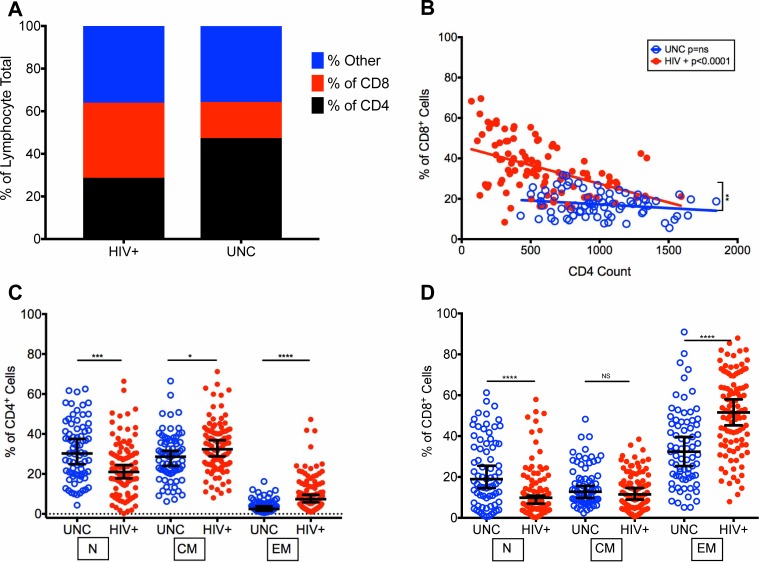
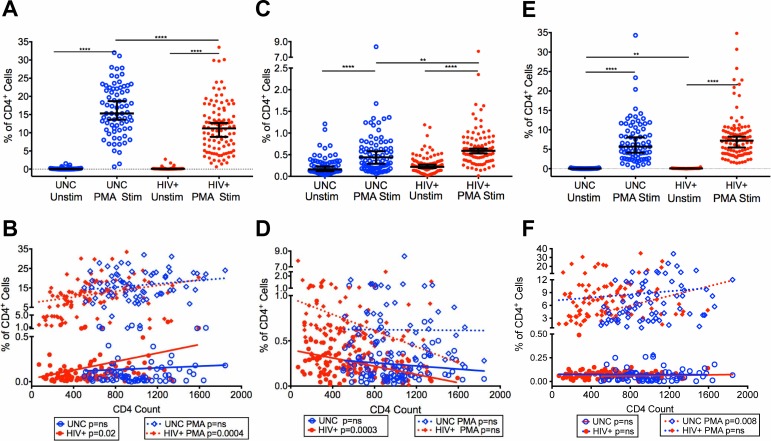
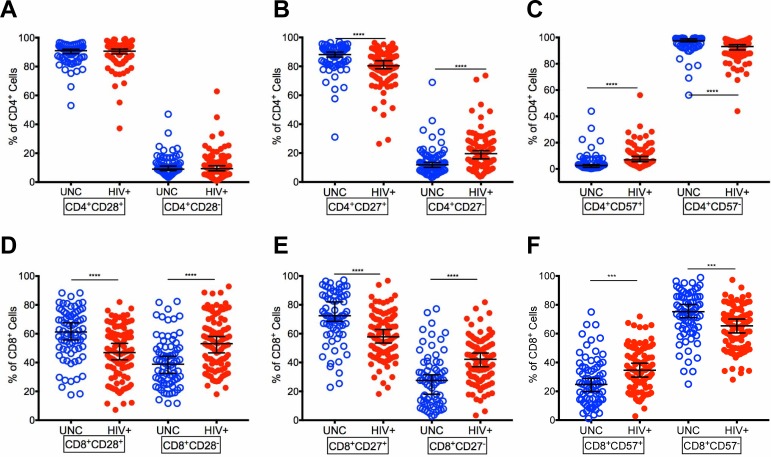
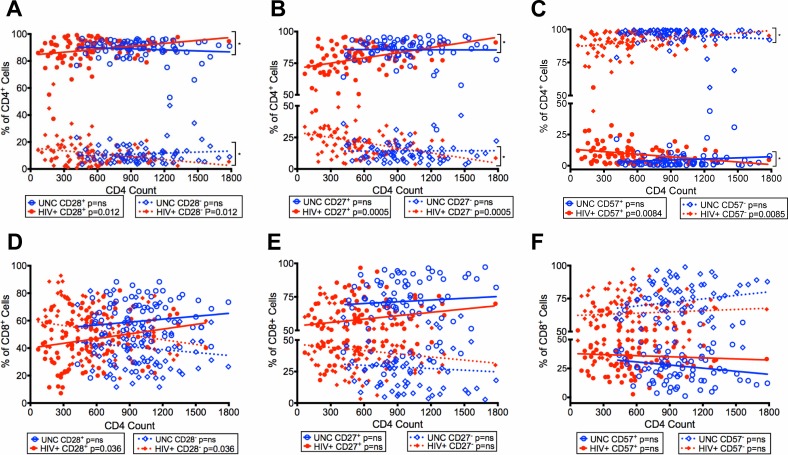
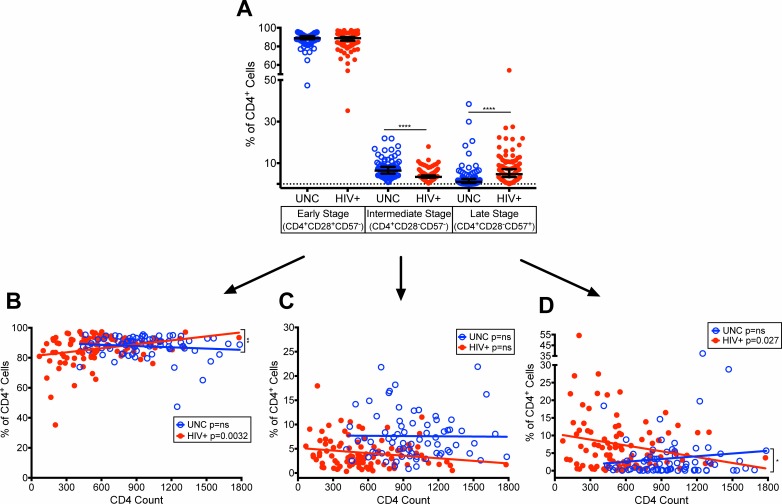
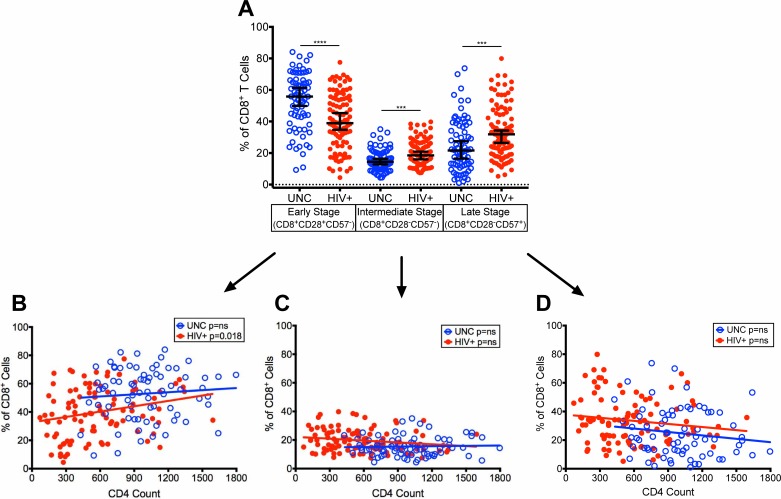
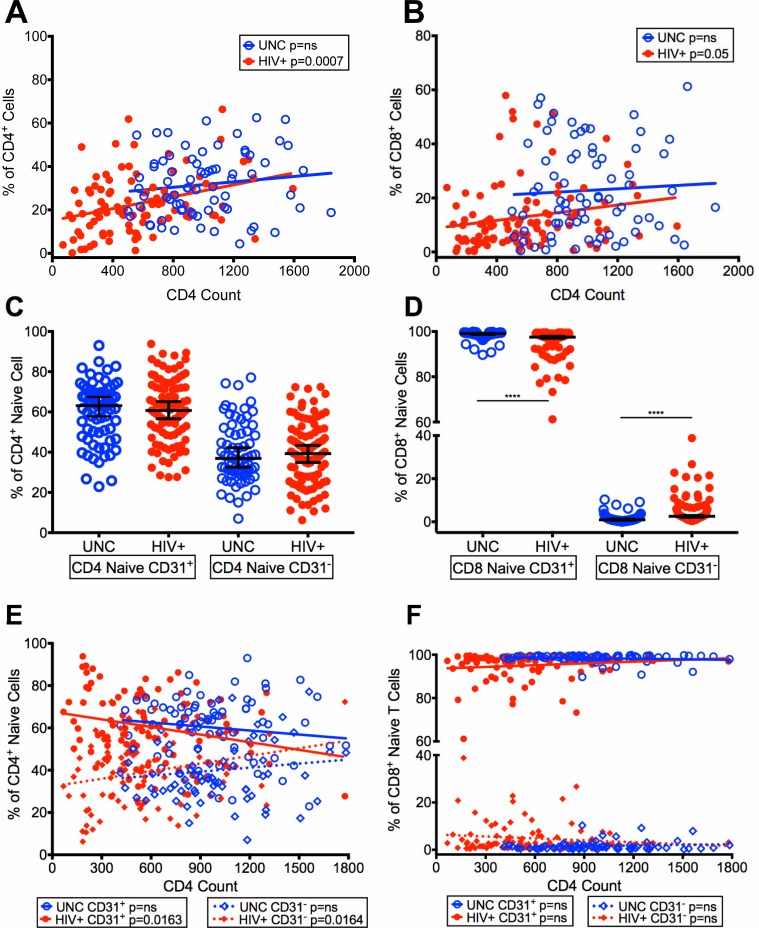
Several studies have shown an increased accumulation of terminally differentiated T cells during HIV infection, suggestive of exhaustion/senescence, causing dysregulation of T cell homeostasis and function and rapid HIV disease progression. We have investigated whether long-term antiretroviral therapy (ART), which controls viremia and restores CD4 T cell counts, is correlated with reduction in terminally differentiated T cells, improved ratios of naïve to memory and function of T cells in 100 virologically controlled HIV-infected patients. We show that while the median frequencies of terminally differentiated CD4+ and CD8+ T cells (CD28-, CD27-, CD57+ and CD28-CD57+), were higher in the virologically controlled HIV-infected patients' cohort compared with uninfected individuals' cohort, the frequencies of these cells significantly decreased with increasing CD4 T cell counts in HIV-infected patients. Although, the naïve CD4+ and CD8+ T cells were lower in HIV patients' cohort than uninfected cohort, there was a significant increase in both naïve CD4+ and CD8+ T cells with increasing CD4 T cell counts in HIV-infected patients. The underlying mechanism behind this increased naïve CD4+ and CD8+ T cells in HIV-infected patients was due to an increase in recent thymic emigrants, CD4+CD31+, as compared to CD4+CD31-. The CD4+ T cells of HIV-infected patients produced cytokines, including IL-2, IL-10 and IFN-γ comparable to uninfected individuals. In conclusion, virologically controlled HIV-infected patients on long-term ART show a significant reduction in terminally differentiated T cells, suggestive of decreased exhaustion/senescence, and improvement in the ratios of naïve to memory and function of T cells.
多项研究表明,在 HIV 感染过程中,终末分化的 T 细胞会积累增加,这提示着衰竭/衰老,导致 T 细胞稳态和功能失调,并使 HIV 疾病快速进展。我们研究了长期抗逆转录病毒治疗(ART)是否与减少终末分化 T 细胞、改善幼稚 T 细胞与记忆 T 细胞的比例以及 T 细胞功能相关,在 100 名病毒学控制的 HIV 感染者中进行了研究。我们发现,虽然在病毒学控制的 HIV 感染者队列中,终末分化的 CD4+和 CD8+T 细胞(CD28-、CD27-、CD57+和 CD28-CD57+)的中位数频率高于未感染者队列,但随着 HIV 感染者 CD4 T 细胞计数的增加,这些细胞的频率显著降低。尽管 HIV 患者队列中的幼稚 CD4+和 CD8+T 细胞低于未感染者队列,但随着 HIV 感染者 CD4 T 细胞计数的增加,幼稚 CD4+和 CD8+T 细胞的数量显著增加。HIV 感染者中幼稚 CD4+和 CD8+T 细胞增加的潜在机制是由于 CD4+CD31+(与 CD4+CD31-相比)的近期胸腺迁出增加。HIV 感染者的 CD4+T 细胞产生细胞因子,包括 IL-2、IL-10 和 IFN-γ,与未感染者相当。总之,长期接受抗病毒治疗的病毒学控制的 HIV 感染者表现出终末分化 T 细胞显著减少,提示衰竭/衰老减少,幼稚 T 细胞与记忆 T 细胞的比例以及 T 细胞功能改善。