International Institute for Integrative Sleep Medicine (WPI-IIIS), University of Tsukuba, Tsukuba, Japan.
Departments of Structural Biology and Developmental Neurobiology, St. Jude Proteomics Facility, St. Jude Children's Research Hospital, Memphis, TN, USA.
Nature. 2018 Jun;558(7710):435-439. doi: 10.1038/s41586-018-0218-8. Epub 2018 Jun 13.
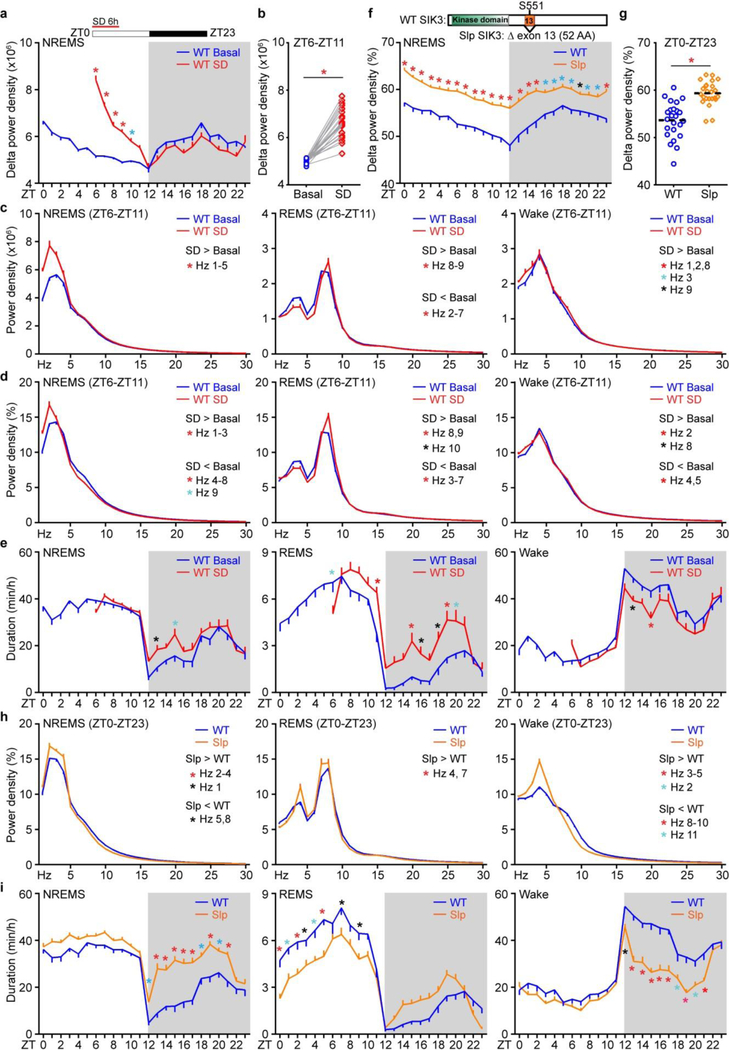
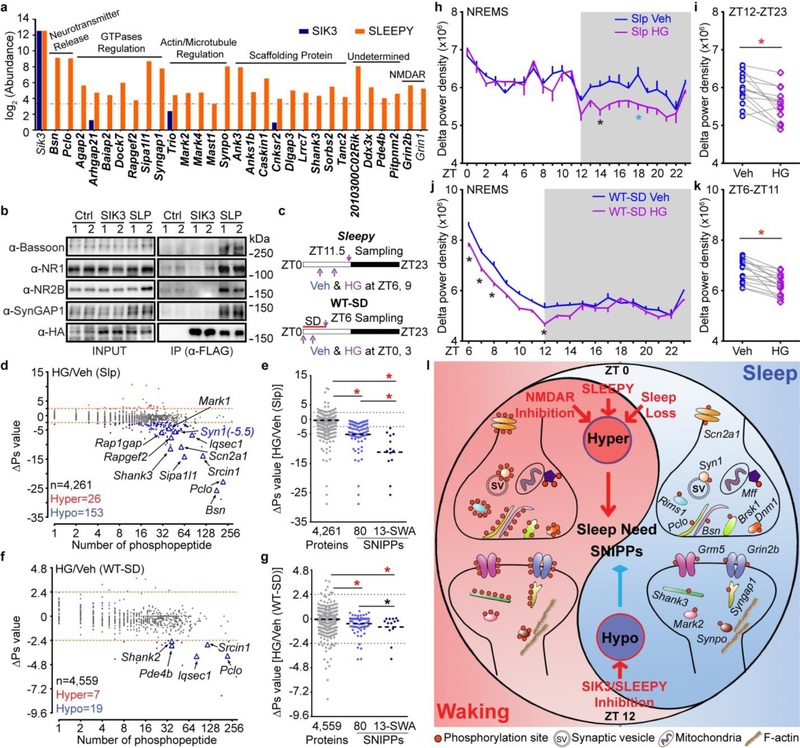
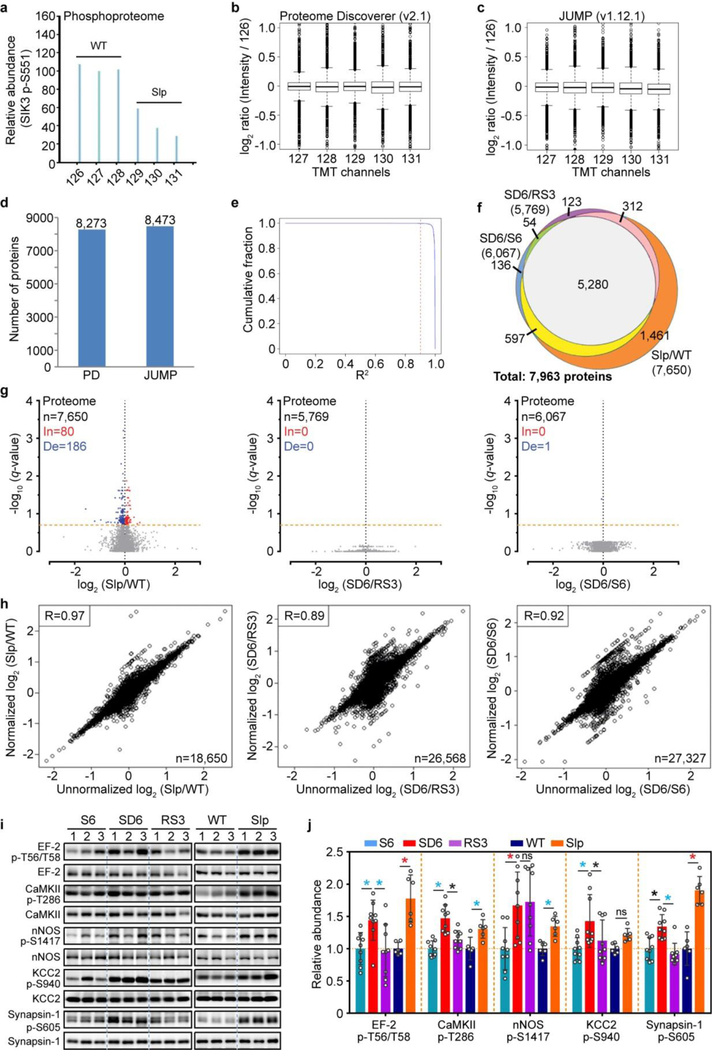
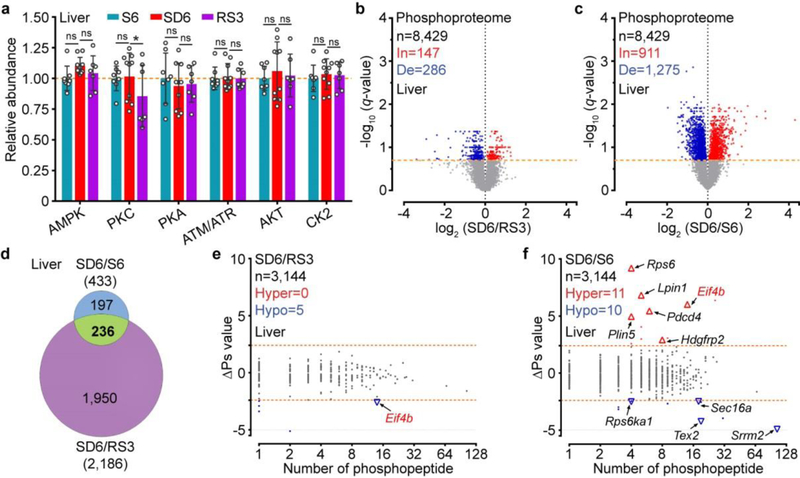
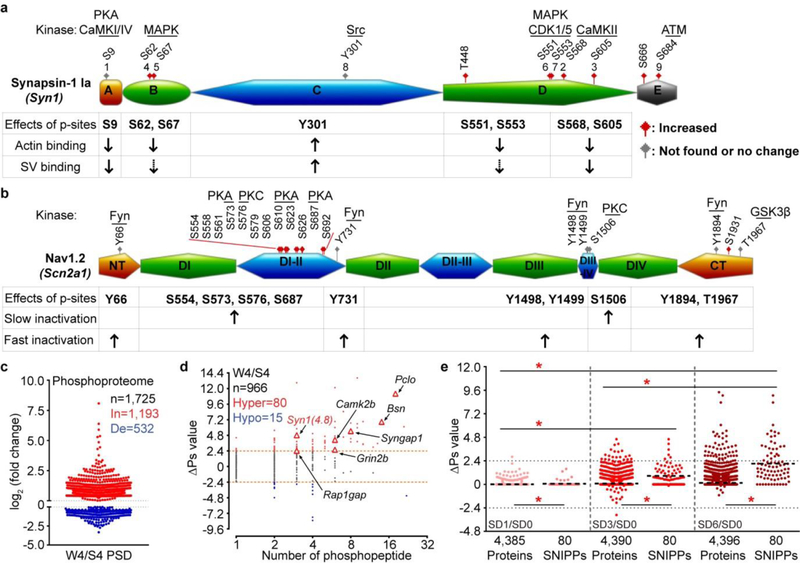
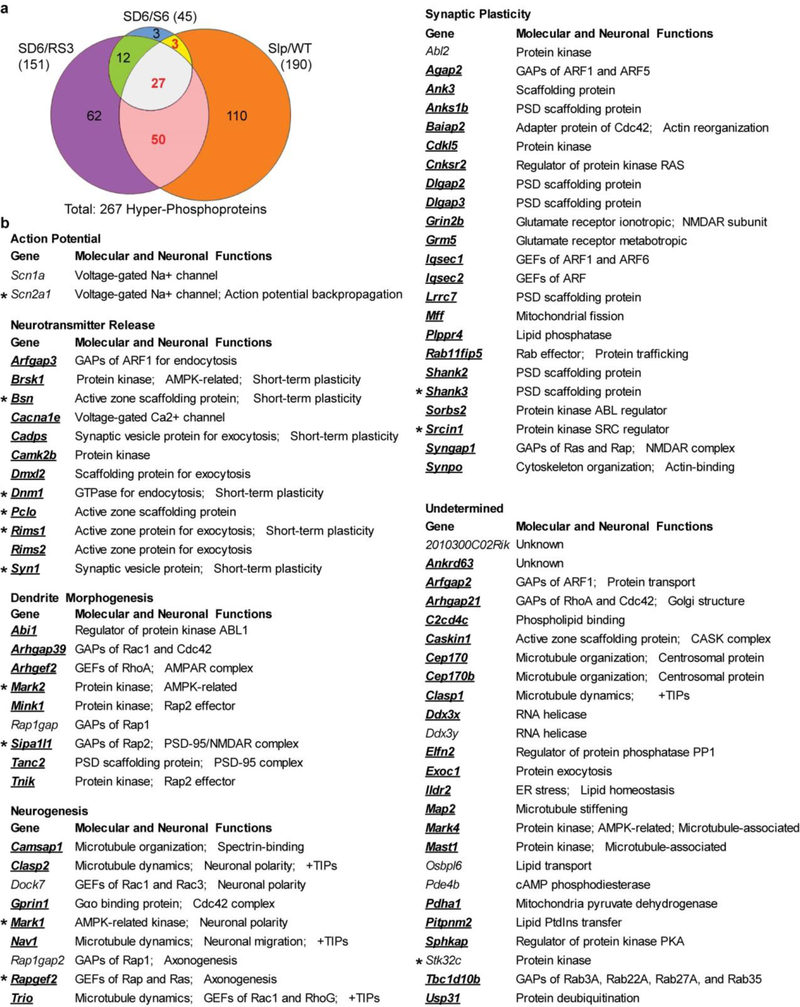
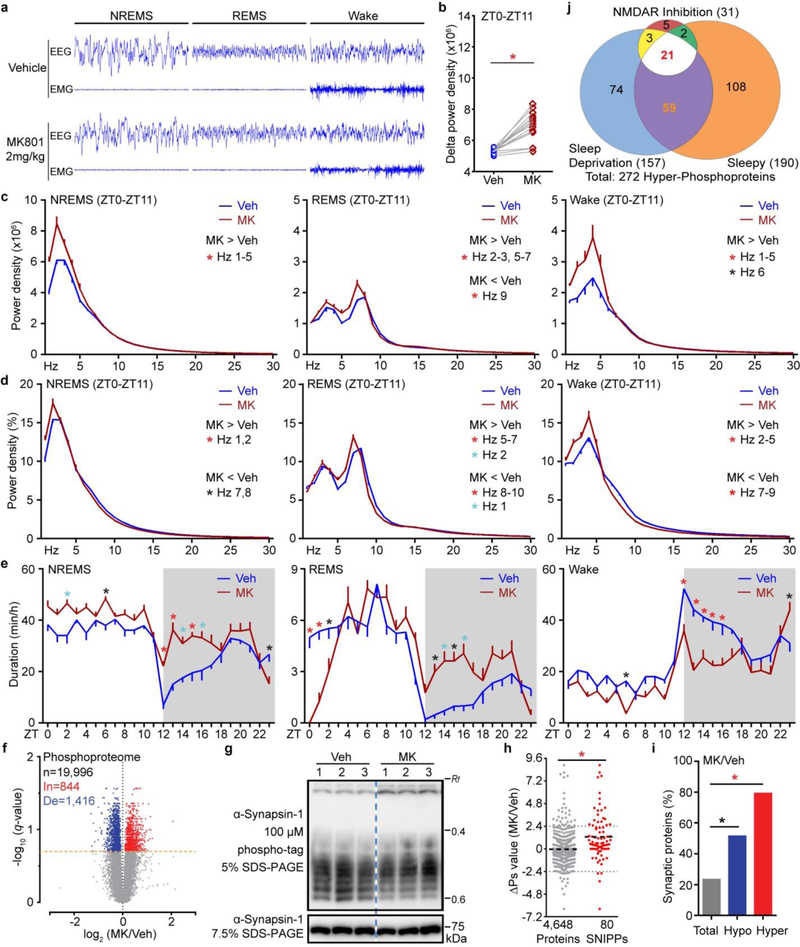
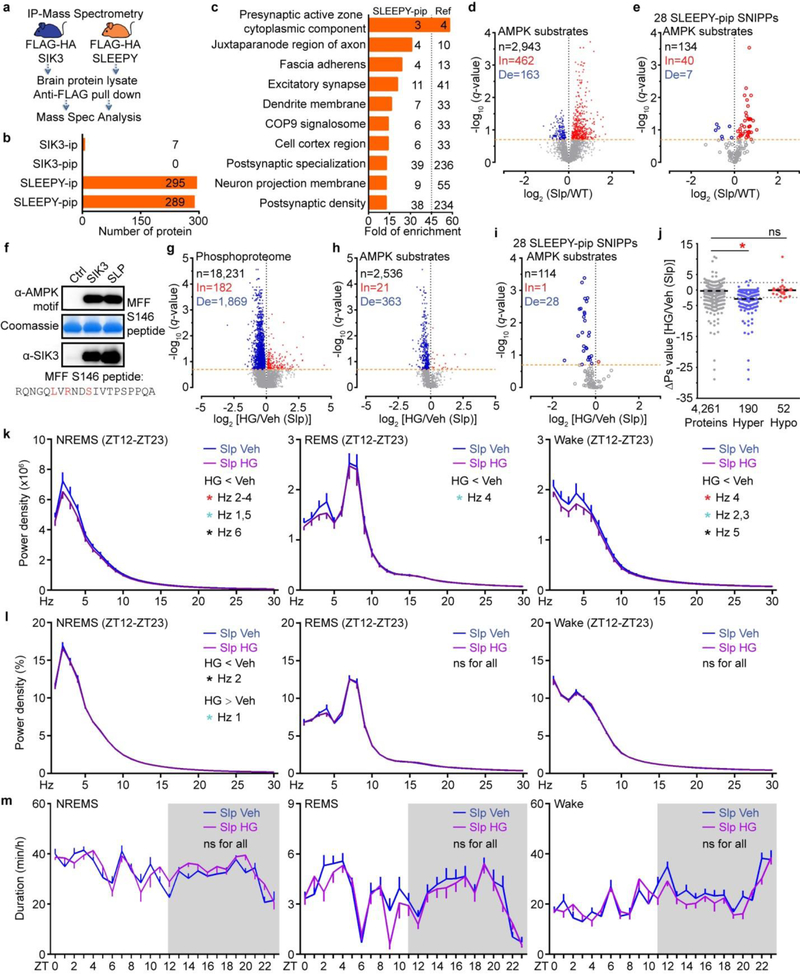
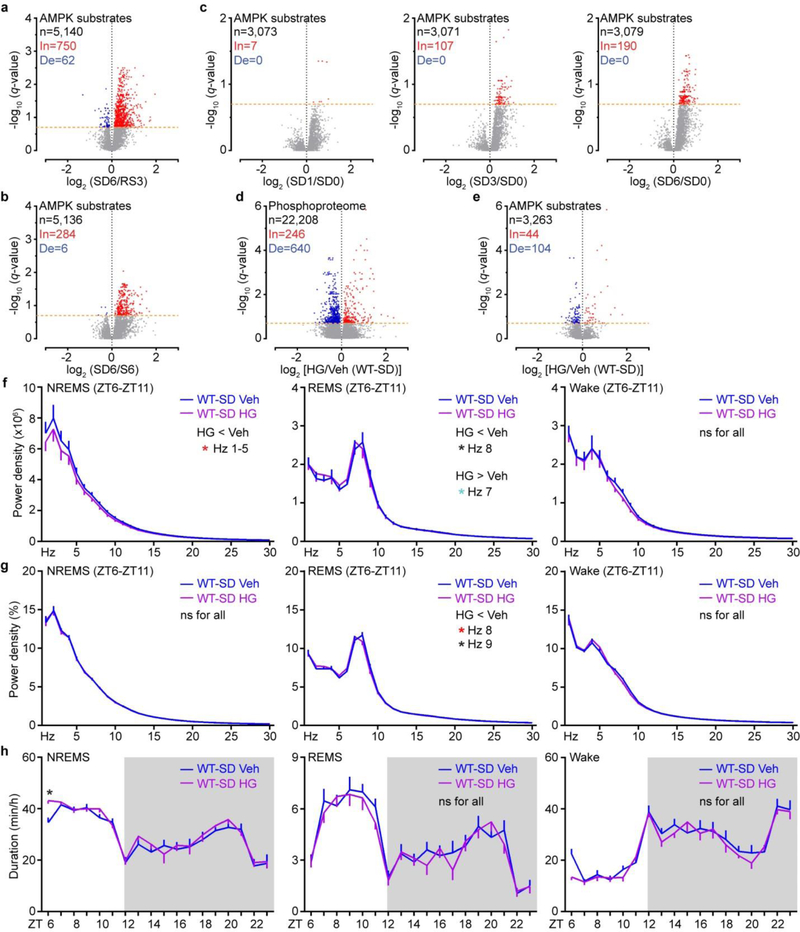
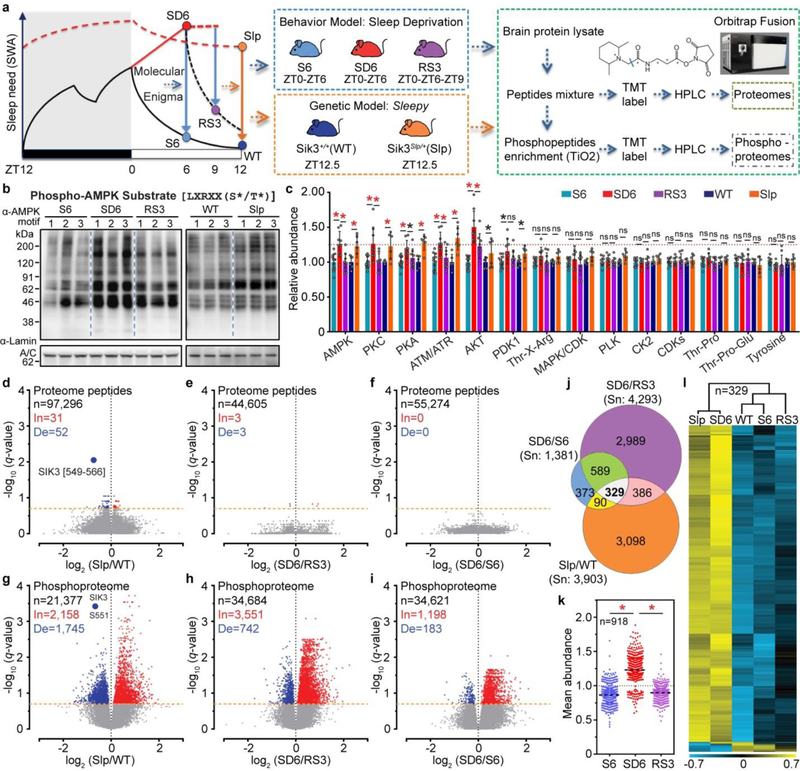
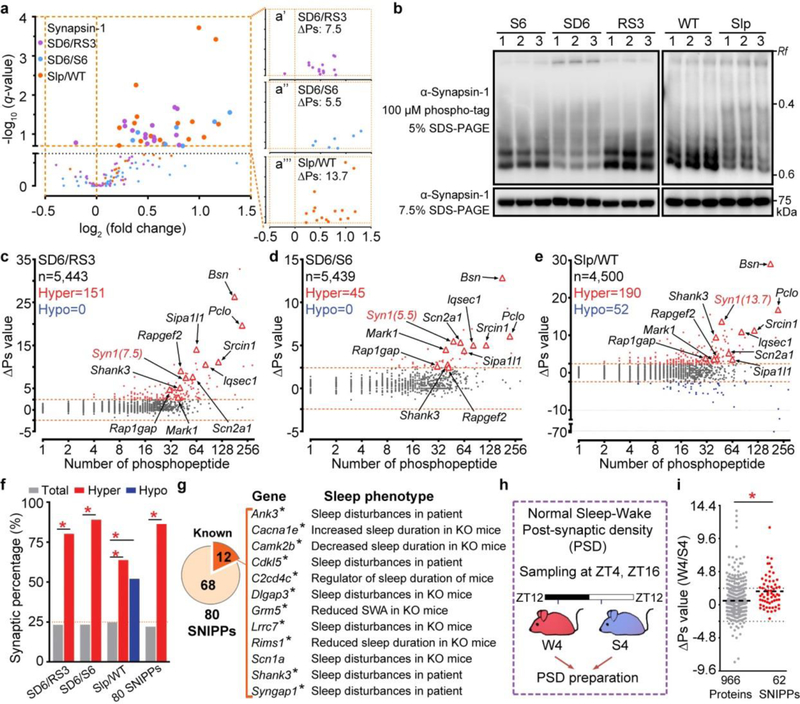
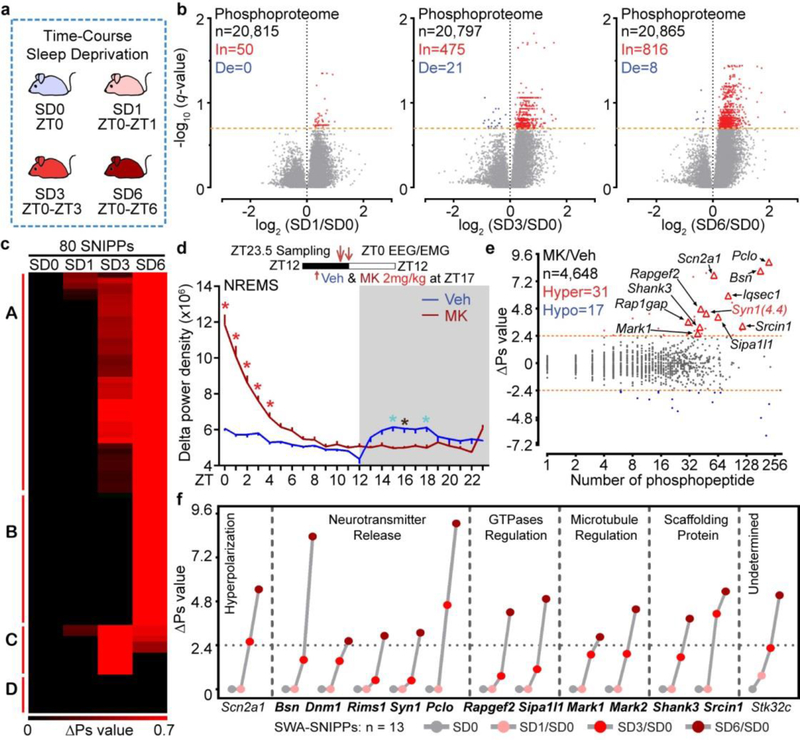
Sleep and wake have global effects on brain physiology, from molecular changes and neuronal activities to synaptic plasticity. Sleep-wake homeostasis is maintained by the generation of a sleep need that accumulates during waking and dissipates during sleep. Here we investigate the molecular basis of sleep need using quantitative phosphoproteomic analysis of the sleep-deprived and Sleepy mouse models of increased sleep need. Sleep deprivation induces cumulative phosphorylation of the brain proteome, which dissipates during sleep. Sleepy mice, owing to a gain-of-function mutation in the Sik3 gene , have a constitutively high sleep need despite increased sleep amount. The brain proteome of these mice exhibits hyperphosphorylation, similar to that seen in the brain of sleep-deprived mice. Comparison of the two models identifies 80 mostly synaptic sleep-need-index phosphoproteins (SNIPPs), in which phosphorylation states closely parallel changes of sleep need. SLEEPY, the mutant SIK3 protein, preferentially associates with and phosphorylates SNIPPs. Inhibition of SIK3 activity reduces phosphorylation of SNIPPs and slow wave activity during non-rapid-eye-movement sleep, the best known measurable index of sleep need, in both Sleepy mice and sleep-deprived wild-type mice. Our results suggest that phosphorylation of SNIPPs accumulates and dissipates in relation to sleep need, and therefore SNIPP phosphorylation is a molecular signature of sleep need. Whereas waking encodes memories by potentiating synapses, sleep consolidates memories and restores synaptic homeostasis by globally downscaling excitatory synapses. Thus, the phosphorylation-dephosphorylation cycle of SNIPPs may represent a major regulatory mechanism that underlies both synaptic homeostasis and sleep-wake homeostasis.
睡眠和觉醒对大脑生理学具有全球性影响,从分子变化和神经元活动到突触可塑性。睡眠-觉醒稳态通过睡眠需求的产生来维持,这种需求在觉醒时积累,在睡眠时消散。在这里,我们使用睡眠剥夺和睡眠需求增加的Sleepy 小鼠模型的定量磷酸蛋白质组学分析来研究睡眠需求的分子基础。睡眠剥夺会导致大脑蛋白质组的累积磷酸化,而这种磷酸化会在睡眠中消散。由于 Sik3 基因的功能获得性突变,Sleepy 小鼠尽管睡眠量增加,但始终存在较高的睡眠需求。这些小鼠的大脑蛋白质组表现出高磷酸化,类似于睡眠剥夺小鼠的大脑。对这两种模型的比较确定了 80 种主要的突触睡眠需求指数磷酸蛋白 (SNIPP),其中磷酸化状态与睡眠需求的变化密切相关。突变的 SIK3 蛋白 SLEEPY 优先与 SNIPPs 结合并磷酸化它们。抑制 SIK3 活性可降低 SNIPPs 的磷酸化水平,并减少非快速眼动睡眠期间的慢波活动,这是睡眠需求的最佳可测量指标,在 Sleepy 小鼠和睡眠剥夺的野生型小鼠中均如此。我们的研究结果表明,SNIPPs 的磷酸化与睡眠需求有关,因此 SNIPP 的磷酸化是睡眠需求的分子特征。虽然清醒通过增强突触来编码记忆,但睡眠通过全局下调兴奋性突触来巩固记忆并恢复突触稳态。因此,SNIPPs 的磷酸化-去磷酸化循环可能代表一种主要的调节机制,它是突触稳态和睡眠-觉醒稳态的基础。