Department Immunology and Infection, London School of Hygiene and Tropical Medicine, London, United Kingdom.
Menzies School of Health Research and Charles Darwin University, Darwin, Northern Territory, Australia.
PLoS Negl Trop Dis. 2018 Jun 14;12(6):e0006457. doi: 10.1371/journal.pntd.0006457. eCollection 2018 Jun.
Plasmodium knowlesi is the most common cause of malaria in Malaysian Borneo, with reporting limited to clinical cases presenting to health facilities and scarce data on the true extent of transmission. Serological estimations of transmission have been used with other malaria species to garner information about epidemiological patterns. However, there are a distinct lack of suitable serosurveillance tools for this neglected disease.
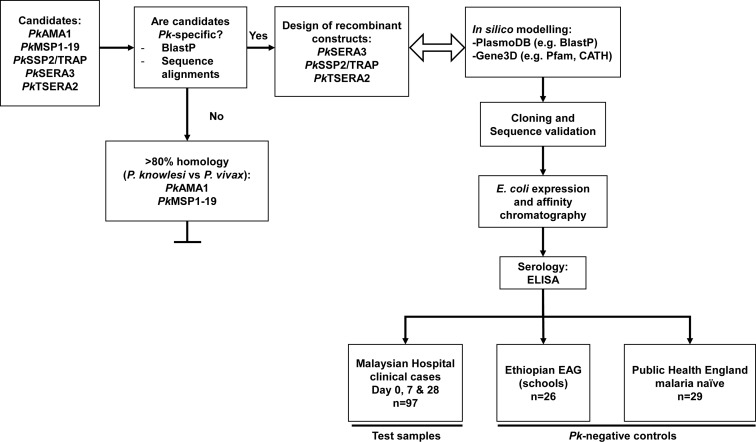
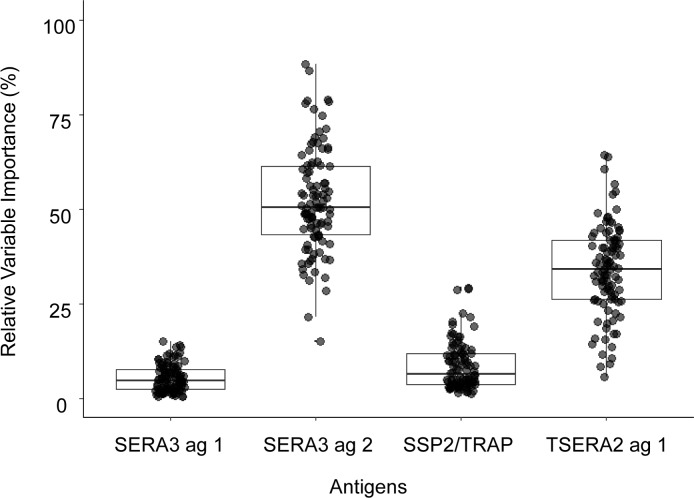
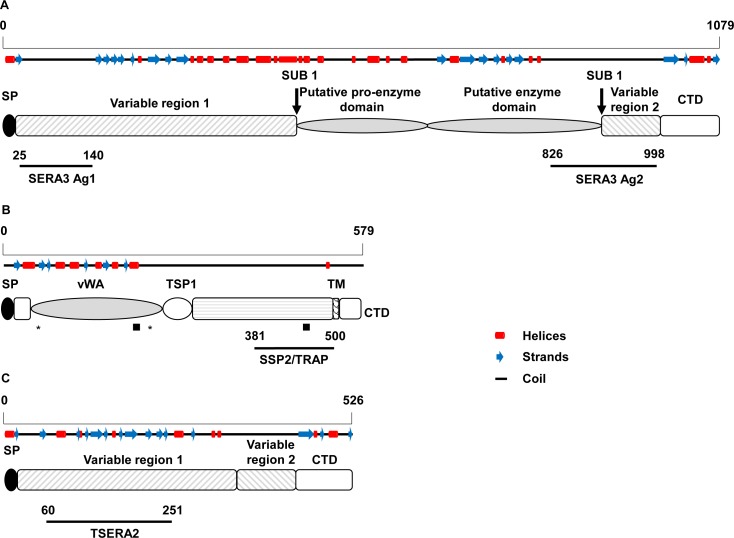
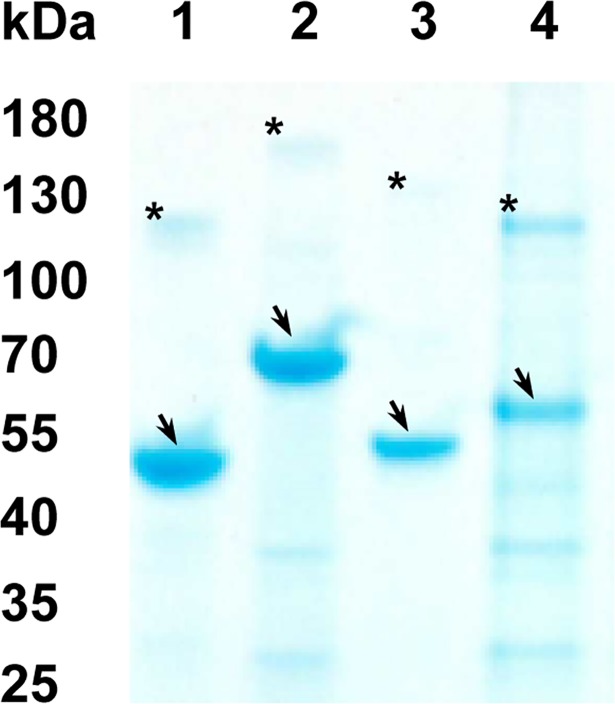
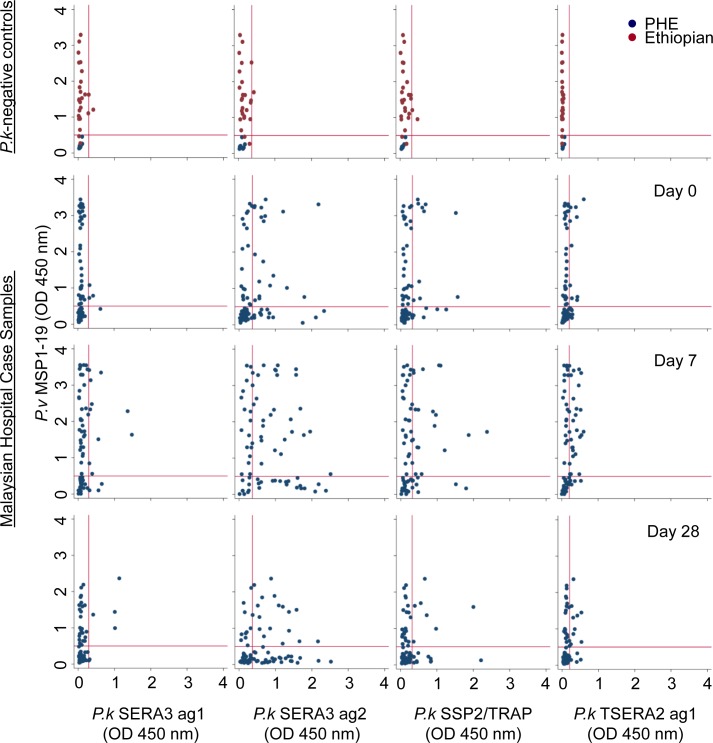
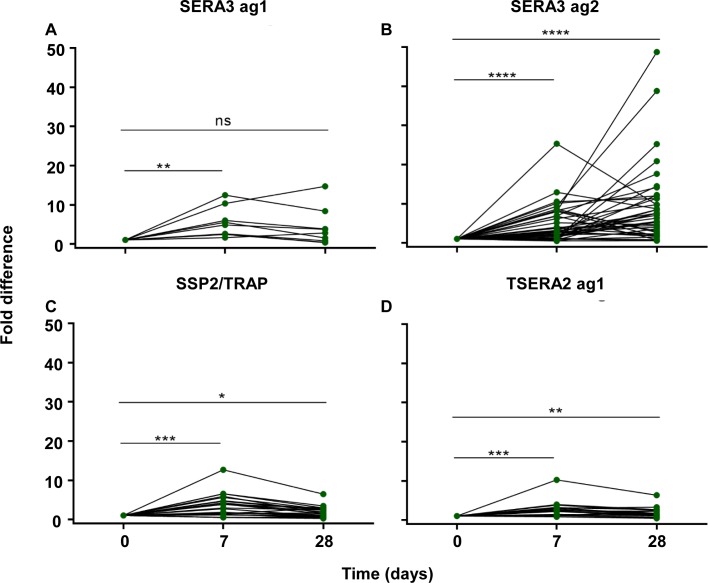
METHODOLOGY/PRINCIPAL FINDINGS: Using in silico tools, we designed and expressed four novel P. knowlesi protein products to address the distinct lack of suitable serosurveillance tools: PkSERA3 antigens 1 and 2, PkSSP2/TRAP and PkTSERA2 antigen 1. Antibody prevalence to these antigens was determined by ELISA for three time-points post-treatment from a hospital-based clinical treatment trial in Sabah, East Malaysia (n = 97 individuals; 241 total samples for all time points). Higher responses were observed for the PkSERA3 antigen 2 (67%, 65/97) across all time-points (day 0: 36.9% 34/92; day 7: 63.8% 46/72; day 28: 58.4% 45/77) with significant differences between the clinical cases and controls (n = 55, mean plus 3 SD) (day 0 p<0.0001; day 7 p<0.0001; day 28 p<0.0001). Using boosted regression trees, we developed models to classify P. knowlesi exposure (cross-validated AUC 88.9%; IQR 86.1-91.3%) and identified the most predictive antibody responses.
CONCLUSIONS/SIGNIFICANCE: The PkSERA3 antigen 2 had the highest relative variable importance in all models. Further validation of these antigens is underway to determine the specificity of these tools in the context of multi-species infections at the population level.
在马来西亚婆罗洲,疟原虫 knowlesi 是最常见的疟疾病原体,报告仅限于向医疗机构就诊的临床病例,关于传播的真实程度的数据非常有限。血清学估计已用于其他疟疾物种,以获取有关流行病学模式的信息。然而,对于这种被忽视的疾病,缺乏合适的血清学监测工具。
方法/主要发现:我们使用计算机工具设计和表达了四种新型疟原虫 knowlesi 蛋白产物,以解决缺乏合适的血清学监测工具的问题:PkSERA3 抗原 1 和 2、PkSSP2/TRAP 和 PkTSERA2 抗原 1。通过在东马来西亚沙巴州进行的一项基于医院的临床治疗试验,使用 ELISA 法在治疗后三个时间点(n = 97 人;所有时间点共 241 个样本)测定这些抗原的抗体流行率。在所有时间点(第 0 天:36.9%(34/92);第 7 天:63.8%(46/72);第 28 天:58.4%(45/77)),PkSERA3 抗原 2 的反应更高(67%,65/97),并且在临床病例和对照组之间存在显著差异(n = 55,均值加 3 个标准差)(第 0 天 p<0.0001;第 7 天 p<0.0001;第 28 天 p<0.0001)。使用增强回归树,我们开发了模型来分类疟原虫 knowlesi 暴露(交叉验证 AUC 88.9%;IQR 86.1-91.3%),并确定了最具预测性的抗体反应。
结论/意义:在所有模型中,PkSERA3 抗原 2 的相对变量重要性最高。正在进一步验证这些抗原,以确定在人群水平上多物种感染情况下这些工具的特异性。