Jin Tao, Hu Bingxue, Chen Shanshan, Wang Qiang, Dong Xue, Zhang Yin, Zhu Yongqiang, Zhang Zhao
Jiangsu Key Laboratory for Molecular and Medical Biotechnology, College of Life Science, Nanjing Normal University, Nanjing, China.
State Key Laboratory of Medical Neurobiology, School of Basic Medical Sciences and Institutes of Brain Science, and the Collaborative Innovation Center for Brain Science, Fudan University, Shanghai, China.
Front Pharmacol. 2018 May 31;9:577. doi: 10.3389/fphar.2018.00577. eCollection 2018.
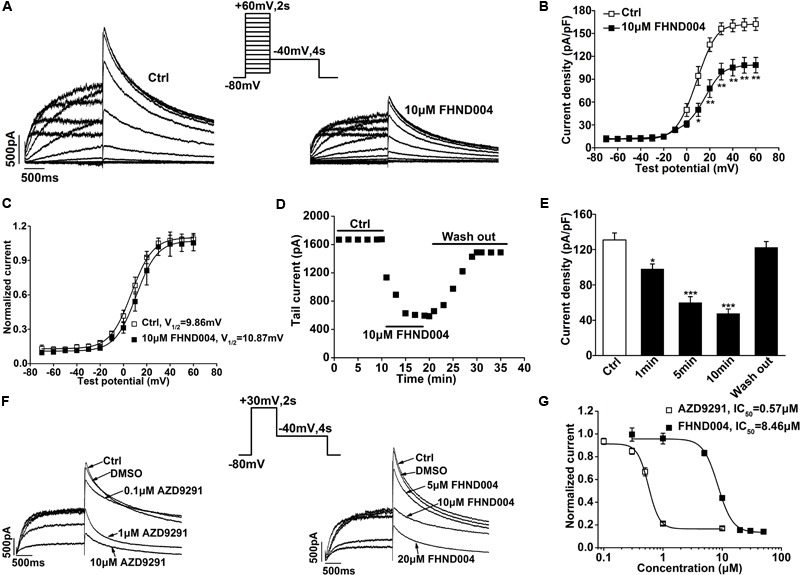
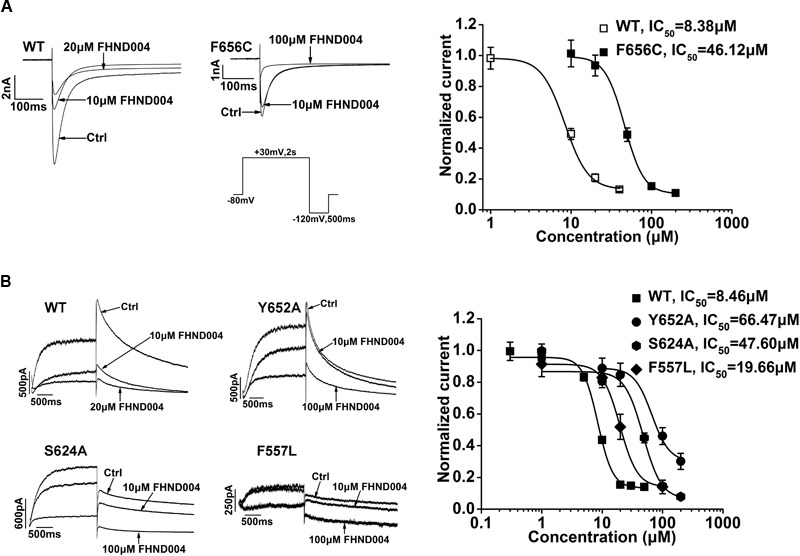
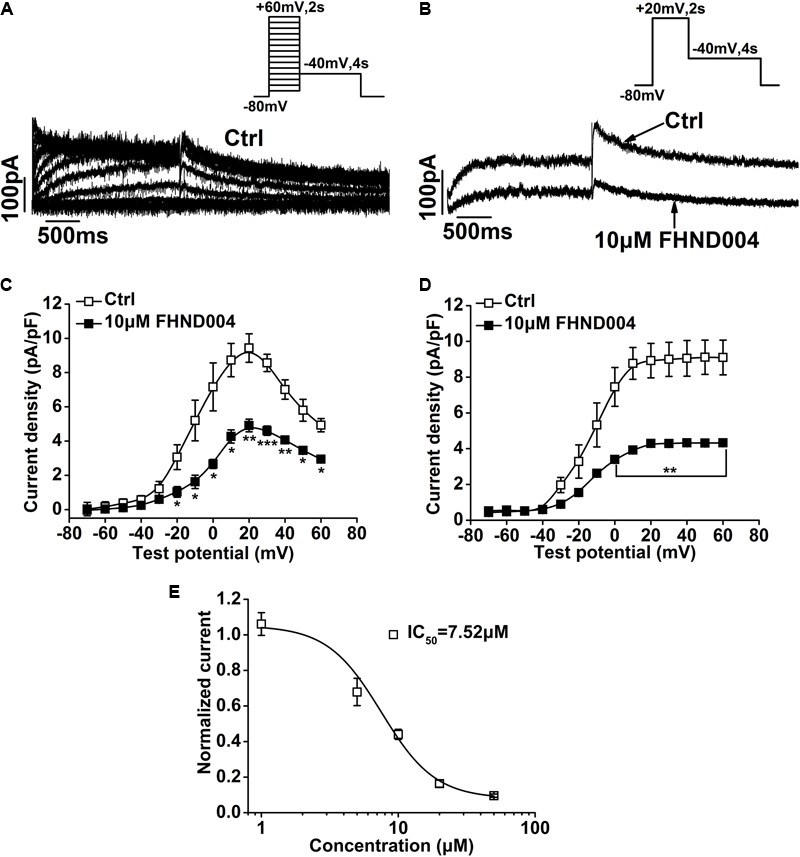
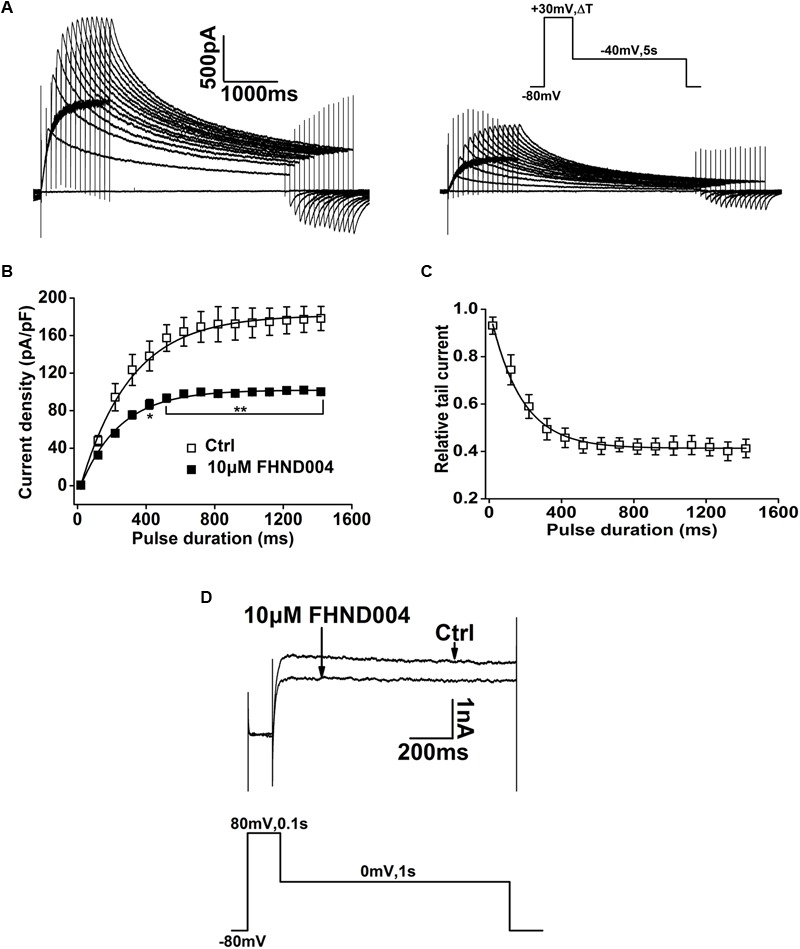
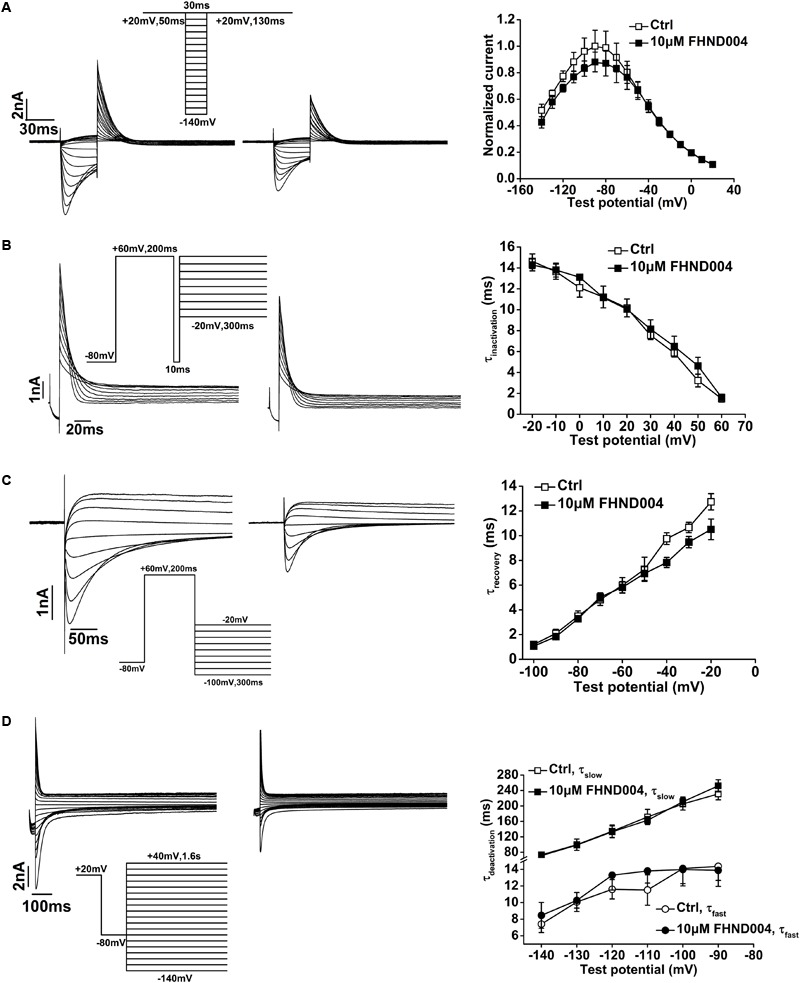
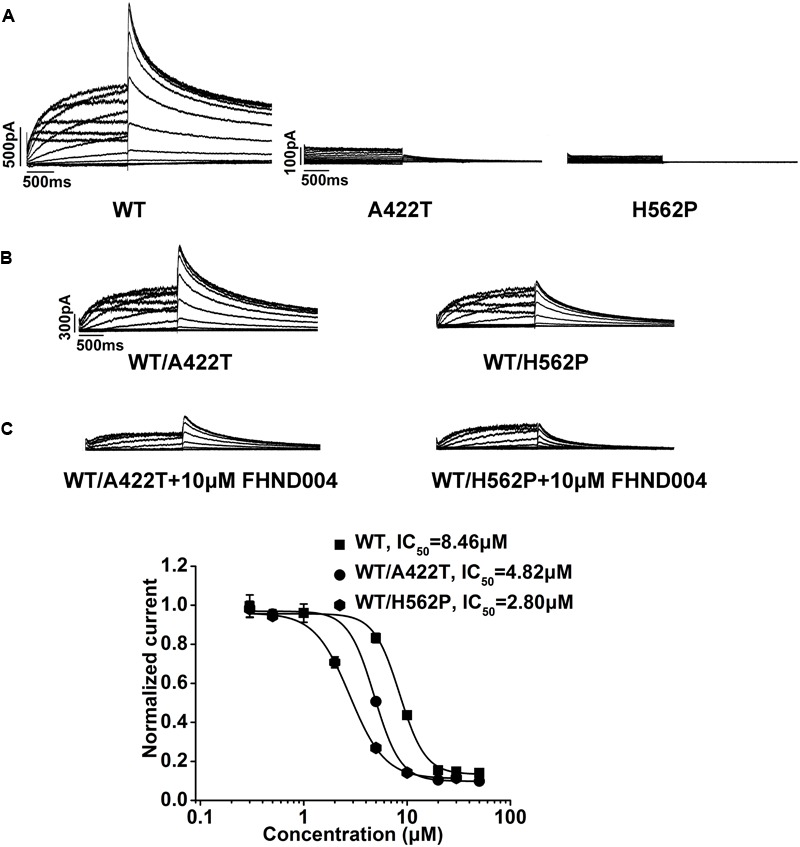
FHND004 is a newly synthesized epidermal growth factor receptor (EGFR) inhibitor for the treatment of non-small cell lung cancer (NSCLC). The aim of the present study was to investigate the impacts of FHND004 on human related gene (hERG) K channels and the molecular mechanisms underlying of its action. Whole-cell patch clamp recording was performed on wild type (WT), mutant hERG channels heterologously expressed in human embryonic kidney (HEK) 293 cells or endogenously expressed in HL-1 cells, respectively. FHND004 inhibited hERG K currents in a concentration-dependent manner with IC values of 8.46 ± 0.33 μM in HEK293 cells and 7.52 ± 1.27 μM in HL-1 cells, respectively. However, the inhibitory potency of FHND004 on hERG channels was significantly less than its precursor AZD9291. FHND004-induced inhibition was state-dependent with a preference within open state, but did not alter other kinetics including activation, inactivation, and recovery from inactivation or deactivation. In addition, FHND004 exhibited more potent inhibitory effects on WT/A422T and WT/H562P-hERG, two known long QT syndrome (LQTS) associated mutations, than WT alone. Mutations of the residues at pore regions (F656C, Y652A, S624A, and F557L) in hERG channels attenuated block effects of FHND004. Taken together, our results demonstrate the evidence that FHND004 is a less potent hERG blocker than its precursor AZD9291. There is, however, a need for caution in the potential use of FHND004 for treating NSCLC patients, especially in those with other concurrent triggering factors.
FHND004是一种新合成的用于治疗非小细胞肺癌(NSCLC)的表皮生长因子受体(EGFR)抑制剂。本研究的目的是探讨FHND004对人相关基因(hERG)钾通道的影响及其作用的分子机制。分别在人胚肾(HEK)293细胞中异源表达或HL-1细胞中内源性表达的野生型(WT)、突变型hERG通道上进行全细胞膜片钳记录。FHND004以浓度依赖性方式抑制hERG钾电流,在HEK293细胞中的IC值为8.46±0.33μM,在HL-1细胞中的IC值为7.52±1.27μM。然而,FHND004对hERG通道的抑制效力明显低于其前体AZD9291。FHND004诱导的抑制具有状态依赖性,偏好开放状态,但不改变包括激活、失活以及从失活或去激活中恢复等其他动力学过程。此外,FHND004对WT/A422T和WT/H562P-hERG这两种已知的与长QT综合征(LQTS)相关的突变体的抑制作用比单独的WT更强。hERG通道孔区残基(F656C、Y652A、S624A和F557L)的突变减弱了FHND004的阻断作用。综上所述,我们的结果证明了FHND004是一种比其前体AZD9291效力更低的hERG阻滞剂。然而,在将FHND004用于治疗NSCLC患者时需要谨慎,尤其是对于那些有其他并发触发因素的患者。