Active Work Laboratory, College of Arts, Law and Education (Dr Mainsbridge, Dr Pedersen); School of Health Sciences, College of Health and Medicine (Dr Ahuja, Dr Williams, Dr Bird), University of Tasmania, Launceston, Tasmania; George Frederick Strong Rehabilitation Research Laboratory (Dr Bird), University of British Columbia, Vancouver, Canada; and Faculty of Education and Arts (Dr Cooley), Federation University, Victoria, Australia.
J Occup Environ Med. 2018 Sep;60(9):769-774. doi: 10.1097/JOM.0000000000001377.
To evaluate the blood pressure (BP) effects of a yearlong e-health solution designed to interrupt prolonged occupational sitting time.
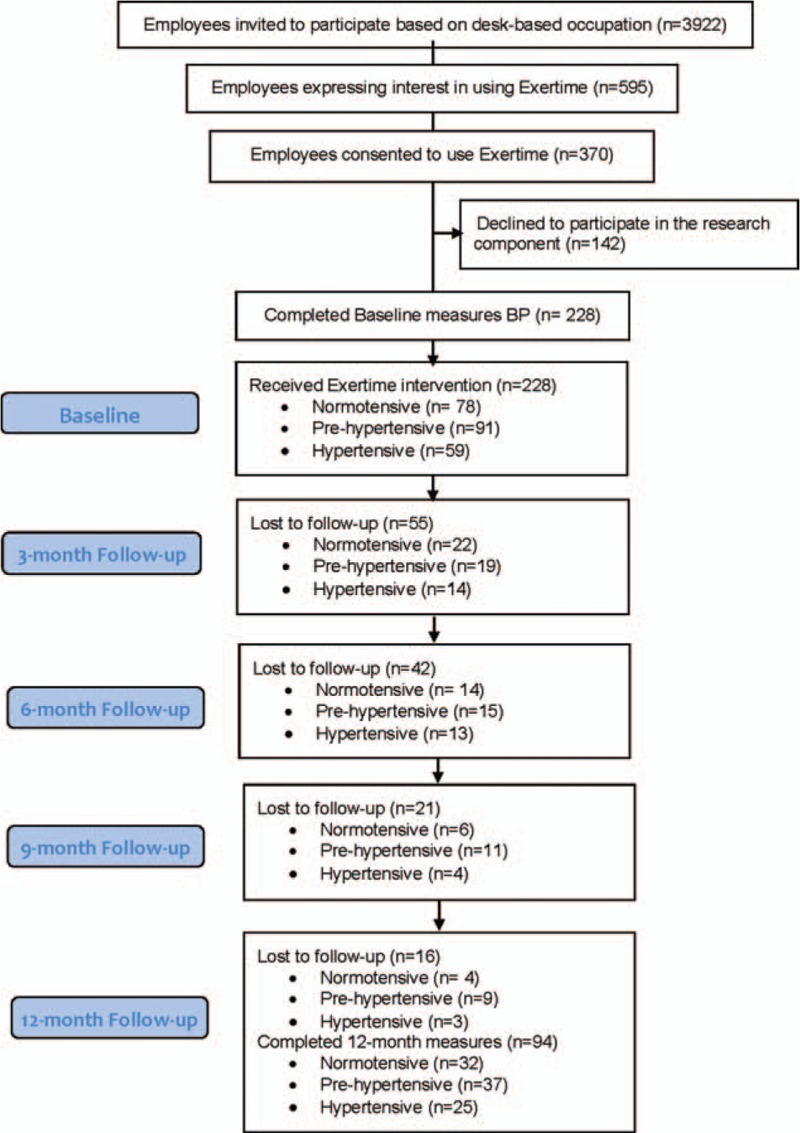
BP data of 228 desk-based employees (45.1 ± 10.5 years) were analyzed at baseline, 3, 6, 9, and 12 months.
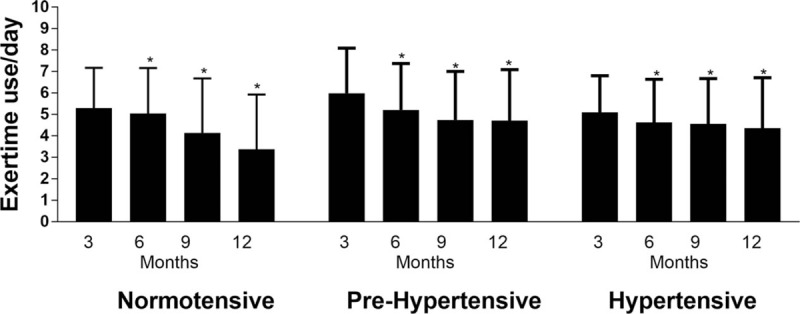
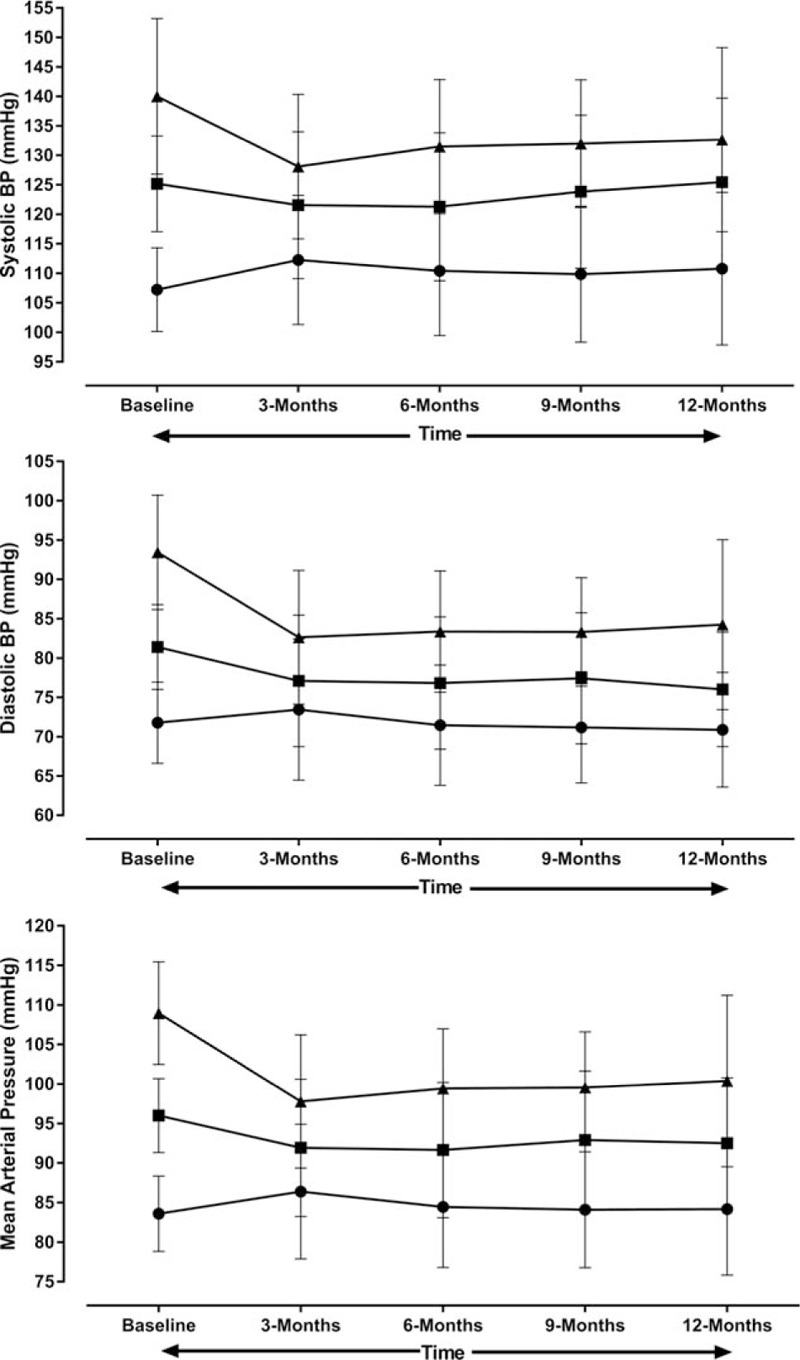
Systolic BP significantly reduced from baseline for the first 9 months (1.0 to 3.4 mmHg; P < 0.01) while diastolic and mean arterial pressure decreased for the full 12-months (4 to 5 mmHg for diastolic pressure and 3.6 to 4.2 mmHg for MAP; all P < 0.01).Participants used the e-health solution 5.5 ± 2.0 times/day in the first 3 months which reduced to 4.2 ± 2.5 times/day by the end of the study (P < 0.05).
An e-health solution designed to increase non-exercise physical activity by interrupting sitting time in the workplace is feasible and produced long-term reductions in blood pressure.
评估一种旨在打断长时间职业坐姿的电子健康解决方案对血压(BP)的影响。
在基线、3、6、9 和 12 个月时,分析了 228 名伏案工作的员工(45.1±10.5 岁)的血压数据。
收缩压在最初的 9 个月内从基线显著降低(1.0 至 3.4mmHg;P<0.01),而舒张压和平均动脉压在 12 个月内持续下降(舒张压下降 4 至 5mmHg,MAP 下降 3.6 至 4.2mmHg;均 P<0.01)。在最初的 3 个月内,参与者每天使用电子健康解决方案 5.5±2.0 次,在研究结束时减少到每天 4.2±2.5 次(P<0.05)。
一种旨在通过打断工作场所久坐时间来增加非运动性身体活动的电子健康解决方案是可行的,并产生了长期的血压降低。