School of Sports, Exercise and Rehabilitation Sciences, College of Life and Environmental Sciences, University of Birmingham, Birmingham, UK.
Community Medicine Unit, Faculty of Medicine, Universiti Sultan Zainal Abidin (UniSZA), Medical Campus, Jalan Sultan Mahmud, 20400, Kuala Terengganu, Terengganu, Malaysia.
BMC Public Health. 2022 Oct 31;22(1):1985. doi: 10.1186/s12889-022-14393-1.
Prolonged sitting is associated with increased risk of obesity, type 2 diabetes and cardiovascular disease. Occupational sitting accounts for up to 50 h/week for employees. This pilot study assessed the acceptability of stair climbing as an interruption to sitting throughout working hours, and provided preliminary data of the effects on glucose and lipid profiles.
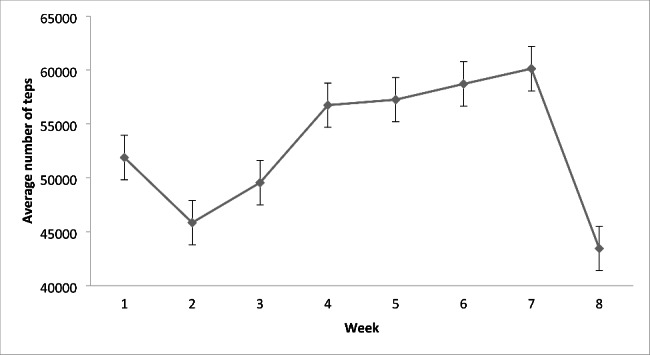
A quasi-experimental design was conducted involving 16 sedentary office workers (five females and 11 males) for intervention (n = 8) and control groups (n = 8) with mean age of 36.38 (5.58). For the eight-week intervention, a continuous four-floor stair climb and descent was performed eight times/day spread evenly over the working day. A prompt to climb was presented on the participant's computer eight times/day. Participants in the experimental group recorded daily floors climbed and steps (measured using pedometers) in a weekly log sheet. Blood samples were collected pre and post intervention to test effects on fasting glucose and 2 h plasma glucose, triglycerides, and total (TC), LDL and HDL cholesterol. Experimental participants were interviewed at the end of the study. The Wilcoxon signed rank test was used to compare the median changes (pre-post) of the dependent variables.
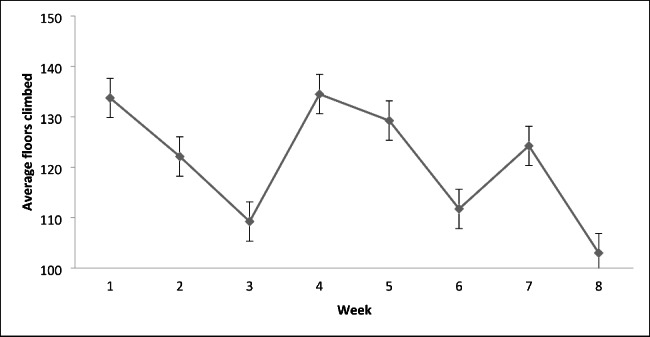
On average, the experimental group climbed 121 floors/week when prompted. There were significant reductions in fasting blood glucose, TC and LDL, as well as the derived measures of 'bad' cholesterol and the TC/HDL ratio in the experimental group. Post-experimental interviews indicated that the interruption to sitting was well tolerated.
Prompted stair climbing activity had impacts on health outcomes and was found acceptable to employees at work.
Ethics for this study was approved by Science, Technology, Engineering and Mathematics Ethical Review Committee, University of Birmingham with ethics reference number ERN_15_0491.
久坐与肥胖、2 型糖尿病和心血管疾病风险增加有关。对于员工来说,职业性久坐可能会占据每周 50 小时。本研究采用准实验设计,对在工作时间内通过爬楼梯打断久坐的可接受性进行评估,并对葡萄糖和血脂谱的影响提供初步数据。
纳入了 16 名久坐的办公室工作人员(5 名女性和 11 名男性),其中 8 名作为干预组,8 名作为对照组,平均年龄为 36.38(5.58)岁。在八周的干预期间,每天均匀地进行 8 次四层楼梯的上下攀爬。参与者的计算机上每天会弹出 8 次爬楼梯的提示。实验组的参与者每天记录爬楼梯的楼层数和步数(使用计步器测量),并填写在每周的日志表上。在干预前后采集血样,以检测对空腹血糖和 2 小时血糖、甘油三酯、总胆固醇(TC)、低密度脂蛋白(LDL)和高密度脂蛋白(HDL)胆固醇的影响。研究结束时对实验组参与者进行访谈。采用 Wilcoxon 符号秩检验比较依赖变量的中位数变化(干预前后)。
在提示时,实验组平均每周爬 121 层楼。实验组的空腹血糖、TC 和 LDL 显著降低,以及“坏”胆固醇的衍生指标和 TC/HDL 比值也显著降低。实验后的访谈表明,打断久坐是可以接受的。
提示爬楼梯活动对健康结果有影响,并且在工作中受到员工的认可。
本研究的伦理学已获得伯明翰大学科学、技术、工程和数学伦理审查委员会批准,注册号为 ERN_15_0491。