Schurgin Mark W, Flombaum Jonathan I
Department of Psychology, University of California, San Diego, California 92093, USA.
Department of Psychological & Brain Sciences, Johns Hopkins University, Baltimore, Maryland 21218, USA.
Learn Mem. 2018 Jun 15;25(7):309-316. doi: 10.1101/lm.047167.117. Print 2018 Jul.
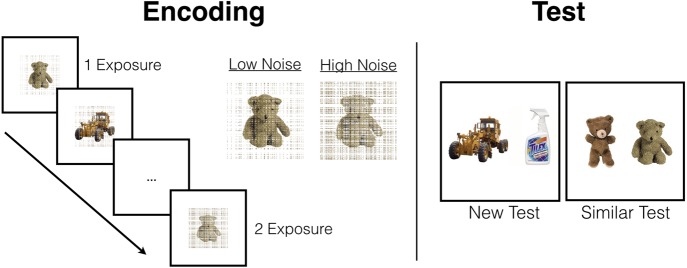
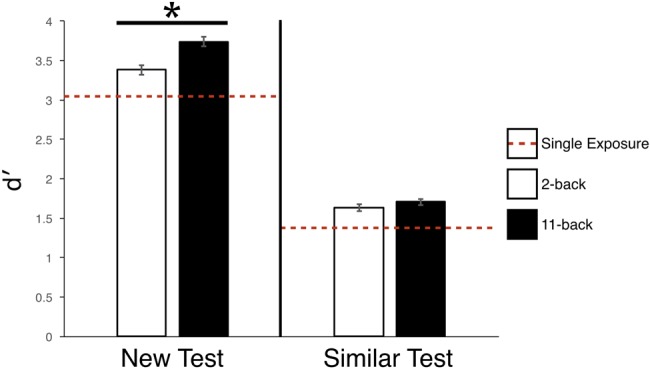
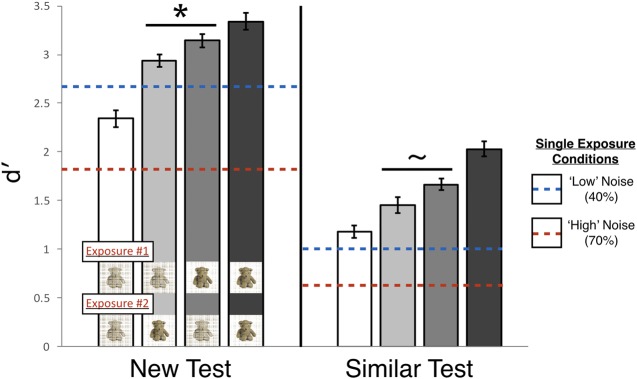
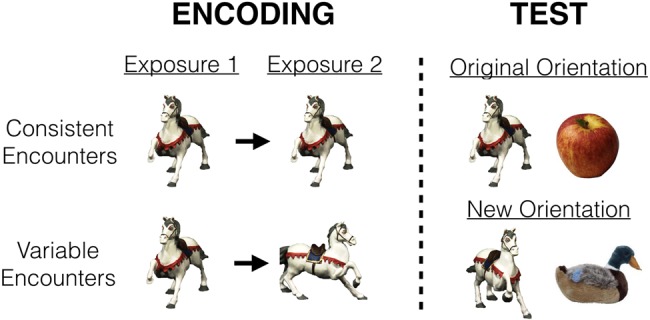
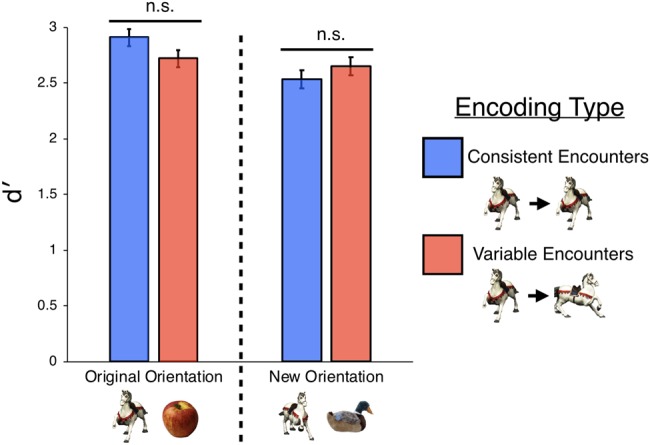
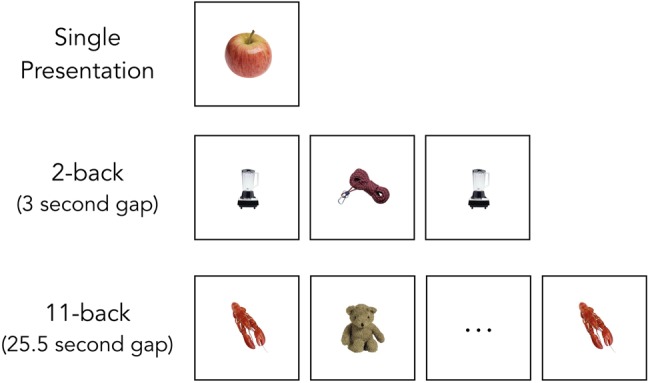
A person sees an object once, and then seconds, minutes, hours, days, or weeks later, she sees it again. How is the person's visual memory for that object changed, improved, or degraded by the second encounter, compared to a situation in which she will have only seen the object once? The answer is unknown, a glaring lacuna in the current understanding of visual episodic memory. The overwhelming majority of research considers recognition following a single exposure to a set of objects, whereas objects reoccur regularly in lived experience. We therefore sought to address some of the more basic and salient questions that are unanswered with respect to how repetition affects visual episodic memory. In particular, we investigated how spacing between repeated encounters affects memory, as well as variable input quality across encounters and changes in viewed orientation. Memory was better when the spacing between encounters was larger, and when a first encounter with an object supplied high quality input (compared to low quality input first, followed later by higher quality input). These experiments lay a foundation for further understanding how memory changes, improves, and degrades over the course of experience.
一个人看到一个物体一次,然后在几秒、几分、几小时、几天或几周后,她又看到了它。与只看过该物体一次的情况相比,第二次遇到该物体时,这个人对它的视觉记忆是如何改变、改善或退化的呢?答案尚不清楚,这是当前对视觉情景记忆理解中一个明显的空白。绝大多数研究考虑的是在单次接触一组物体后的识别,而物体在实际生活中是经常重复出现的。因此,我们试图解决一些关于重复如何影响视觉情景记忆的更基本、更突出但尚未得到解答的问题。特别是,我们研究了重复接触之间的间隔如何影响记忆,以及不同接触之间输入质量的变化和观察方向的改变。当接触之间的间隔较大时,以及当第一次接触物体时提供高质量输入(与先提供低质量输入,随后再提供高质量输入相比)时,记忆效果更好。这些实验为进一步理解记忆在经历过程中如何变化、改善和退化奠定了基础。