Li Xiaoqiong, Jensen Bent Borg, Højberg Ole, Noel Samantha Joan, Canibe Nuria
Department of Animal Science, Faculty of Science and Technology, Aarhus University, Blichers Allé 20, P. O. Box 50, 8830, Tjele, Denmark.
Institute of Food Science, Zhejiang Academy of Agricultural Sciences, Hangzhou, 310021, China.
AMB Express. 2018 Jun 16;8(1):99. doi: 10.1186/s13568-018-0627-y.
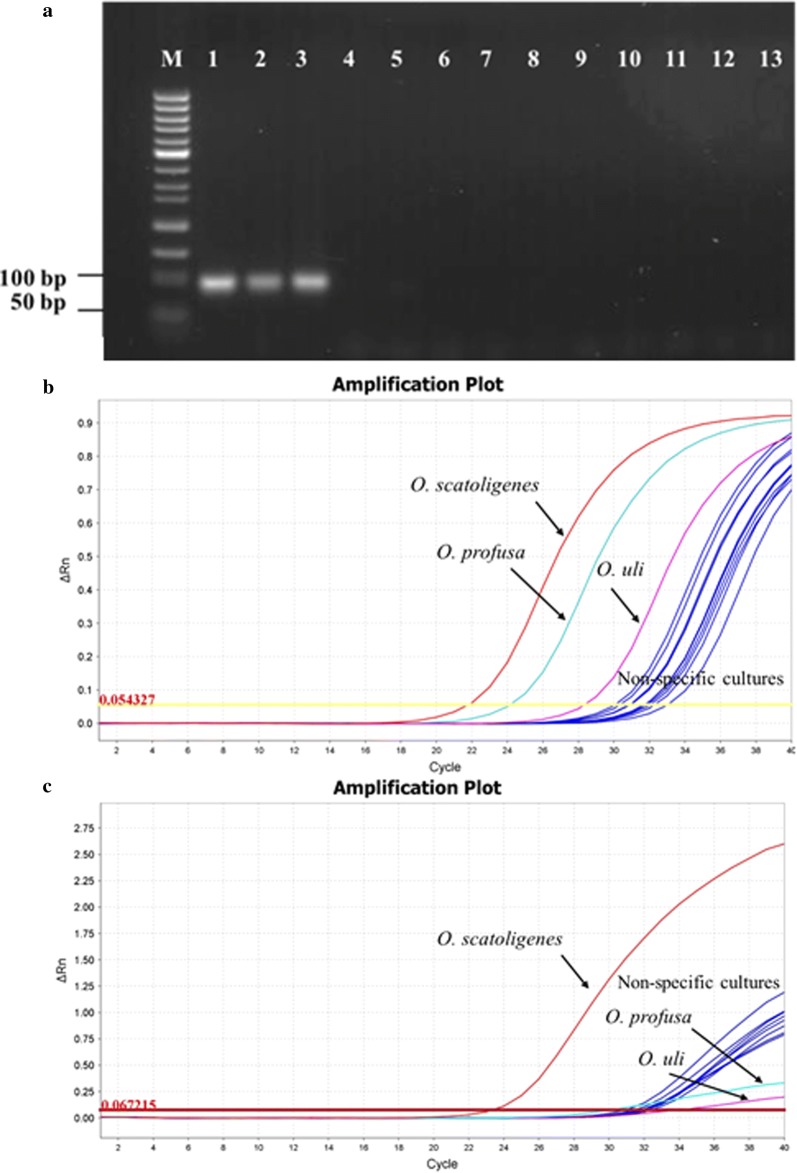
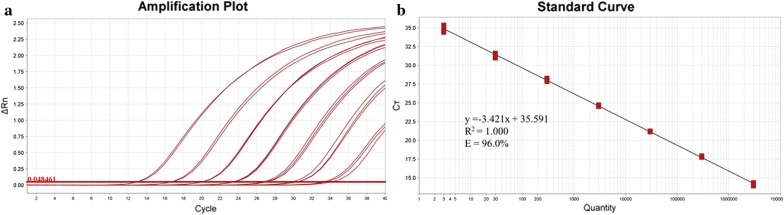
Olsenella scatoligenes is the only skatole-producing bacterium isolated from the pig gut. Skatole, produced from microbial degradation of l-tryptophan, is the main contributor to boar taint, an off-odor and off-flavor taint, released upon heating meat from some entire male pigs. An appropriate method for quantifying O. scatoligenes would help investigating the relationship between O. scatoligenes abundance and skatole concentration in the pig gut. Thus, the present study aimed at developing a TaqMan-MGB probe-based, species-specific qPCR assay for rapid quantification of O. scatoligenes. The use of a MGB probe allowed discriminating O. scatoligenes from other closely related species. Moreover, the assay allowed quantifying down to three target gene copies per PCR reaction using genomic DNA-constructed standards, or 1.5 × 10 cells/g digesta, using O. scatoligenes-spiked digesta samples as reference standards. The developed assay was applied to assess the impact of dietary chicory roots on O. scatoligenes in the hindgut of pigs. Olsenella scatoligenes made up < 0.01% of the microbial population in the pig hindgut. Interestingly, the highest number of O. scatoligenes was found in young entire male pigs fed high levels of chicory roots. This indicates that the known effect of chicory roots for reducing skatole production is not by inhibiting the growth of this skatole-producing bacterium in the pig hindgut. Accordingly, the abundance of O. scatoligenes in the hindgut does not seem to be an appropriate indicator of boar taint. The present study is the first to describe a TaqMan-MGB probe qPCR assay for detection and quantification of O. scatoligenes in pigs.
产粪臭素奥尔森菌是从猪肠道中分离出的唯一能产生粪臭素的细菌。粪臭素由l-色氨酸经微生物降解产生,是公猪异味的主要来源,这种异味和不良风味在加热某些成年公猪的肉时会释放出来。一种合适的定量产粪臭素奥尔森菌的方法将有助于研究猪肠道中产粪臭素奥尔森菌的丰度与粪臭素浓度之间的关系。因此,本研究旨在开发一种基于TaqMan-MGB探针的、物种特异性的qPCR检测方法,用于快速定量产粪臭素奥尔森菌。使用MGB探针能够将产粪臭素奥尔森菌与其他密切相关的物种区分开来。此外,该检测方法使用基因组DNA构建的标准品时,每个PCR反应能够定量低至三个目标基因拷贝,或者使用产粪臭素奥尔森菌加标的消化物样品作为参考标准品时,能够定量低至每克消化物1.5×10个细胞。所开发的检测方法被应用于评估日粮中的菊苣根对猪后肠中产粪臭素奥尔森菌的影响。产粪臭素奥尔森菌在猪后肠微生物群落中所占比例小于0.01%。有趣的是,在饲喂高水平菊苣根的幼年成年公猪中发现产粪臭素奥尔森菌的数量最多。这表明菊苣根降低粪臭素产生的已知作用并非通过抑制猪后肠中这种产生粪臭素的细菌的生长。因此,后肠中产粪臭素奥尔森菌的丰度似乎不是公猪异味的合适指标。本研究首次描述了一种用于检测和定量猪体内产粪臭素奥尔森菌的TaqMan-MGB探针qPCR检测方法。