Angiogenesis Laboratory, Department of Ophthalmology, Massachusetts Eye and Ear, Harvard Medical School, Boston, MA 02114.
Schepens Eye Research Institute, Massachusetts Eye and Ear, Department of Ophthalmology, Harvard Medical School, Boston, MA 02114.
Proc Natl Acad Sci U S A. 2018 Jul 3;115(27):E6264-E6273. doi: 10.1073/pnas.1719601115. Epub 2018 Jun 18.
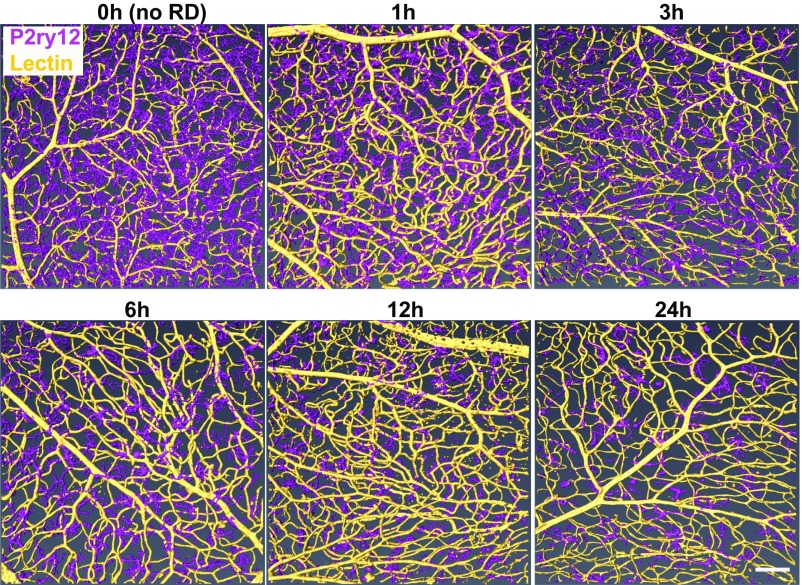
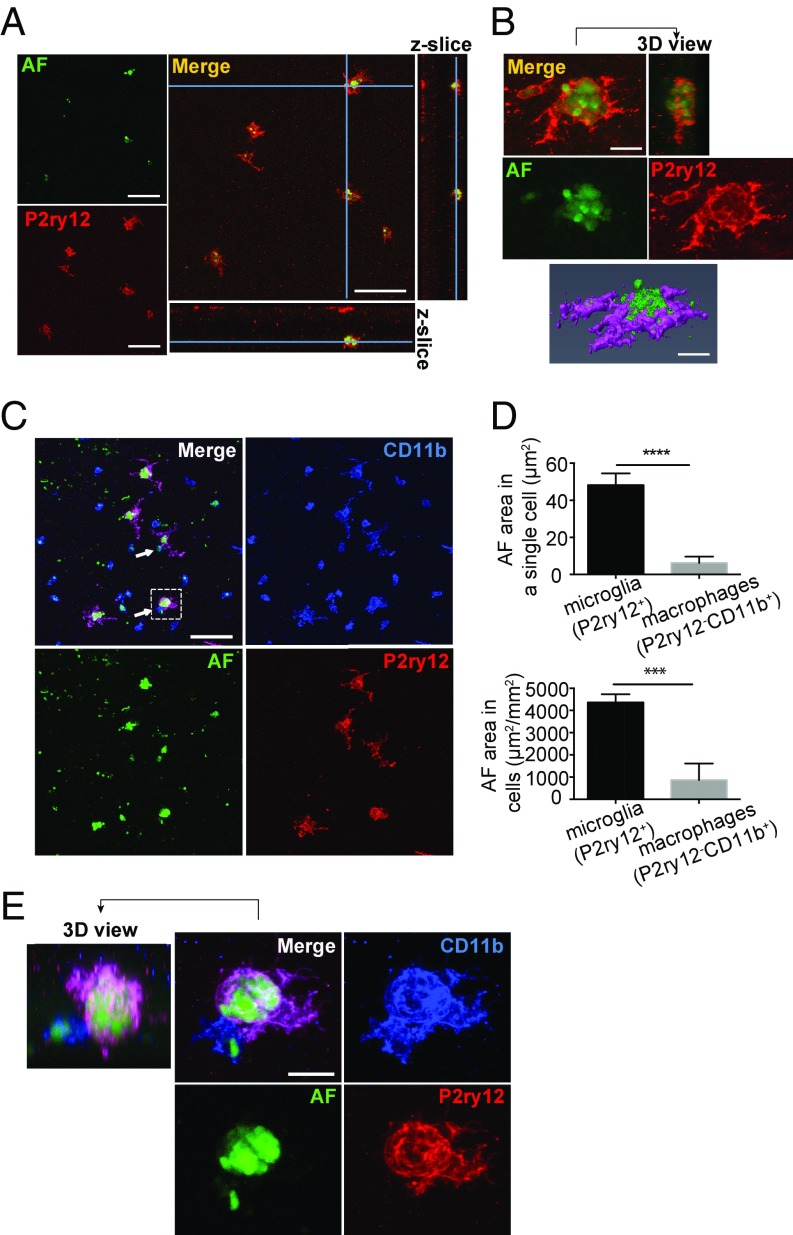
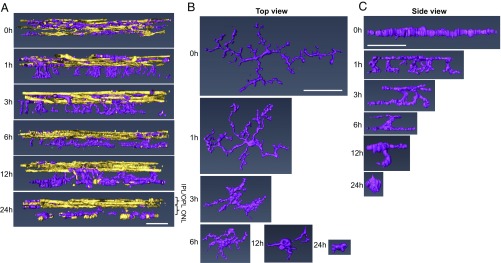
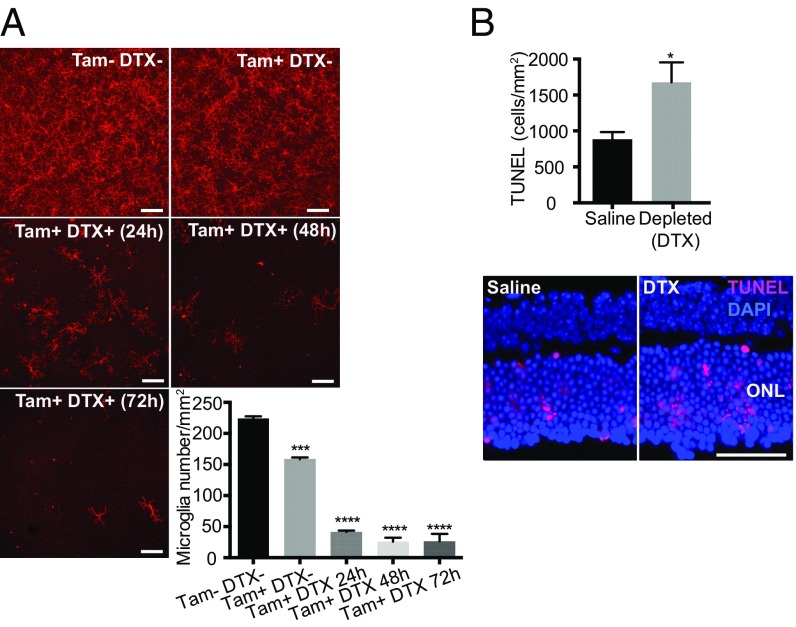
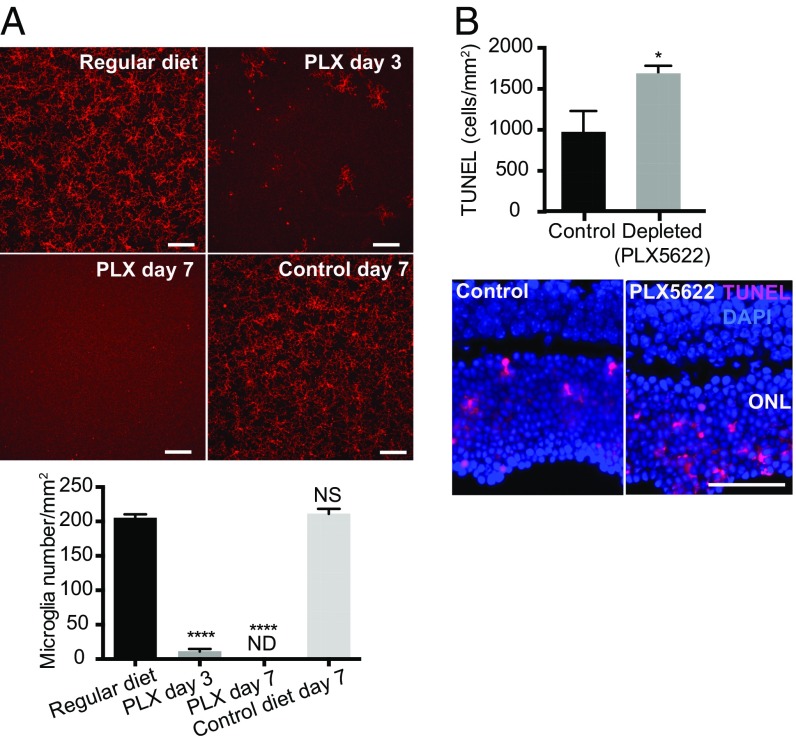
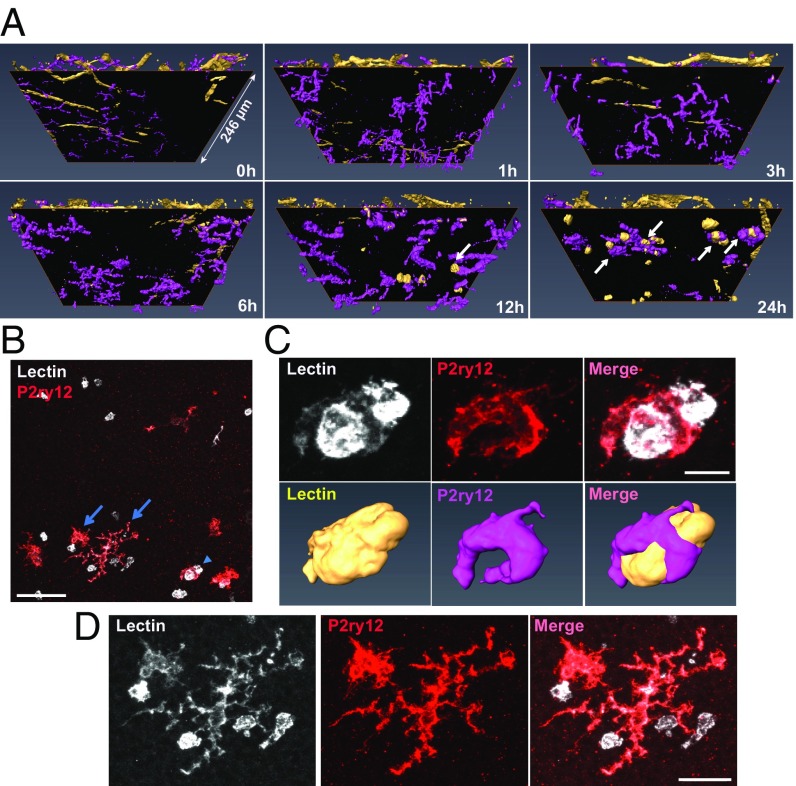
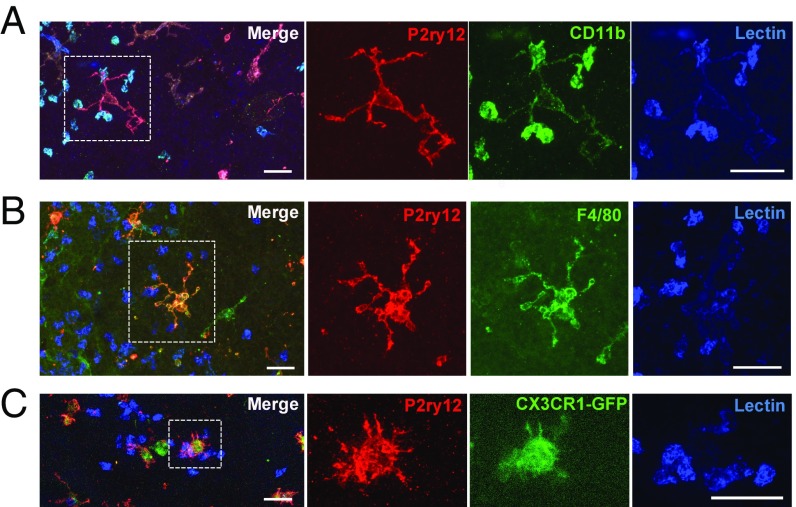
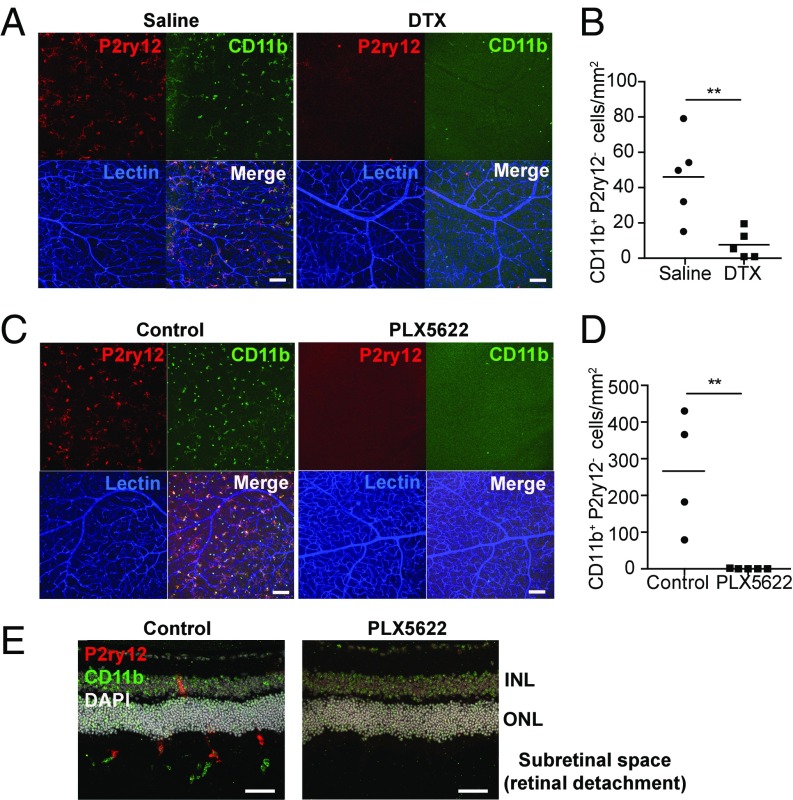
Retinal detachment (RD) is a sight-threatening complication common in many highly prevalent retinal disorders. RD rapidly leads to photoreceptor cell death beginning within 12 h following detachment. In patients with sustained RD, progressive visual decline due to photoreceptor cell death is common, leading to significant and permanent loss of vision. Microglia are the resident immune cells of the central nervous system, including the retina, and function in the homeostatic maintenance of the neuro-retinal microenvironment. It is known that microglia become activated and change their morphology in retinal diseases. However, the function of activated microglia in RD is incompletely understood, in part because of the lack of microglia-specific markers. Here, using the newly identified microglia marker P2ry12 and microglial depletion strategies, we demonstrate that retinal microglia are rapidly activated in response to RD and migrate into the injured area within 24 h post-RD, where they closely associate with infiltrating macrophages, a population distinct from microglia. Once in the injured photoreceptor layer, activated microglia can be observed to contain autofluorescence within their cell bodies, suggesting they function to phagocytose injured or dying photoreceptors. Depletion of retinal microglia results in increased disease severity and inhibition of macrophage infiltration, suggesting that microglia are involved in regulating neuroinflammation in the retina. Our work identifies that microglia mediate photoreceptor survival in RD and suggests that this effect may be due to microglial regulation of immune cells and photoreceptor phagocytosis.
视网膜脱离(RD)是许多高发视网膜疾病常见的致盲性并发症。RD 会迅速导致光感受器细胞死亡,自脱离后 12 小时内开始。在持续 RD 的患者中,由于光感受器细胞死亡导致的视力进行性下降很常见,导致视力显著和永久性丧失。小胶质细胞是中枢神经系统(包括视网膜)的固有免疫细胞,其功能是维持神经视网膜微环境的稳态。已知小胶质细胞在视网膜疾病中会被激活并改变其形态。然而,激活的小胶质细胞在 RD 中的功能尚不完全清楚,部分原因是缺乏小胶质细胞特异性标志物。在这里,我们使用新鉴定的小胶质细胞标志物 P2ry12 和小胶质细胞耗竭策略,证明 RD 会导致视网膜小胶质细胞迅速激活,并在 RD 后 24 小时内迁移到受伤区域,在那里它们与浸润的巨噬细胞密切相关,而巨噬细胞与小胶质细胞不同。一旦进入受伤的光感受器层,就可以观察到激活的小胶质细胞在其细胞体内含有自发荧光,表明它们的功能是吞噬受伤或死亡的光感受器。视网膜小胶质细胞耗竭会导致疾病严重程度增加和巨噬细胞浸润抑制,表明小胶质细胞参与调节视网膜中的神经炎症。我们的工作表明小胶质细胞介导 RD 中的光感受器存活,并表明这种作用可能是由于小胶质细胞对免疫细胞和光感受器吞噬作用的调节。