From the Department of Anesthesiology, University of Virginia School of Medicine, Charlottesville, Virginia.
Anesth Analg. 2019 Nov;129(5):1273-1280. doi: 10.1213/ANE.0000000000003572.
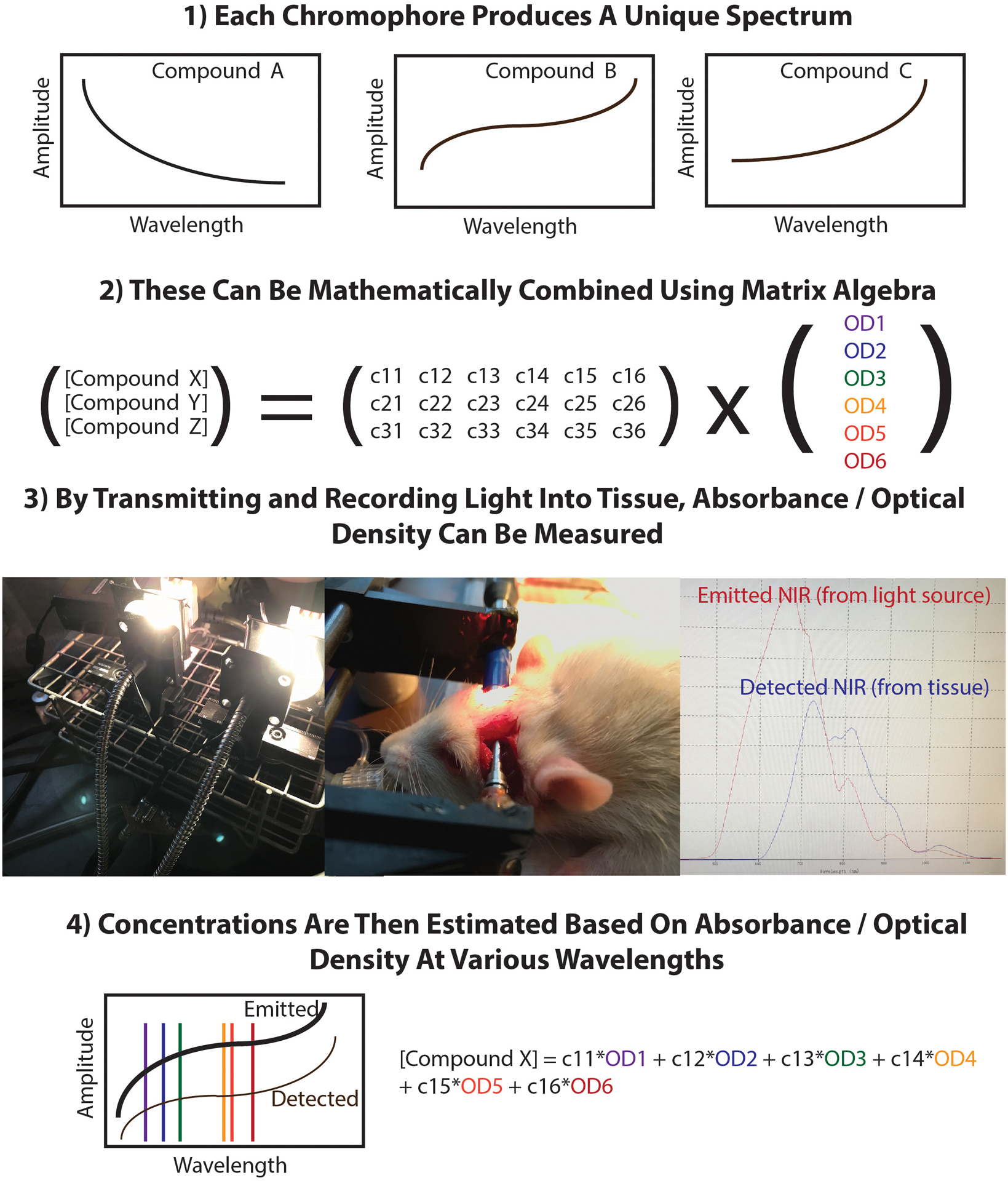
Cytochrome aa3, the terminal component of the electron transport chain, absorbs near-infrared radiation (NIR) differentially depending on its oxidation state (Cytox), which can in theory be measured using near-infrared spectroscopy (NIRS) by relating light absorption at specific wavelengths to chromophore concentrations. Some NIRS algorithms use discrete wavelengths, while others analyze a band of NIR (broadband NIRS). The purpose of this study was to test the ability of discrete wavelength and broadband algorithms to measure changes in Cytox (primary outcome), and to determine whether or not a discreet wavelength NIRS algorithm could perform similarly to a broadband NIRS algorithm for the measurement of Cytox in a staged hypoxia-cyanide model (hypoxia and cyanide have oppositional effects on tissue saturation, but both cause cytochrome reduction).
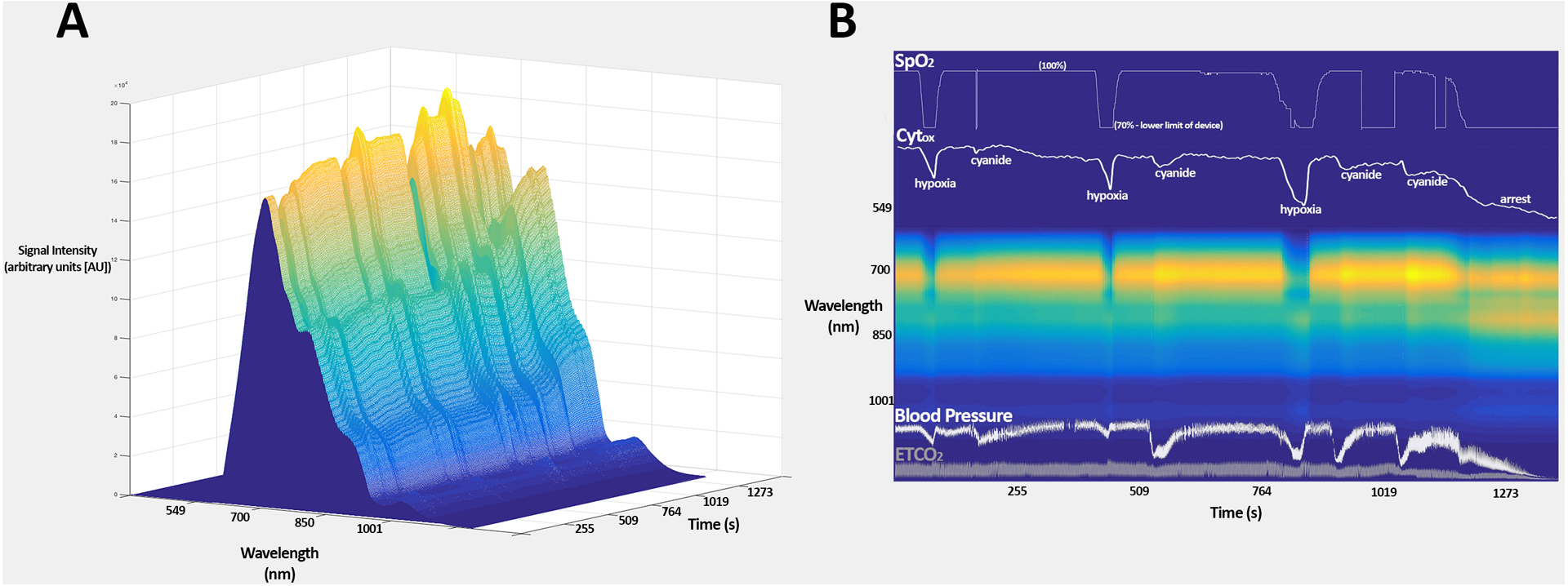
Twenty Sprague-Dawley rats were anesthetized with isoflurane, intubated, and instrumented. Blood pressure, end-tidal carbon dioxide, and arterial oxygen saturation were measured. A halogen light source transmitted NIR transcranially. NIR from the light source and the skull was transmitted to 2 cooled charge-coupled device spectrometers. Rats were subjected to anoxia (fraction of inspired oxygen, 0.0) until arterial oxygen saturation decreased to 70%. After recovery, 5 mg/kg sodium cyanide was injected intravenously. The cycle was repeated until cardiac arrest occurred. Relative concentrations of hemoglobin and cytochrome aa3 were calculated using discreet wavelength and broadband NIRS algorithms.
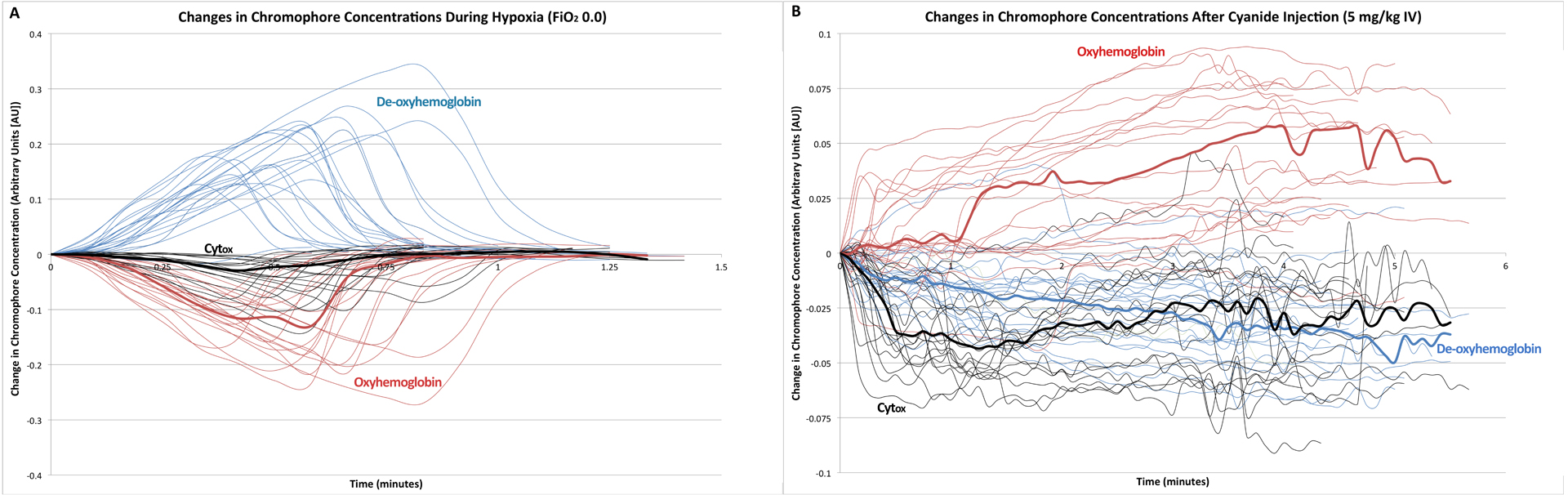
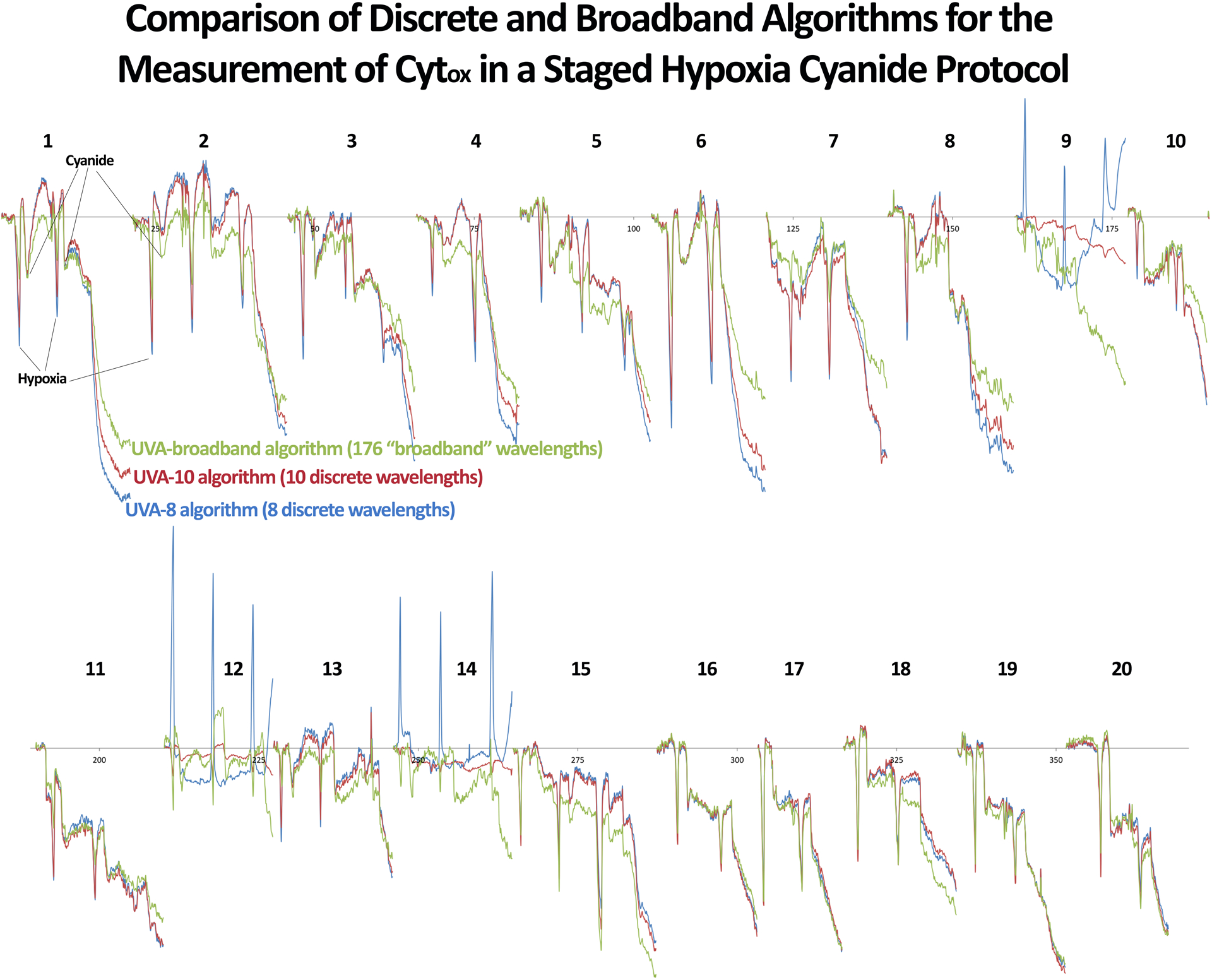
Hypoxia led to an increase in calculated deoxyhemoglobin (0.20 arbitrary units [AUs]; 95% confidence interval [CI], 0.17-0.22; P < .0001), a decrease in calculated oxyhemoglobin (-0.16 AUs; 95% CI, -0.19 to -0.14; P < .0001), and a decrease in calculated Cytox (-0.057 AUs; 95% CI, -0.073 to 0.0040; P < .001). Cyanide led to a decrease in calculated deoxyhemoglobin (-0.037 AUs; 95% CI, 0.046 to -0.029; P < .001), an increase in calculated oxyhemoglobin (0.053 AUs; 95% CI, 0.040-0.065; P < .001), and a decrease in calculated Cytox (-0.056 AUs; 95% CI, -0.064 to -0.048; P < .001). The correlations between "discreet" wavelength algorithms (using 4, 6, 8, and 10 wavelengths) and the broadband algorithm for the measurement of calculated Cytox were 0.54 (95% CI, 0.52-0.56), 0.87 (0.87-0.88), 0.88 (0.88-0.89), and 0.95 (0.95-0.95), respectively.
The broadband and 10 wavelength algorithm were able to accurately track changes in Cytox for all experiments.
细胞色素 aa3 是电子传递链的末端组件,根据其氧化状态(Cytox)不同,会吸收近红外辐射(NIR),理论上可以通过将特定波长的光吸收与发色团浓度相关联,使用近红外光谱(NIRS)来测量。一些 NIRS 算法使用离散波长,而其他算法则分析近红外光带(宽带 NIRS)。本研究的目的是测试离散波长和宽带算法测量 Cytox 变化的能力(主要结果),并确定离散波长 NIRS 算法是否可以与宽带 NIRS 算法一样,用于在分期缺氧-氰化物模型中测量 Cytox(缺氧和氰化物对组织饱和度有相反的影响,但都会导致细胞色素还原)。
20 只 Sprague-Dawley 大鼠用异氟烷麻醉,气管插管,并进行仪器操作。测量血压、呼气末二氧化碳和动脉血氧饱和度。卤素光源经颅传输近红外光。光源和颅骨的近红外光传输到 2 个冷却的电荷耦合器件光谱仪。大鼠经历缺氧(吸入氧分数,0.0),直到动脉血氧饱和度降至 70%。恢复后,静脉注射 5mg/kg 氰化钠。循环重复,直到发生心脏骤停。使用离散波长和宽带 NIRS 算法计算血红蛋白和细胞色素 aa3 的相对浓度。
缺氧导致计算出的脱氧血红蛋白增加(0.20 个任意单位[AU];95%置信区间[CI],0.17-0.22;P<0.0001),计算出的氧合血红蛋白减少(-0.16 AU;95%CI,-0.19 至-0.14;P<0.0001),以及计算出的 Cytox 减少(-0.057 AU;95%CI,-0.073 至 0.0040;P<0.001)。氰化物导致计算出的脱氧血红蛋白减少(-0.037 AU;95%CI,0.046 至-0.029;P<0.001),计算出的氧合血红蛋白增加(0.053 AU;95%CI,0.040-0.065;P<0.001),以及计算出的 Cytox 减少(-0.056 AU;95%CI,-0.064 至-0.048;P<0.001)。用于测量计算 Cytox 的“离散”波长算法(使用 4、6、8 和 10 个波长)与宽带算法之间的相关性分别为 0.54(95%CI,0.52-0.56)、0.87(0.87-0.88)、0.88(0.88-0.89)和 0.95(0.95-0.95)。
宽带和 10 波长算法都能够准确跟踪所有实验中 Cytox 的变化。