Department of Physiology and Biophysics, Jacobs School of Medicine and Biomedical Sciences, University at Buffalo, 955 Main Street, Buffalo, NY 14203, USA.
Nutrients. 2018 Jun 19;10(6):788. doi: 10.3390/nu10060788.
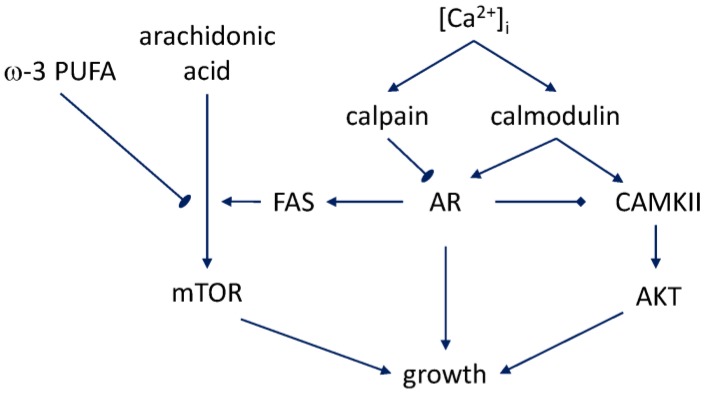
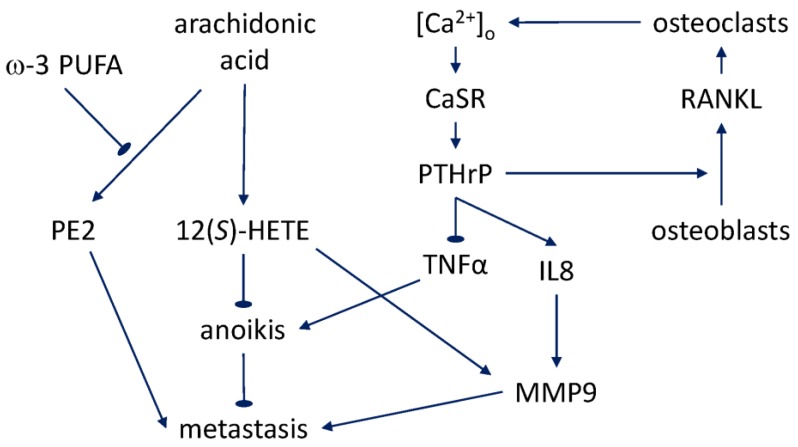
Prostate cancer is a widespread malignancy characterized by a comparative ease of primary diagnosis and difficulty in choosing the individualized course of treatment. Management of prostate cancer would benefit from a clearer understanding of the molecular mechanisms behind the transition to the lethal, late-stage forms of the disease, which could potentially yield new biomarkers for differential prognosis and treatment prioritization in addition to possible new therapeutic targets. Epidemiological research has uncovered a significant correlation of prostate cancer incidence and progression with the intake (and often co-intake) of fatty acids and calcium. Additionally, there is evidence of the impact of these nutrients on intracellular signaling, including the mechanisms mediated by the calcium ion as a second messenger. The present review surveys the recent literature on the molecular mechanisms associated with the critical steps in the prostate cancer progression, with special attention paid to the regulation of these processes by fatty acids and calcium homeostasis. Testable hypotheses are put forward that integrate some of the recent results in a more unified picture of these phenomena at the interface of cell signaling and metabolism.
前列腺癌是一种广泛存在的恶性肿瘤,其特点是原发性诊断相对容易,但治疗方案的个体化选择较为困难。如果能更深入地了解导致疾病向致命的晚期阶段转变的分子机制,将有助于改善前列腺癌的治疗效果,这可能会为预后和治疗优先级的区分提供新的生物标志物,并为可能的新治疗靶点提供依据。流行病学研究已经发现,前列腺癌的发病率和进展与脂肪酸和钙的摄入(通常是同时摄入)之间存在显著相关性。此外,有证据表明这些营养素会影响细胞内信号转导,包括钙离子作为第二信使介导的机制。本综述调查了与前列腺癌进展关键步骤相关的分子机制的最新文献,特别关注脂肪酸和钙稳态对这些过程的调节。提出了一些可检验的假说,将这些现象在细胞信号转导和代谢界面的最新结果整合到一个更为统一的图景中。