Kim Won-Seok, Cho Sungmin, Park Seo Hyun, Lee Ji-Young, Kwon SuYeon, Paik Nam-Jong
Department of Rehabilitation Medicine, Seoul National University College of Medicine, Seoul National University Bundang Hospital, Seongnam, South Korea.
Medicine (Baltimore). 2018 Jun;97(25):e11173. doi: 10.1097/MD.0000000000011173.
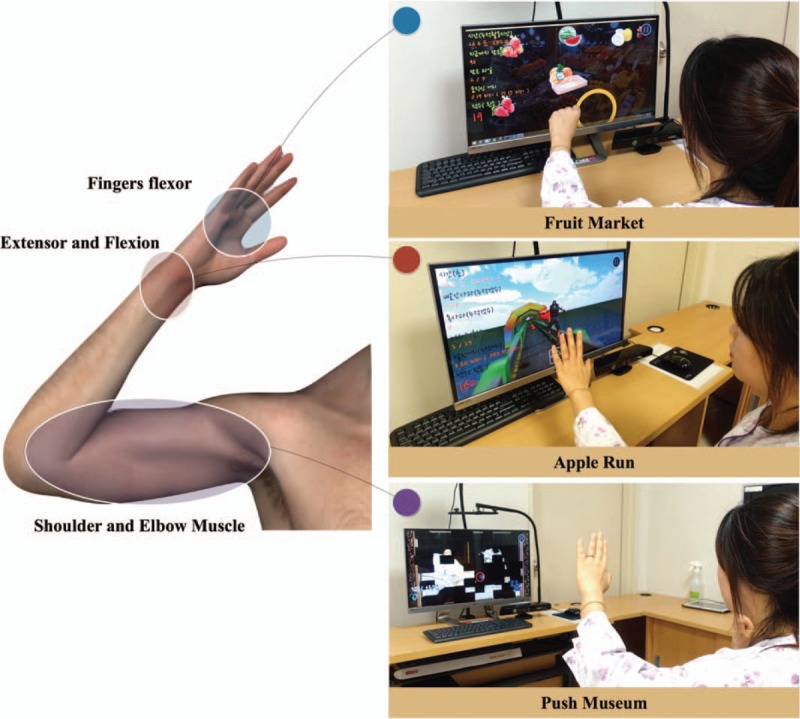
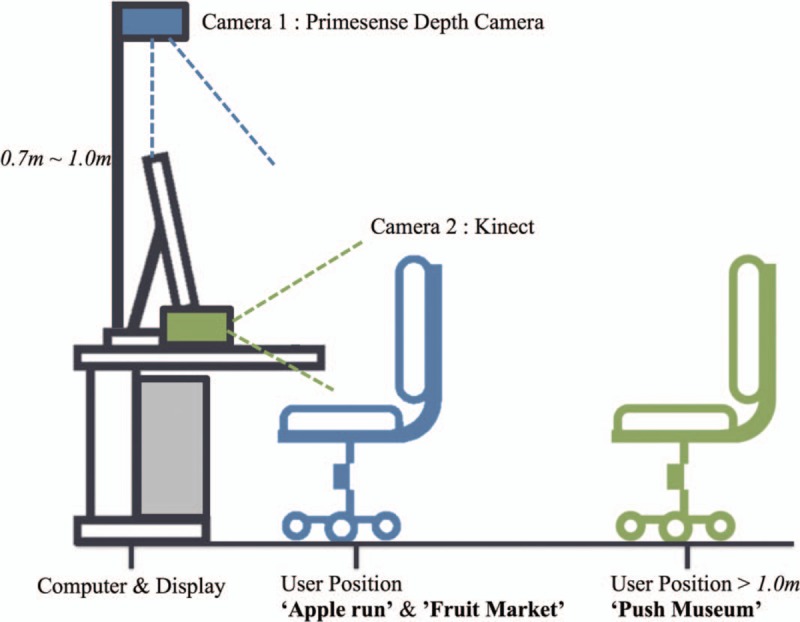
We designed this study to prove the efficacy of the low-cost Kinect-based virtual rehabilitation (VR) system for upper limb recovery among patients with subacute stroke.
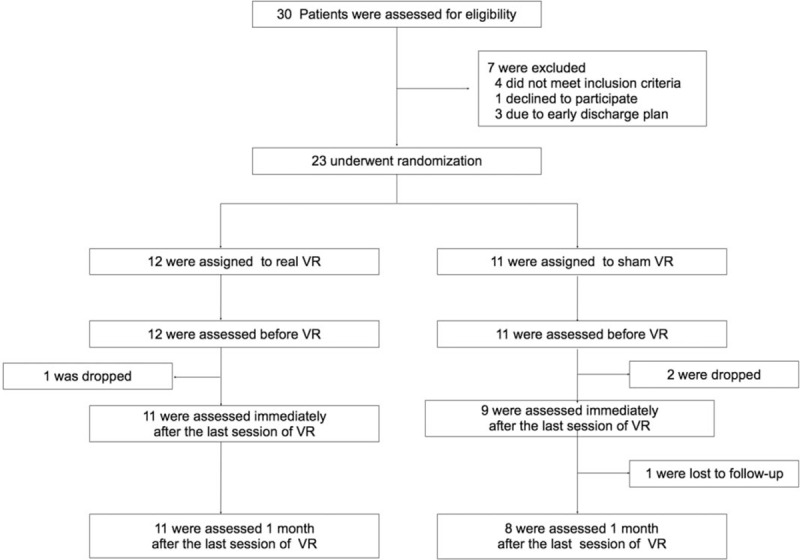
A double-blind, randomized, sham-controlled trial was performed. A total of 23 subjects with subacute stroke (<3 months) were allocated to sham (n = 11) and real VR group (n = 12). Both groups participated in a daily 30-minute occupational therapy for upper limb recovery for 10 consecutive weekdays. Subjects received an additional daily 30-minute Kinect-based or sham VR. Assessment was performed before the VR, immediately and 1 month after the last session of VR. Fugl-Meyer Assessment (FMA) (primary outcome) and other secondary functional outcomes were measured. Accelerometers were used to measure hemiparetic upper limb movements during the therapy.
FMA immediately after last VR session was not different between the sham (46.8 ± 16.0) and the real VR group (49.4 ± 14.2) (P = .937 in intention to treat analysis). Significant differences of total activity counts (TAC) were found in hemiparetic upper limb during the therapy between groups (F2,26 = 4.43; P = .22). Real VR group (107,926 ± 68,874) showed significantly more TACs compared with the sham VR group (46,686 ± 25,814) but there was no statistical significance between real VR and control (64,575 ± 27,533).
Low-cost Kinect-based upper limb rehabilitation system was not more efficacious compared with sham VR. However, the compliance in VR was good and VR system induced more arm motion than control and similar activity compared with the conventional therapy, which suggests its utility as an adjuvant additional therapy during inpatient stroke rehabilitation.
我们设计了这项研究,以证明基于低成本Kinect的虚拟康复(VR)系统对亚急性中风患者上肢恢复的疗效。
进行了一项双盲、随机、假对照试验。共有23名亚急性中风(<3个月)患者被分配到假治疗组(n = 11)和真实VR组(n = 12)。两组连续10个工作日每天参加30分钟的上肢恢复职业治疗。受试者每天额外接受30分钟的基于Kinect的或假的VR治疗。在VR治疗前、最后一次VR治疗结束后立即和1个月后进行评估。测量Fugl-Meyer评估(FMA)(主要结局)和其他次要功能结局。在治疗期间使用加速度计测量偏瘫上肢的运动。
在意向性治疗分析中,假治疗组(46.8±16.0)和真实VR组(49.4±14.2)在最后一次VR治疗后立即进行的FMA无差异(P = 0.937)。在治疗期间,两组之间偏瘫上肢的总活动计数(TAC)存在显著差异(F2,26 = 4.43;P = 0.022)。真实VR组(107,926±68,874)的TAC明显多于假VR组(46,686±25,814),但真实VR组与对照组(64,575±27,533)之间无统计学意义。
与假VR相比,基于低成本Kinect的上肢康复系统并无更高疗效。然而,VR的依从性良好,VR系统比对照组诱导了更多的手臂运动,且与传统治疗的活动相似,这表明其可作为住院中风康复期间的辅助附加治疗手段。